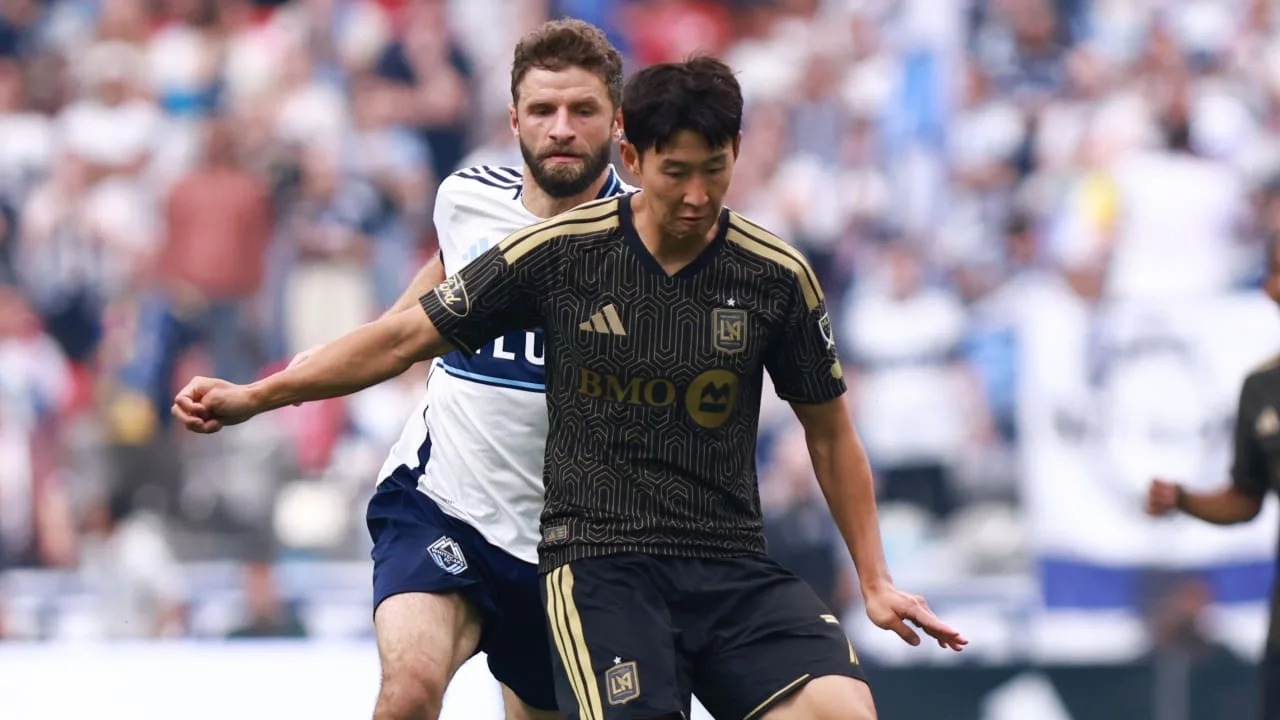
Lionel Messi plays for Inter Miami, Son Heung-min for LAFC, Thomas Müller for Vancouver, Robert Lewandowski for Chicago and Antoine Griezmann for Orlando. Those are current MLS club assignments checked on October 11, 2026, rather than a collection of transfer rumors or names from an earlier season.
This guide helps you connect recognizable players with their teams and the soccer they bring to the league. It is an unranked directory: global fame, an outstanding MLS career and excellent current form are related ideas, but each answers a different question. A newcomer can be internationally famous before accumulating a long MLS record.
Famous MLS players in 2026: the current club directory
Start with the club, especially if you last watched these players in Europe or international soccer. A previous team's shirt in a highlight clip does not establish where someone plays today. The table uses current official MLS roster headers, with broad roles to help readers recognize what to watch.
| Player | Current MLS club | Broad role |
|---|---|---|
| Lionel Messi | Inter Miami CF | Forward and creator |
| Luis Suárez | Inter Miami CF | Striker |
| Son Heung-min | LAFC | Forward |
| Thomas Müller | Vancouver Whitecaps FC | Attacking midfielder |
| Robert Lewandowski | Chicago Fire FC | Striker |
| Antoine Griezmann | Orlando City SC | Second striker |
| Marco Reus | LA Galaxy | Attacking midfielder |
| Timo Werner | San Jose Earthquakes | Forward |
| Evander | FC Cincinnati | Attacking midfielder |
| Hany Mukhtar | Nashville SC | Attacking creator |
| Carles Gil | New England Revolution | Attacking midfielder |
| Denis Bouanga | LAFC | Forward |
| Petar Musa | FC Dallas | Striker |
| Anders Dreyer | San Diego FC | Winger and creator |
| Tim Ream | Charlotte FC | Defender |
| Matt Freese | New York City FC | Goalkeeper |
These names provide different entry points. A Tottenham supporter may begin with Son; a Bayern follower may recognize Müller and Lewandowski; a regular MLS viewer may already associate Mukhtar or Gil with their clubs. The order above groups players for explanation and does not award a numbered position for quality or popularity.
For a performance judgment, use our separate best MLS players right now ranking. For the league's historical achievements, see the all-time player ranking. Here, the useful questions are who is actually in the league, what connects each name to his present team and which parts of his game help make that team worth following.
Global names and the MLS teams they play for
The most recognizable arrivals do not all perform the same job. Some are central finishers, others create attacks or move between positions. Following those differences makes a match more rewarding than waiting for the famous player to appear in every highlight.
Lionel Messi and Luis Suárez at Inter Miami
Messi and Suárez give Inter Miami two familiar names for viewers who remember their Barcelona partnership. They remain active club players at the October 11 checkpoint. Miami's October 10 home win over D.C. United supplied a recent example: each scored twice in the 4-0 result.
Messi offers a starting point for understanding the attack as a whole. Watch where he receives the ball and which teammates move ahead of it. When he comes toward midfield, the useful question is whether someone else stretches the defense. A goal highlights the final action; the preceding movement often explains why the opportunity existed.
Suárez brings a different reference point in central areas. His reputation includes elite Liverpool and Barcelona seasons, but his Miami contribution should be assessed in its present setting. Watch his positioning between defenders, his combinations around the box and when he chooses to finish rather than make the next pass.
The October match shows why the pair are a useful introduction to Miami without reducing the team to two individuals. They scored the goals, yet every possession still depended on progression and support around them. For the Uruguayan's longer MLS story, our Luis Suárez career guide separates league seasons and competitions.
Son Heung-min at LAFC and Thomas Müller in Vancouver
Son joined LAFC from Tottenham in August 2025, so 2026 is his first full MLS season. The Premier League Golden Boot he shared in 2021-22 helps explain why supporters outside North America already recognize him. His official profile lists both-footed finishing, another reason a defender cannot simply protect one side.
Müller joined Vancouver in August 2025 after his Bayern career. The 2014 World Cup winner's appeal includes how he interprets space, rather than only the moments when he is on the ball. Look for a run that pulls a defender away, a quick combination or an arrival between lines. Those are useful observation points, not a claim that he occupies one fixed position every week.
The two scored in the same August 1 match at BC Place, a 1-1 draw. That historical meeting is a concrete example of familiar European names competing for different MLS clubs. It should not be confused with their separate October 10 return fixture.
Vancouver is a Canadian MLS club; LAFC and LA Galaxy are separate Los Angeles clubs. Those distinctions matter when searching schedules. A supporter following Son should choose LAFC's fixture list, while a Müller supporter should choose Vancouver's, even if an old clip or a search result still emphasizes Tottenham or Bayern.
Robert Lewandowski in Chicago and Antoine Griezmann in Orlando
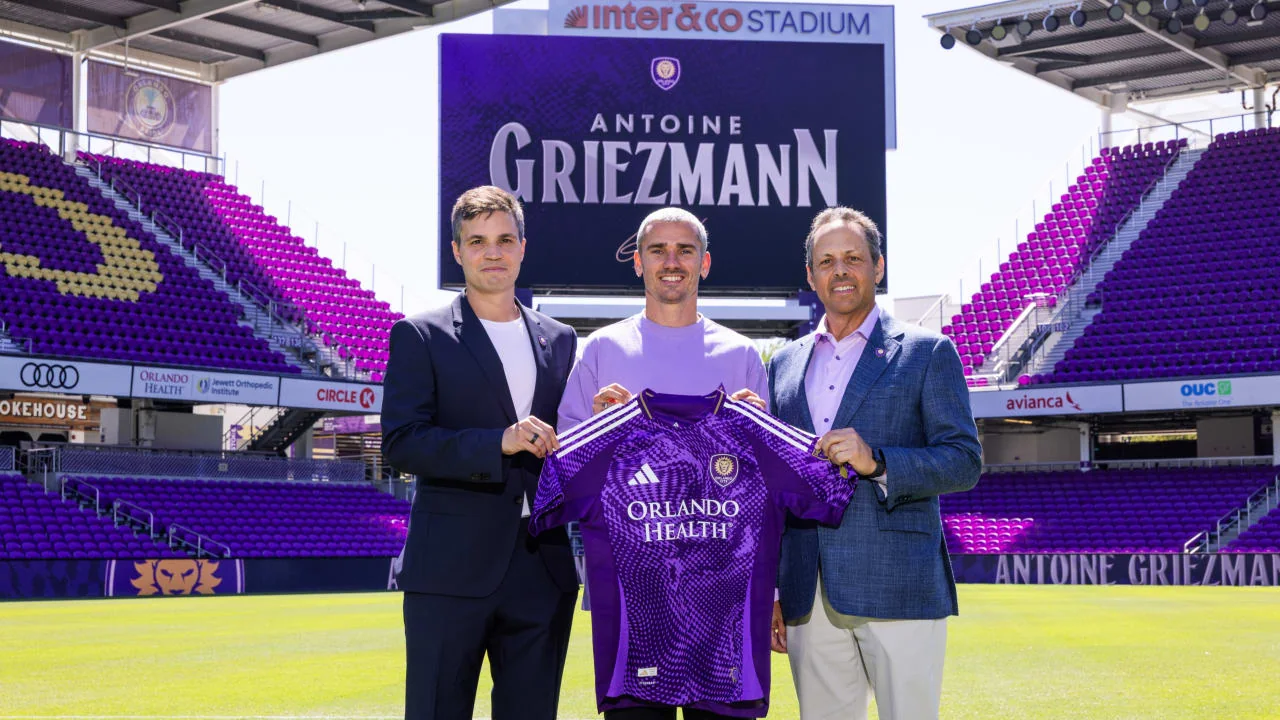
Lewandowski and Griezmann are confirmed 2026 arrivals. Their inclusion is supported by current roster pages and dated club announcements, rather than a prediction that either might eventually move to MLS.
Lewandowski joined Chicago from Barcelona in July. A September MLS feature credited him with six goals and two assists in his first 10 league appearances, then examined how teammates were learning his movement. That dated early return is useful context, not his final 2026 total. Chicago's story includes both a famous striker and the process of building connections around him.
For a viewer, watch the space he attacks before a cross or through ball is delivered. A striker can make an excellent run without receiving the pass; the relationship between that run and the teammate providing service is part of the adjustment. His existing fame makes the club easier to discover, while those combinations explain how he fits its soccer.
Orlando announced Griezmann's signing on March 24 with a July 2026 contract start. By September, he had scored in five consecutive games. The official roster identifies him as a second striker, a useful clue for viewers expecting a conventional center forward. His involvement can include connecting attacks as well as arriving to finish them.
Marco Reus in Los Angeles and Timo Werner in San Jose
Reus represents LA Galaxy. His original signing was announced on August 15, 2024, and the club extended his contract through December 2027 in February 2026. A reference to him as a future MLS possibility, or as a current Dortmund player, misses the established club assignment.
His Dortmund career explains his recognition, while his midfield role gives Galaxy followers a different attacking focal point from a pure striker. Watch how he links the next pass, positions himself around the penalty area and combines with teammates. His route into the league also illustrates why a famous name does not automatically imply a Designated Player signing: the Galaxy's original release specified Targeted Allocation Money.
Werner plays for San Jose after a permanent transfer from RB Leipzig. The Earthquakes announced a Designated Player contract through June 2028. Their signing release describes experience across both wings, second striker and center forward, with pace as a defining characteristic.
His MLS debut against Atlanta included an assist for Ousseni Bouda. That is a useful reminder to follow the whole attack rather than judging an established forward only by whether he scores. San Jose and the Galaxy offer two different California destinations for German stars; neither should be substituted for LAFC simply because Los Angeles features prominently in MLS coverage.
League stars worth knowing beyond the global headlines
A recognizable MLS name does not have to arrive after a decade of European headlines. Some players become closely associated with a club through their work in this league. Their recognition may be strongest among regular MLS viewers, which is a reason to introduce them to a new audience rather than overlook them.
Evander, Hany Mukhtar and Carles Gil: the creative hubs
Evander plays for Cincinnati after two Portland seasons and a February 2025 move within MLS. His path is useful for Brazilian readers who remember his Vasco background: the present club assignment is Cincinnati, and his creative responsibility includes both making chances and finishing attacks. Our Evander guide follows that development in more detail.
Mukhtar is one of the clearest names to associate with Nashville. He won the 2022 MLS MVP and Golden Boot awards, establishing a league identity that does not depend on fame earned at a previous European club. Look for how he moves between providing the final pass and arriving to score. A roster's broad position label cannot describe every action of a flexible attacker.
Gil gives New England another established creative reference point. The 2021 MLS MVP owns the club's regular-season assist record. A new viewer can follow how often teammates look for him when moving into the attacking half, and how his next decision changes the direction of a possession.
These three make different clubs easier to understand. They are introductions to Cincinnati, Nashville and New England, not interchangeable names in a generic “No. 10” list. Recognition comes from the relationship between an individual and the team whose attacks he helps organize.
Denis Bouanga, Petar Musa and Anders Dreyer: different attacking threats
Bouanga is an established LAFC star alongside Son. The Gabon international won the 2023 Golden Boot and became the first MLS player with three consecutive regular seasons of at least 20 goals. His league record predates Son's arrival, so a guide to LAFC should not make him disappear behind the newer global headline.
Musa is Dallas's central striker, signed from Benfica in 2024. His role provides an entry point for readers who prefer watching penalty-area movement and finishing. Notice where he positions himself before service arrives and how he occupies the opposing central defenders. The Petar Musa profile separates his Dallas scoring record from broader competition totals.
Dreyer became the 2025 MLS Newcomer of the Year in San Diego's inaugural season. He offers another type of attacking interest: creation and finishing within the same move. Following a winger's next pass, as well as his shot, helps explain why a player can become a club's central attacking figure without acting as a conventional striker.
The three names also prevent a misleading assumption that every club's star must fit the same template. Bouanga's established scoring record, Musa's central-forward responsibility and Dreyer's introduction to a new MLS club give supporters different reasons to choose a match.
Tim Ream and Matt Freese: recognition beyond goals
Ream plays for Charlotte after joining in August 2024 from Fulham. His long English career and U.S. national-team visibility make him familiar to viewers who may not follow Charlotte every week. His club value belongs in defensive positioning, decisions under pressure and the quality of the next pass, rather than a forward's scoring comparison.
Freese represents New York City FC and was the U.S. starting goalkeeper at the 2026 World Cup. That international exposure introduces a club goalkeeper to a broader audience. For a league match, watch his starting position before an attack develops, his response to crosses and how possession begins after a save.
Including a defender and goalkeeper keeps the directory useful across positions. A famous attacker can draw a new viewer into MLS; noticing the player preventing the goal or starting the move gives that viewer a fuller picture of the same game.
Former stars, transfer rumors and emerging prospects
Some of the league's most famous historical names are absent from the current directory for a simple reason: they are no longer active players. David Beckham, Zlatan Ibrahimović and Gareth Bale belong to MLS history. Their highlights remain worth watching, but they do not identify a current lineup.
The same check matters for more recent Miami coverage. Sergio Busquets and Jordi Alba finished their playing careers at the end of 2025. A list or graphic still grouping all four former Barcelona teammates as active Miami players in 2026 needs updating. Messi and Suárez's continued club careers do not extend the playing careers of their former teammates.
A transfer link requires a different label again. Interest, negotiations and a completed signing are separate stages. A player should not enter a current-club directory because an anonymous social post puts him in a team's shirt. Confirm an official club announcement and current roster assignment before treating the connection as established.
Where Cavan Sullivan fits in the conversation
Sullivan plays for the Philadelphia Union and attracts attention through a different route from the established international veterans. His MLS debut at 14 years, 293 days in 2024 created immediate interest in his development. That achievement explains why a young player can become a familiar name before building a long first-team career.
He belongs in a conversation about emerging players, with expectations tied to his present role and actual appearances. A promising trajectory is not the same evidence as a decade of elite performance. The distinction lets readers enjoy his development without treating every match as a verdict on his eventual career.
Keep the competition attached to each appearance. Philadelphia's first team plays in MLS; Philadelphia Union II plays in MLS NEXT Pro. A Union II performance can be valuable development evidence without counting as an MLS first-team appearance. Our Cavan Sullivan development guide explains that pathway and the importance of separating its stages.
This is a useful way to extend the directory: established stars help a new viewer find the league, while younger players give that viewer reasons to keep following it. They can share attention without being judged by an identical career standard.
How to find a star's next MLS appearance
Use the player's current club to find the next fixture, then check whether the event is MLS or another competition. Miami, for example, can appear in searches connected with league matches and cup matches. The club name alone does not identify the tournament or its coverage arrangements.
The site's MLS games today page provides an entry point for current fixtures. Compare the kickoff's time zone with your own and open the club's match announcement for the specific event. Our TV and streaming guide explains the league viewing route, including current MLS coverage on Apple TV.
A scheduled club match does not guarantee a particular player's appearance. Check the latest official availability information, then the announced matchday lineup. Starting, being named among substitutes and being absent from the squad are different statuses. A healthy reserve may enter later; a star in a promotional graphic may still be unavailable.
After watching, place the individual performance in the team's situation using the MLS standings. A famous player can produce an excellent moment in a difficult team result, while an unfamiliar teammate may do the work that makes a winning performance possible. Following both is how a directory of names becomes an understanding of clubs.
Comments
Comments are reviewed before publication.
Spam, abusive content, personal information and policy-violating links are not published.
Sign in with Google to comment or reply.
Loading comments…