
Cavan Sullivan's Philadelphia Union story now involves much more than a record-setting debut. The 17-year-old midfielder has progressed through the club's academy and Union II before becoming a substantial first-team contributor in 2026. His pathway is easiest to understand when each competition and each stage of responsibility remains visible.
This guide explains those stages, separates appearances from meaningful playing time and examines the confirmed record through October 11, 2026. It also distinguishes his current Philadelphia contract from the widely discussed future Manchester City pathway. A prospective move does not replace the football he is playing for the Union today.
Cavan Sullivan's current Union identity and earliest MLS milestone
Sullivan is Philadelphia's No. 6 and is listed as a midfielder. His club profile identifies him as a Homegrown player in the supplemental roster category covering slots 21-24. Born on September 28, 2009, he turned 17 in September 2026. Older articles describing him as 14, 15 or 16 reflect the ages he reached during earlier stages of the same career.
The Union announced his first-team signing on May 9, 2024, with a contract through 2028. He had joined the academy in 2020 at age ten. That local development history matters because the first professional agreement did not arrive before the club knew him: the academy, his coaches and his family were already part of his football environment.
His MLS debut followed on July 17, 2024, in a 5-1 win over New England at Subaru Park. He entered in the 85th minute at 14 years and 293 days old, breaking Freddy Adu's MLS debut mark of 14 years and 306 days. The milestone describes the youngest first appearance, rather than the youngest player to complete a full season or become a regular starter.
The distinction helps explain why the debut received exceptional attention while the next development steps remained gradual. A brief appearance introduces a player to the speed and setting of first-team competition. It cannot, on its own, answer how he will cope with repeated starts, difficult away games or the need to influence a match for much longer.
For a supporter looking back, the record should be a starting point for the story. The more revealing development evidence is what followed: where he obtained minutes, which decisions improved and when the first-team staff trusted him with sustained responsibility. Sullivan's age explains the unusual scale of the achievement. His subsequent football explains why that achievement has become part of a larger Union career.
The pathway from Union Academy to Union II and the first team
Sullivan's progression includes the Union's U-15 and U-17 academy teams, Philadelphia Union II and the MLS first team. Those are connected parts of one organization, but they are distinct competitive environments. Moving through them changes both the opponents a player meets and the responsibility he must carry.
A good development account therefore follows more than the highest level at which he has appeared. It asks where he repeatedly made decisions, where he had time to recover from mistakes and where a coach could give him a longer assignment. The first-team debut is a highly visible event; the work between such events can be less visible and still be essential.
MLS NEXT and MLS NEXT Pro are different stages
MLS NEXT is the academy environment in Sullivan's pathway. MLS NEXT Pro is a professional men's league, where Union II compete. The league describes its purpose as completing the route from MLS NEXT toward MLS first teams. The similar names should not obscure the difference between youth academy football and professional reserve competition.
For Sullivan, Union II supplied professional experience before and after his first MLS appearance. His first Union II start included 55 minutes against Columbus Crew 2 in a 3-1 win. That was a substantial playing assignment in its own setting, rather than an MLS first-team start.
The distinction also governs goals. On September 21, 2025, he converted a penalty during Union II's 5-2 victory over Chicago Fire II. The club identified it as his sixth MLS NEXT Pro goal of that season. It belongs to his Union II record. Adding it to a first-team MLS goal total would mix two competitions and misdescribe the achievement.
Why first-team appearances and development minutes diverge
His 2025 first-team profile lists 11 appearances, one start and 214 minutes. The first start came against Nashville on July 5. Those figures show why appearance totals need context: eleven entries in a match log did not mean eleven full games or an established weekly starting role.
During the same year, the club's season review credited him with 14 Union II matches and six goals. Read that alongside the first-team figures, rather than treating one line as a replacement for the other. He could gain MLS exposure while obtaining a different kind of responsibility in MLS NEXT Pro.
This does not make every reserve appearance evidence of a setback or every first-team substitute appearance proof that development has accelerated. A young player can be challenged by starting, by being asked to create against older opponents, or by entering a high-pressure MLS game. The level, minutes and task help explain which challenge a particular match presented.
When reviewing his progress, distinguish being selected, coming on, starting and completing an extended run of starts. Each is a step in responsibility. The most persuasive evidence is how he performs as that responsibility grows, rather than whether his name appears on the most prominent team sheet every week.
What changed in Sullivan's 2026 first-team role
The 2026 season supplied the next level of evidence. Sullivan's first MLS assist came against Charlotte on April 4, and his first MLS goal followed against Orlando on May 13. These were first-team achievements, separate from the reserve goals already appearing in his professional record.
His larger breakthrough followed the World Cup pause, during the Union's recovery under interim coach Ryan Richter, who had previously led Union II. That connection provides a development context, but it does not prove one person caused every improvement. Team structure, teammates and the player's decisions all contribute to what a longer run of starts produces.
September's performances turned potential into production
Sullivan recorded four goals and five assists in four September appearances. The contributions took several forms: a goal in the 2-0 win over Montréal, three assists in the 5-0 win over Cincinnati, two goals and an assist against San Diego, and a goal and assist in the 4-3 comeback against Sporting Kansas City.
Those performances are more informative than a prospect label. The Cincinnati match demonstrated repeated creation for others, while the San Diego game added a brace of his own. The Kansas City contribution came in a match that Philadelphia won after falling three goals behind. Different game situations tested different attacking decisions.
He received September's MLS Player of the Month award at 17 years and two days old, the youngest recipient in league history. The club's award announcement recorded seven goals and 12 assists in 1,450 regular-season minutes. Keep that line attached to the September announcement; it was not a final 2026 total.
For evaluating a midfielder, the balance of goals and assists matters. A player who can finish one move and create the next gives teammates more options. The development question becomes whether he recognizes the useful action consistently, including on nights when a spectacular dribble is unavailable. That is a higher demand than occasionally producing a memorable highlight.
The October update and a separate national-team record
The October 10 win over Real Salt Lake brought another update. MLS's subsequent reaction credited Sullivan with two assists and 21 regular-season goal contributions, surpassing the teenage single-season benchmarks of Diego Fagúndez and Alphonso Davies. The same report listed 14 assists, level with Albert Rusnák at that reporting point.
The earlier club match narrative described his first assist as tying the record at 20. The later MLS account includes the second assist credit and the resulting new mark. When revisiting the game, use the completed reporting rather than stop at the milestone reached during the opening goal.
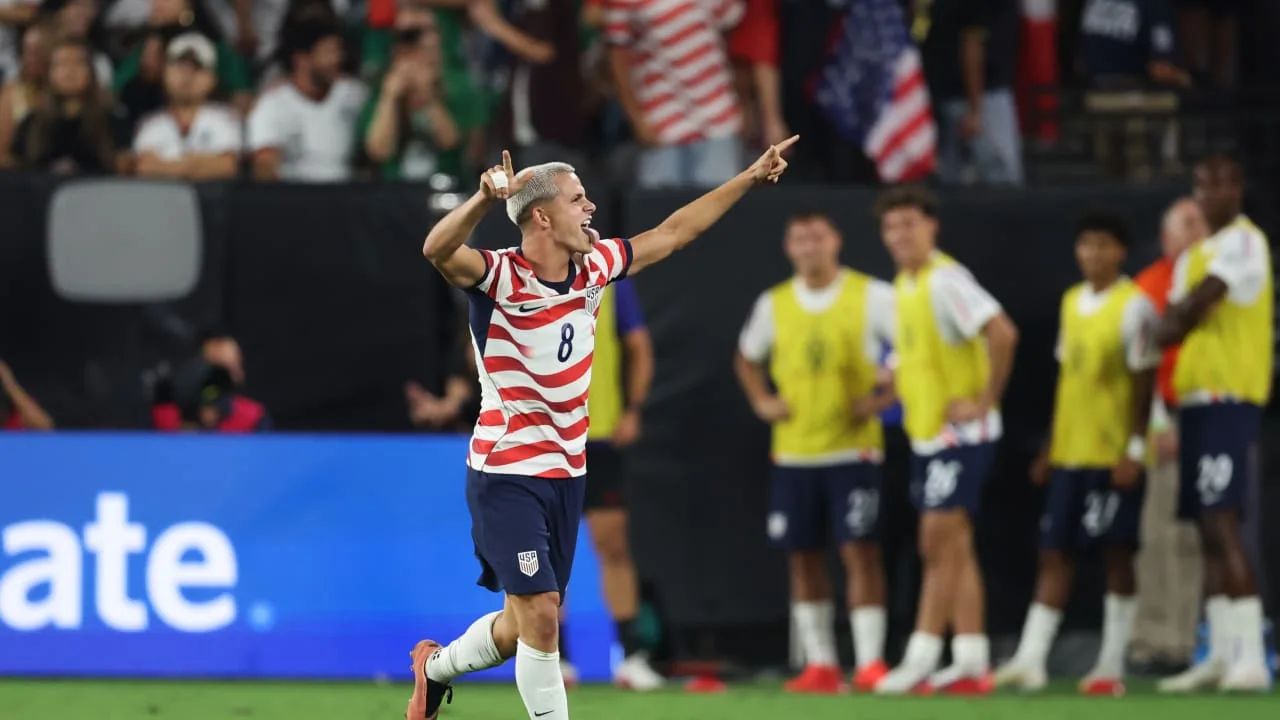
His international breakthrough belonged to another team. Against Mexico on October 3, he scored in the 63rd minute of a 3-0 U.S. win and became the USMNT's youngest goalscorer at 17 years and five days. That national-team goal adds to his senior international career, not his MLS goal count.
Together, the club and country achievements show expanding responsibility across different environments. They do not guarantee the next selection or remove the need to develop. A record can be completed while the player who established it still has substantial football to learn.
What Homegrown status and match eligibility actually tell you
The current Union profile lists Sullivan as a Homegrown midfielder in Supplemental Slots 21–24. These are MLS roster designations. They describe his first-team registration and signing pathway, rather than putting his senior appearances into a separate youth league. His MLS goals and assists remain senior league contributions.
MLS's published 2026 rules describe an active roster of up to thirty players eligible for the game-day squad. The Homegrown mechanism allows qualifying academy players to sign without the SuperDraft, and Homegrown players may occupy Senior or Supplemental roster places. A player does not lose the possibility of first-team selection simply because his signing route began in the academy.
Sullivan's own match history supplies stronger evidence than an assumption based on age. He made his MLS debut in 2024 and returned to Philadelphia's starting midfield against Real Salt Lake on October 10, 2026. Those are actual selections. They establish that he has been used in senior competition, without guaranteeing a place in the next lineup or explaining every decision behind his playing time.
A roster category is different from a starting place
Supplemental status concerns roster and budget treatment. Under the league rules, salaries on the Supplemental Roster do not count toward the club's Salary Budget. That general treatment does not disclose Sullivan's individual earnings. His Homegrown label also does not, on its own, establish a U22 Initiative designation or a promised starting position.
Separate three questions when reading his profile and a match report. Registration identifies the club and category under which he is listed. Selection identifies whether he is included in the named match and in what capacity. Performance describes his contribution after he enters the game. Sullivan's October start and involvement in Philadelphia's goals answer the latter questions; the profile explains the registration background.
Two academy graduates can therefore share a Homegrown designation while receiving different competitive opportunities. One may appear regularly in MLS and another may obtain more minutes with Union II. The common label cannot resolve that difference. Compare their actual appearances, starts and responsibilities in each competition, and use official availability and lineup information for the next match rather than turning a budget category into a depth chart.
The Manchester City pathway remains a future step
The Manchester City connection is part of Sullivan's story, but it needs a clear time frame. Philadelphia's May 2024 signing announcement confirmed a Union contract through 2028. In its reporting that day, the Associated Press described a collaborative agreement intended to take him to Manchester City at 18. MLS's October 2026 feature continues to describe that future move as reported.
His birth date means he turns 18 on September 28, 2027. That calculation is straightforward; it does not establish the date on which an international transfer will actually be registered. A birthday, an agreement between clubs and a completed sporting move are different events. This guide therefore treats the City pathway as a future arrangement rather than describing Sullivan as having already left Philadelphia.
For a fan deciding which team to watch now, the current answer remains the Union. His recent league production, Philadelphia's remaining schedule and the club's match announcements establish where his immediate competitive opportunities lie. A future destination should not erase the development taking place in those games. The passes against Real Salt Lake, for example, matter as senior contributions to Philadelphia's season, not simply as an audition viewed through a European club's name.
The same care applies to projected roles. A reported route to Manchester City does not guarantee a first-team start, a particular shirt number, a loan destination or a specific future manager. Those questions require later announcements. No undisclosed transfer fee or detailed clause is needed to explain the current football story, and this article does not assign them.
There is a more useful way to assess the pathway: watch whether Sullivan sustains his influence as opponents prepare specifically for him. Can he create chances when space closes, remain involved without the ball and repeat strong performances across a demanding schedule? Those are questions for observation rather than predictions with certain answers. The future arrangement adds context, while his present matches provide the evidence on which a development assessment should rest.
How to follow his development without confusing the records
The next scheduled opportunity after this October 11 snapshot is Philadelphia's October 14 trip to Chicago Fire at Soldier Field, with kickoff listed for 8:30 p.m. Eastern and coverage on Apple TV. That is a team fixture, not a promise that Sullivan will start. Use the MLS games today page for the current match slate and the MLS TV schedule to check viewing information as the date approaches.
When assessing his development, keep four labels beside every statistic: team, competition, season and reporting date. A Union II goal in MLS NEXT Pro does not belong in his MLS total. His senior United States goal against Mexico does not increase his Philadelphia tally. A Leagues Cup contribution is valuable, but it also belongs in a separate competition column. These distinctions become especially useful for a player whose pathway crosses academy, reserve, first-team and national-team settings.
Read the date before treating a total as a contradiction. The September award announcement and the October 10 recap describe different points in a season. Seven league goals and 12 assists in a feature before the Real Salt Lake game do not invalidate the later seven-goal, 14-assist update. In this instance, two more assists explain the change. A profile's career narrative may preserve an earlier milestone while its latest match coverage carries a newer total.
Minutes and starts deserve the same attention. His 11 MLS appearances in 2025 amounted to 214 minutes and one start, so the appearance count alone would exaggerate that year's workload. Conversely, September 2026's repeated contributions show why a story based only on his record-setting debut is now incomplete. Review the size and continuity of the role before comparing raw totals across those seasons.
Finally, place individual progress alongside Philadelphia's competitive situation. The MLS standings can show what a result means for the club, while official lineups and match reports show Sullivan's participation. His development is increasingly visible in senior games with consequences for his teammates. Following those performances, with each record in its proper competition and date, offers a stronger picture than either an old age-record headline or an assumed European future.
Comments
Comments are reviewed before publication.
Spam, abusive content, personal information and policy-violating links are not published.
Sign in with Google to comment or reply.
Loading comments…