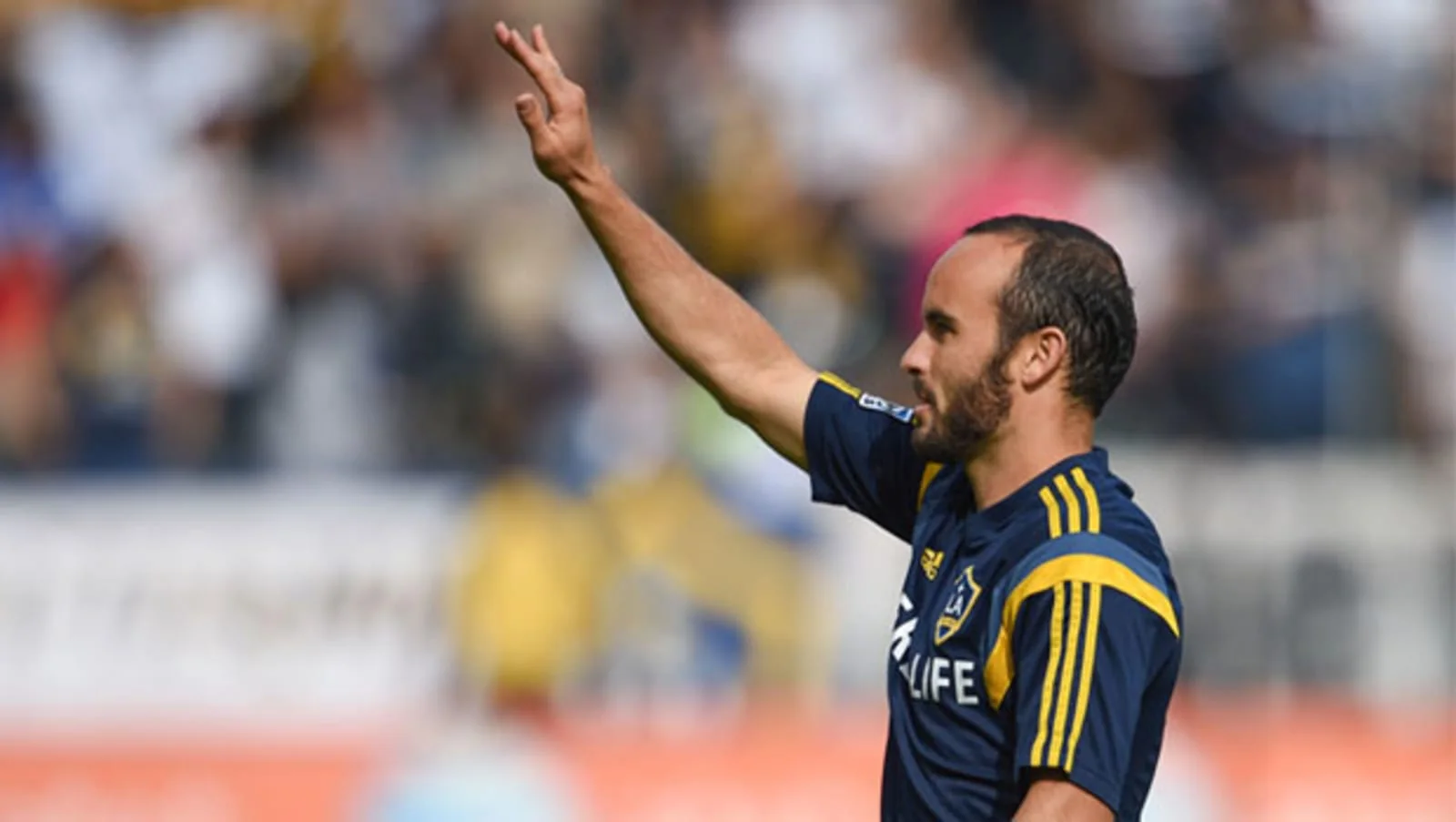
How We Ranked the Best MLS Players of All Time
This is a ranking of MLS careers, not a list of the most famous footballers who ever stopped in the league. A player's national-team résumé, European trophies, coaching record and celebrity do not earn points here. That distinction matters: Lionel Messi may be the greatest player in the sport's history, but Landon Donovan and Jaime Moreno built far longer bodies of work inside MLS.
Our scorecard gives 40% to sustained MLS excellence and longevity, 30% to peak performance and individual honors, 25% to team success and postseason moments, and 5% to league impact as a tie-breaker. We also adjust for position and era. A center back cannot be measured by goals, and a 1990s star competed under different roster rules and statistical conditions than a 2020s Designated Player.
The factual baseline is the completed 2025 season. We use official MLS records, awards and trophy histories, plus the league's unranked “25 Greatest” project, which was chosen from 137 nominees by nearly 200 experts. Partial 2026 totals are excluded so every active player is judged at the same completed-season cutoff. The ordering remains editorial, especially where a spectacular peak meets a decade of steady value.
| Rank | Player | Defining MLS case |
|---|---|---|
| 1 | Landon Donovan | Complete career, six MLS Cups |
| 2 | Jaime Moreno | D.C. dynasty and elite longevity |
| 3 | Lionel Messi | Unmatched peak, MVPs and MLS Cup |
| 4 | Chris Wondolowski | All-time regular-season goals leader |
| 5 | Dwayne De Rosario | Big-game brilliance across clubs |
| 6 | Preki | Two MVP awards and creative longevity |
| 7 | Marco Etcheverry | Playmaker of the early D.C. dynasty |
| 8 | Robbie Keane | Three-title attacking centerpiece |
| 9 | Sebastian Giovinco | Transformative 2015 MVP peak |
| 10 | Diego Valeri | Portland icon, creator and champion |
| 11 | Nick Rimando | Goalkeeping excellence and longevity |
| 12 | Carlos Valderrama | Historic assist production |
| 13 | Chad Marshall | Three Defender of the Year awards |
| 14 | Jeff Agoos | Five championships in two dynasties |
| 15 | Carlos Vela | Record 34-goal season |
| 16 | Tony Meola | Goalkeeper MVP and 2000 double |
| 17 | Eddie Pope | Championship defender at his peak |
| 18 | Josef Martínez | Record-setting scorer and 2018 MVP |
| 19 | Bradley Wright-Phillips | Relentless New York goal production |
| 20 | Luciano Acosta | Elite creator and 2023 MVP |
| 21 | David Beckham | Two titles and structural influence |
| 22 | Clint Dempsey | Two-era attacking quality |
| 23 | Steve Ralston | Assist record and durable excellence |
| 24 | Cobi Jones | One-club durability and trophies |
| 25 | Kyle Beckerman | Midfield consistency and leadership |
Readers interested in collective dynasties should also see our separate guide to the most successful MLS teams. That article ranks clubs; this one asks how much each individual actually achieved in MLS.
Nos. 1-5: Donovan, Moreno, Messi, Wondolowski and De Rosario
1. Landon Donovan
Donovan owns the best blend of peak, duration and decisive winning in league history. His 145 regular-season goals and record 136 assists show that he was both finisher and creator, while six MLS Cups—the last with LA Galaxy in 2014—remain the championship standard for a player. He added a league MVP and two MLS Cup MVP awards. Messi has already produced a higher individual peak, but no one has yet matched Donovan's complete MLS ledger.
2. Jaime Moreno
Moreno was the attacking constant of D.C. United's original dynasty and remained productive long after the league's launch years. Four MLS Cups, 133 regular-season goals and 102 assists give him a rare combination of titles, scoring and creation. He was less decorated individually than Donovan and never had Messi's explosive two-year peak, yet his ability to evolve from dangerous striker to connective attacker over 15 MLS seasons makes the second-place case stronger than nostalgia alone.
3. Lionel Messi
Messi's MLS résumé is shorter, but its ceiling is extraordinary. In 2025 he became the first player to win consecutive league MVP awards, delivering 29 goals and 19 assists across 28 regular-season matches. Then came the missing team achievement: Inter Miami beat Vancouver 3-1 for the 2025 MLS Cup, with Messi creating two goals and taking the match MVP award. That combination of unprecedented efficiency, two MVPs and a championship pushes him above every short-stay superstar who lacked either sustained dominance or a title.
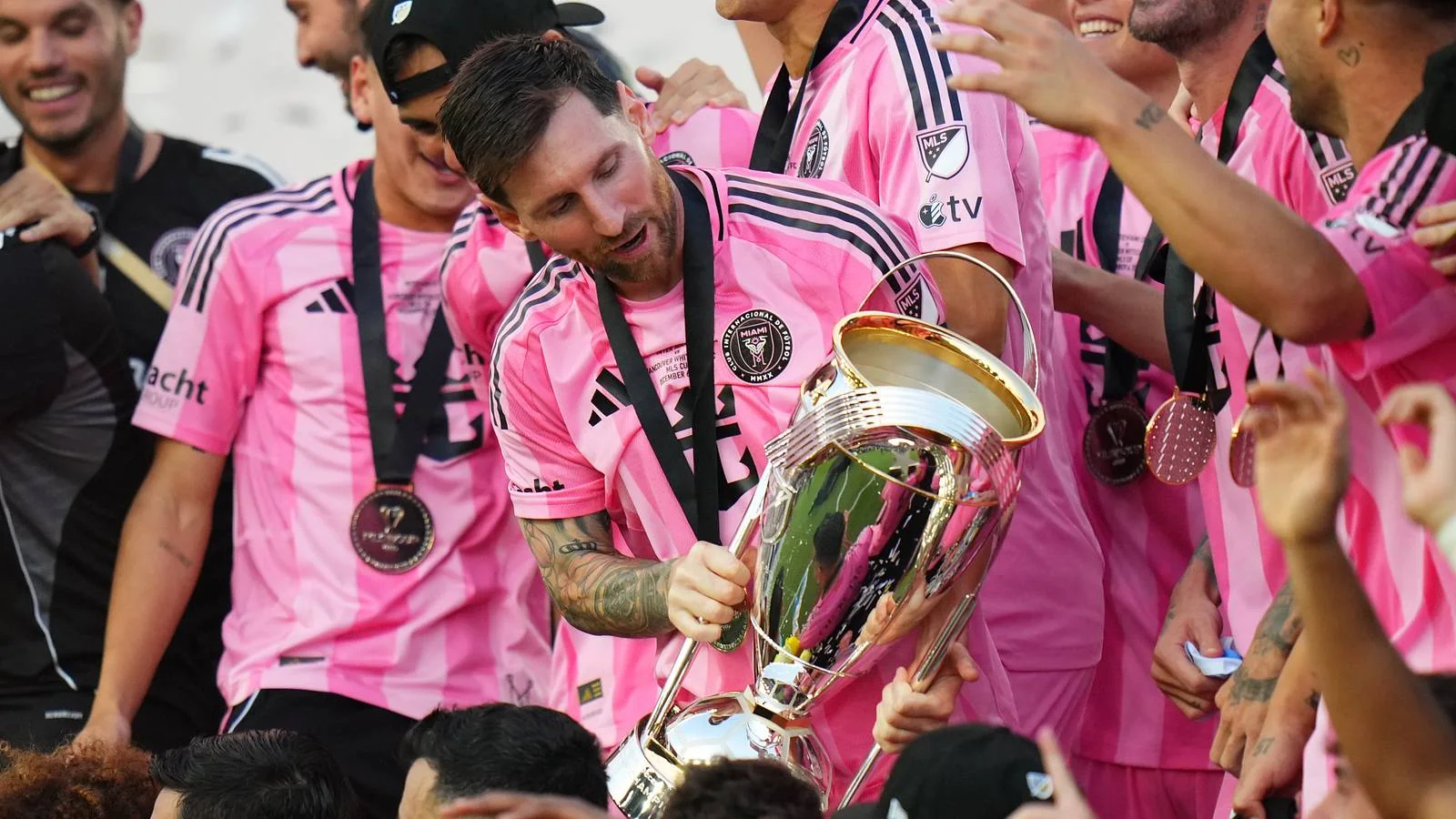
Why not No. 1? The cutoff is after 2025, and three MLS seasons cannot yet equal the accumulated value of Donovan or Moreno. Messi is active, so this is a snapshot rather than a final verdict. Fans following how future postseason results could change that calculation can use our MLS playoffs guide.
4. Chris Wondolowski
Wondolowski turned elite movement, anticipation and repeatability into 171 regular-season goals, the league record through 2025. He won two Golden Boots and the 2012 MVP, when his 27 goals tied the then single-season mark, while becoming the face of San Jose rather than collecting chances on a rotating cast of superclubs. The counterargument is that his team and playoff résumé cannot match the top three. The answer is that no MLS scorer has sustained this level of dependable production for longer.
5. Dwayne De Rosario
De Rosario closes the top five because his career joined spectacular moments to portability. He won four MLS Cups, twice earned MLS Cup MVP and later captured the 2011 league MVP after producing across multiple clubs. His 104 regular-season goals understate his range: he could operate as a forward, attacking midfielder or chance creator and still decide major matches. Wondolowski owns the stronger scoring record, while De Rosario owns the more varied championship portfolio. That tradeoff makes Nos. 4 and 5 exceptionally close.
Together, the top five reveal the ranking's central tension. Donovan and Moreno supply the long championship careers; Messi supplies the greatest compressed peak; Wondolowski supplies unmatched scoring persistence; and De Rosario supplies big-game versatility. Each route can create all-time value, but none receives a free pass for reputation earned outside MLS.
Nos. 6-10: Preki, Etcheverry, Keane, Giovinco and Valeri
6. Preki
Preki's case begins with a distinction only Messi has joined: multiple MLS MVP awards. The Kansas City creator won in 1997 and again in 2003, six years apart, while compiling 79 regular-season goals and 112 assists. His 2000 team won MLS Cup and the Supporters' Shield. Because pre-2005 scoring championships used a points formula rather than today's Golden Boot rules, his era needs context, but his longevity, left-footed invention and two separate peaks travel well across eras.
7. Marco Etcheverry
Etcheverry was the tactical brain of D.C. United's early dominance. The Bolivian playmaker won the 1998 MVP, reached 101 regular-season assists and directed a side that captured three of the first four MLS Cups. Jaime Moreno supplied goals and movement; Etcheverry supplied rhythm and final passes. He lands behind Preki because the latter paired comparable creation with more scoring and a longer individual-award span, but few players have ever controlled a championship MLS team so completely.
8. Robbie Keane
Keane delivered superstar efficiency without treating MLS as a farewell tour. He scored 83 regular-season goals in only 125 matches, won the 2014 MVP and helped LA Galaxy lift three MLS Cups. His sharp movement and combination play made the Donovan-Keane partnership the league's defining attack of the early 2010s. A shorter MLS stay limits his longevity score, yet three titles give him a postseason advantage over nearly every other high-output import.
9. Sebastian Giovinco
Giovinco's 2015 debut remains one of the great individual seasons: 22 goals, 16 assists, MVP and the Golden Boot. He became the first player to lead MLS in goals and assists in the same season, transforming Toronto from a perennial outsider into a credible contender before the club's 2017 title. That peak could justify a higher spot. He stays ninth because his elite MLS window was shorter than Preki's or Etcheverry's and his strongest championship season did not end with the Cup MVP-level role Keane enjoyed.
10. Diego Valeri
Valeri gave Portland both a long-term identity and signature trophies. He scored early in the 2015 MLS Cup final, won that match's MVP award and then reached a new individual level in 2017: 21 goals, 11 assists and league MVP. Unlike a pure scorer, he carried chance creation, set pieces and tempo for years. Giovinco's best season was more explosive, while Valeri offered the deeper single-club body of work. Tenth is the compromise between those two forms of greatness.
This group also shows why the ranking does not simply sort a spreadsheet. Preki and Etcheverry played when assist conventions, roster depth and tactics differed substantially from the Designated Player era. Keane, Giovinco and Valeri faced a larger league and different spending mechanisms. Honors and production establish the case; role, postseason responsibility and sustained influence separate close neighbors.
Nos. 11-15: Rimando, Valderrama, Marshall, Agoos and Vela
11. Nick Rimando
Rimando is the highest-ranked goalkeeper because his value combined volume with championship performance. He finished with 514 regular-season appearances, 223 goalkeeper wins, 154 shutouts and 1,701 saves—all league records at retirement and still atop the completed-2025 historical tables for shutouts. He also won two MLS Cups and was the 2009 final's MVP. The lack of a Goalkeeper of the Year award looks strange, but two decades of shot-stopping and penalty expertise outweigh a single-season ballot gap.
12. Carlos Valderrama
Valderrama made the final pass feel like a main event. His 114 regular-season assists remain an elite career total, and his 26 assists in 2000 still stand as the single-season benchmark through 2025. He won the inaugural-era 1996 MVP and immediately gave the new league a recognizable creative identity. A limited championship résumé keeps him outside the top ten, yet his production must be viewed in an era with fewer teams, rougher travel and far less attacking infrastructure.
13. Chad Marshall
Marshall is the ranking's strongest pure center back. He is the only player to win Defender of the Year three times—2008, 2009 and 2014—and earned four Best XI selections across a long career in Columbus and Seattle. Those honors capture what goals and assists miss: aerial control, positioning and the ability to stabilize different championship-level defenses. Valderrama ranks one place higher because elite creation was easier to quantify and sustained; Marshall nevertheless clears many celebrated forwards once position is valued properly.
14. Jeff Agoos
Agoos collected five MLS Cups across D.C. United and San Jose, but calling him merely fortunate would ignore his central role in two different title environments. He read danger, organized back lines and supplied useful distribution while the league changed rapidly around him. Marshall had the superior individual defensive awards, so Agoos follows him. His edge over Vela comes from repeated championship responsibility over many seasons rather than one overwhelming statistical peak.
15. Carlos Vela
Vela's 2019 is the best regular-season scoring campaign in MLS history: 34 goals, 15 assists, MVP, Golden Boot and the Supporters' Shield for LAFC. The 49 combined goal contributions demonstrate that he was far more than a finisher, while the Shield proves that his peak powered an elite team rather than empty statistics. Why only 15th? Availability and uneven stretches reduce his longevity score, while the players above him supplied either deeper championship repetition or decade-scale positional excellence.
This five-player run is the clearest test of the methodology. A goalkeeper's record book, a playmaker's chance creation, two defenders' structural value and a forward's historic peak cannot share one clean metric. The ranking therefore treats honors and team context as evidence, not decoration. That approach prevents 34 goals from automatically erasing 20 seasons in goal—or five championships from automatically proving that a defender was individually dominant.
Nos. 16-20: Meola, Pope, Martínez, Wright-Phillips and Acosta
16. Tony Meola
No goalkeeper has owned an MLS season like Meola in 2000. He became the position's only league MVP, added Goalkeeper of the Year, recorded 16 shutouts and carried Kansas City to MLS Cup, where he also took match MVP. Rimando ranks higher because his excellence lasted far longer; Meola's unique four-award peak earns him the next goalkeeper slot and proves that a season of preventing goals can be as valuable as scoring them.
17. Eddie Pope
Pope paired individual defensive class with the defining moment of the league's first championship. He scored D.C. United's golden goal in the 1996 final, won three MLS Cups, made four Best XIs and was 1997 Defender of the Year. Injuries kept his overall volume below Marshall's and Agoos's, but his best years set the standard for an American center back. He ranks above the scorers immediately below because his peak anchored a dynasty rather than merely complementing it.
18. Josef Martínez
Martínez's 2018 season fused spectacular scoring with a perfect finish. His then-record 31 regular-season goals brought the MVP and Golden Boot; in the MLS Cup final he scored the winner, assisted the insurance goal and earned match MVP as Atlanta beat Portland 2-0. His case is more concentrated around that extraordinary campaign than the decade-scale résumés above him. Even so, few players have been more responsible for both an expansion club's identity and its championship.
19. Bradley Wright-Phillips
Wright-Phillips was a ruthless specialist whose timing and economy powered the New York Red Bulls. He scored 117 regular-season goals through his MLS career and won two Golden Boots, including 27 goals in 2014. Unlike Martínez, he never capped his best work with an MLS Cup, which is the decisive gap here. His sustained production and repeat awards nevertheless place him above more glamorous imports with shorter or less consistent league careers.
20. Luciano Acosta
Acosta is the only active player in this group, and his position is deliberately frozen after 2025. His 2023 MVP season—17 goals and 14 assists—drove FC Cincinnati to the Supporters' Shield, while his career assist total reached 97 through the completed 2025 campaign. He combines low-center-of-gravity dribbling with durable chance creation across two clubs. A deeper Cup résumé could move him rapidly upward. For context on how the Shield rewards the regular-season table, see our MLS standings guide.
Nos. 16-20 are separated less by talent than by the shape of their value. Meola and Martínez produced concentrated title-winning peaks; Pope supplied dynasty defense; Wright-Phillips supplied repeat scoring; Acosta supplies active creative accumulation. The ranking rewards each route, then uses postseason responsibility and duration to break the tie.
Nos. 21-25: Beckham, Dempsey, Ralston, Jones and Beckerman
21. David Beckham
Beckham's MLS playing career was better than the celebrity shorthand suggests. He produced 18 goals and 40 assists in 98 regular-season matches and helped LA Galaxy win two Supporters' Shields and consecutive MLS Cups in 2011 and 2012. His arrival also became the clearest symbol of the league's Designated Player era. Influence counts only as a tie-breaker here, however; it cannot elevate a 98-match playing résumé above the top 20's larger bodies of MLS work.
22. Clint Dempsey
Dempsey gave MLS two distinct versions of an elite attacker: a fearless young New England talent and a mature Seattle finisher. Across the two stints he logged 186 appearances, 72 goals and 42 assists. His improvisation and competitive edge translated in both eras. Achievements with the U.S. national team and Fulham do not count in this ranking, and his MLS trophy/award ledger is lighter than Beckham's, but his league production comfortably exceeds that of many globally famous arrivals.
23. Steve Ralston
Ralston was the model of dependable wing creation before that role generated weekly highlight clips. He retired with 135 regular-season assists, 76 goals and 378 appearances, repeatedly supplying New England teams that reached the MLS Cup final. The missing championship is a real deduction. His second-place standing on the completed-2025 career assist table nevertheless shows extraordinary productive longevity, not merely attendance, and narrowly lifts him above fellow original-era fixture Cobi Jones.
24. Cobi Jones
Jones spent his entire MLS career with LA Galaxy, making 306 regular-season appearances while contributing 70 goals and 91 assists. He also won two MLS Cups and was an essential bridge from the uncertain launch years to a stable flagship club. Ralston leads in creative volume, while Jones leads in one-club continuity and championships. The ranking gives the statistical edge slightly more weight, leaving Jones 24th without diminishing his foundational importance.
25. Kyle Beckerman
Beckerman claims the final place because defensive-midfield value often hides behind the pass before the assist. His 498 regular-season appearances, 461 starts and 41,164 minutes document remarkable durability, and he captained the Real Salt Lake core associated with the 2009 MLS Cup. Nine All-Star selections reinforce that this was sustained quality, not longevity alone. He lacks the attacking totals and major individual award of those above, but two decades of tempo control and positional discipline beat a shorter burst of fame.
These placements keep the list consistent with its MLS-only promise. Beckham receives credit for what he did on the field and measured structural influence, not for global celebrity. Dempsey receives no imported national-team points. Ralston, Jones and Beckerman receive full credit for the long careers that helped make the league durable. Readers comparing how their clubs performed across seasons can explore our MLS standings history by year.
The Hardest Cuts and How This Ranking Can Change
A top 25 creates unfair-looking omissions by design. The closest goalkeeper cuts were Kevin Hartman, Stefan Frei and Andre Blake. Hartman's longevity earned him a place in MLS's official 2020 “25 Greatest” group, while Blake became the first three-time Goalkeeper of the Year in 2022. Rimando's record-setting duration and Meola's unique MVP/Cup MVP season took the two goalkeeper places here. Blake still has an active opportunity to add the completed-season volume and postseason distinction that this formula rewards.
Darlington Nagbe was the most painful midfield omission. He retired after 2025 with four MLS Cups across Portland, Atlanta and Columbus, demonstrating that possession control can travel between winning systems. Kyle Beckerman received the final place because this scorecard valued his longer run as one club's central organizer and his 498 appearances. That is a judgment call, not proof that Beckerman was universally “better.” Nicolas Lodeiro, Osvaldo Alonso, Brad Davis and Robin Fraser were also serious candidates whose roles or era-adjusted value made simple counting inadequate.
Among attackers, Hany Mukhtar has perhaps the clearest path into a future edition. His 2022 MVP and Golden Boot season delivered 23 goals and 11 assists, accounting for 65.4% of Nashville's goals. David Villa, Thierry Henry, Zlatan Ibrahimović, Carlos Ruiz and Taylor Twellman all supplied peaks worthy of a longer list. They missed because a top-25 spot demanded the right combination of MLS duration, honors, creation and championship responsibility, not merely the most memorable scoring run. Kei Kamara's exceptional career goal total created the opposite dilemma: enormous longevity without the same individual-award or title peak as the selected forwards.
The list will not chase weekly form. Its next full review should come after the 2026 MLS Cup, when 2026 becomes a complete and comparable season. Messi and Acosta can rise; Blake and Mukhtar can enter; another active player can force an entirely new debate. None is guaranteed to move, because added statistics must be weighed with availability, role, awards and postseason contribution.
That update rule is as important as the names. It prevents an August hot streak from being compared with a retired player's full career and keeps predictions out of the factual record. Reasonable readers can change the weights and get a different order. The ranking's claim is not perfect objectivity; it is that every player is judged by the same declared MLS-only standards, with sourced accomplishments and an honest explanation of the close calls.
Comments
Comments are reviewed before publication.
Spam, abusive content, personal information and policy-violating links are not published.
Sign in with Google to comment or reply.
Loading comments…