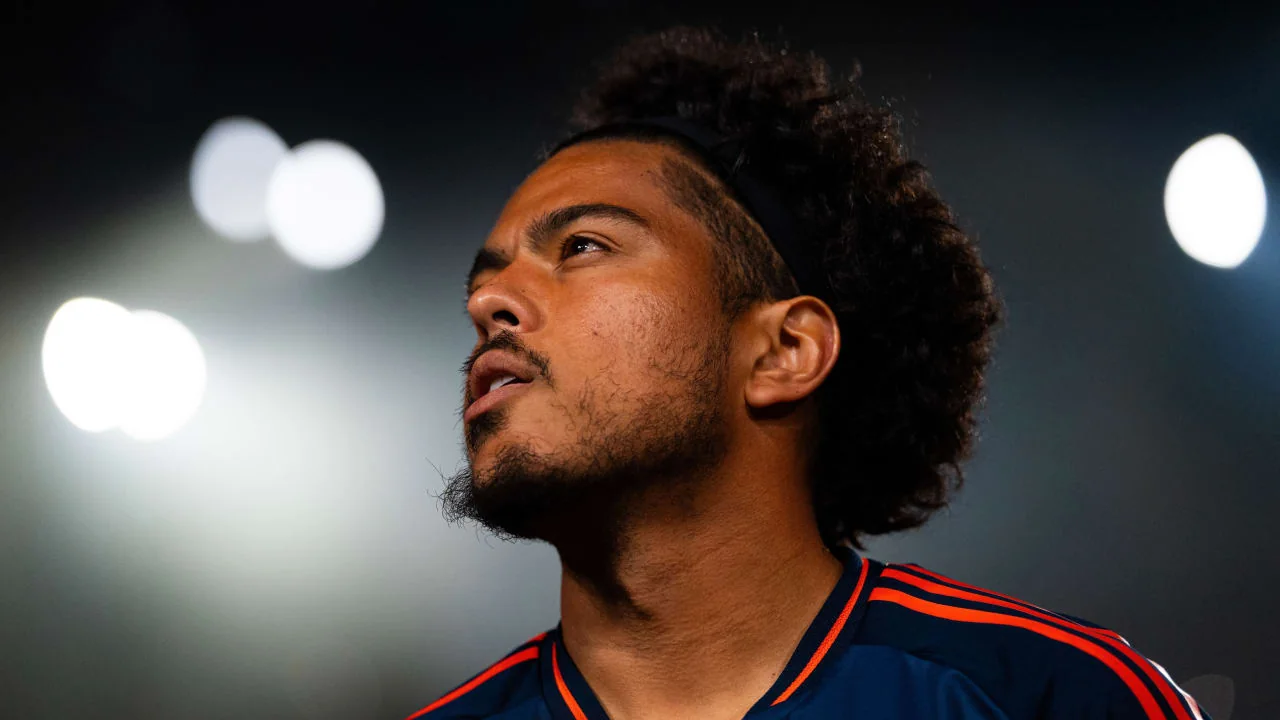
Evander is FC Cincinnati's Brazilian attacking midfielder, a No. 10 whose MLS value comes from creating and finishing chances in the same attack. His route from Portland to Cincinnati made him one of the league's most significant internal acquisitions, but the transfer figure explains only part of the story. His decisions with the ball explain why the investment matters.
Checked on October 11, 2026, this guide follows his MLS development, separates goals from assists and wider competition totals, and examines actual Cincinnati matches that reveal his influence. It is a player-and-role guide, rather than another ranking of the league's most famous names.
Who is Evander, and how did he reach FC Cincinnati?
His full name is Evander da Silva Ferreira. He was born in Rio de Janeiro on June 9, 1998, and Cincinnati lists him as a midfielder and Designated Player wearing No. 10. His senior career began at Vasco da Gama in Brazil, continued at FC Midtjylland in Denmark, and then brought him to MLS with Portland before Cincinnati.
That route gave him experience in several kinds of competition before his MLS move. More useful than treating the list of clubs as a badge of prestige is asking what he does with that experience: recognizing an opening, choosing between a pass and a shot, and adjusting to the pressure around him. Those questions connect his background to his present role.
A No. 10 shirt is a familiar symbol, but it does not fix a player's position on every possession. Evander may need to receive nearer midfield to help move the ball, or farther forward to make the final decision. The important distinction is his attacking responsibility. He supplies more than the final finish expected of a center forward.
The Portland-to-Cincinnati move
Cincinnati announced the acquisition on February 17, 2025. It was a cash-for-player trade from Portland for $12 million, with up to $150,000 in conditional performance incentives and a retained future sell-on percentage. His announced Cincinnati contract ran through 2027 with a club option for 2028. The option should be read as a possibility, rather than an already exercised extension.
The transaction was within MLS, even though he had originally arrived from Denmark. Those are two separate moves. Portland confirmed its acquisition from Midtjylland on December 5, 2022, ahead of the 2023 season; the Cincinnati trade came after his two Portland playing seasons. An old Portland player page can remain searchable after a transfer, so its historical club heading should not override the newer official announcement.
For Cincinnati, the sporting question was whether an established MLS creator could take on responsibility immediately in a new attacking group. A large trade payment expresses how strongly the club valued that possibility. It does not establish his salary, guarantee a trophy or explain every tactical choice. The matches provide the evidence for those sporting judgments.
Evander's MLS goals and assists need the right context
For a playmaker who also shoots, goals and assists need to be read together. The table covers completed MLS regular seasons only. It excludes playoff and cup production, so every row answers the same question despite the change of club.
| Season | Club | Appearances | Goals | Assists | Goals plus assists |
|---|---|---|---|---|---|
| 2023 | Portland | 27 | 9 | 5 | 14 |
| 2024 | Portland | 28 | 15 | 19 | 34 |
| 2025 | Cincinnati | 32 | 18 | 15 | 33 |
What he produced in Portland
His first Portland season produced nine goals and five assists. The following year brought 15 goals and 19 assists, a much stronger combined output with only one additional league appearance. Portland's sale announcement recorded 24 goals and 24 assists across his two league seasons, showing why Cincinnati was acquiring an established MLS performer rather than relying solely on his European record.
The 2024 season also brought MVP-finalist and Best XI recognition. Those honors describe how his performance was assessed across the league; they are separate from the arithmetic in the table. A goals-plus-assists total can support an evaluation, but it does not automatically award MVP or tell you how much defensive work a player contributed.
His improvement also invites a more specific football question: how often did Portland put him in a position to make the final decision? An attacking midfielder's output depends partly on whether he receives facing goal, whether runners offer contrasting options, and whether the team sustains pressure after an initial pass. The raw increase establishes production; the match footage helps explain the situations behind it.
His first Cincinnati season
Evander finished the 2025 regular season with 18 goals and 15 assists. Cincinnati's Best XI announcement described the resulting 33 contributions as matching its club record, and he was again selected for the league's Best XI. The numbers demonstrate that his ability to score and provide survived the change of team.
The club's year-end awards account used a different number: 22 goals across the wider club season, alongside its MVP and Golden Boot awards for Evander. That total should not replace the 18 in an MLS regular-season comparison. A club Golden Boot award and the league's Golden Boot race also have different fields of competitors.
There is another limit to simple addition. Goals plus assists is a useful individual summary, but a single team goal can contribute to more than one teammate's record. Adding every player's contributions together therefore does not produce the team's goals total. Equally, comparing Evander's 34 in Portland with 33 in Cincinnati cannot by itself prove that he became less effective: the teammates, opposition, responsibilities and playing opportunities were different.
For the wider league context, consult our MLS scoring and assist guide. For Evander's development, keep the completed-season filters above in view. They provide a stable baseline before you turn to the changing 2026 match record.
How Evander connects Cincinnati's midfield and attack
One of the most revealing Cincinnati accounts came after the July 5, 2025 win over Chicago. Evander scored and supplied Kévin Denkey in a 2–1 victory, while the club's report discussed the effort to involve him more directly in the buildup. The point was to give its strongest creative player useful possession more often, rather than wait for an isolated piece of brilliance near goal.
Denkey's run matters in that relationship. A pass that splits defenders needs a receiver offering the correct direction and timing. If the striker runs before Evander can control the ball, the opening may close; if the run comes too late, the defense may already be set. The creative player and the finisher solve the same problem from different positions.

The club's early-2026 assessment made the connection an explicit area for improvement. Both players had been productive individually in 2025, yet Cincinnati wanted their partnership to function more consistently. That is a useful reminder that two strong individual seasons do not automatically make a smooth attacking unit. Passing routes, complementary movement and the players surrounding the pair can change the quality of their opportunities.
To understand Evander's work, begin with his first touch. When he receives facing forward, he can threaten a shot or a pass immediately. When he receives with a marker close behind, he may need a teammate to offer a short return option. Those different situations change how quickly the attack can progress. A highlight of the final pass often omits the earlier movement that allowed him to face the goal.
His shooting threat adds another decision for defenders. If a midfielder allows him space outside the box, he may have time to strike. If the defender steps out, a passing lane can open behind that pressure. This is a tactical explanation of the dilemma an attacking midfielder creates, rather than a claim that every Cincinnati opponent reacts in the same way.
There is also a tradeoff in where he receives. Coming deeper can help the team get through pressure, but it puts him farther from the final action. Staying high can preserve a dangerous finishing position, but it requires others to bring the ball to him. The team needs to connect those phases. That is why discussions of Evander's role should include midfield support and the striker's movement, not just his own shots.
Watch a complete sequence from Cincinnati's first forward pass to its final chance. Identify who helped Evander receive, which defender he drew toward the ball, and which teammate moved into the resulting space. Those observations make his No. 10 role visible even when he does not score or receive an official assist.
The 2026 matches that show his influence
Evander won MLS Player of the Month for May and then for the combined July–August period in 2026. Those awards recognize performance over defined windows. They are useful evidence of sustained influence, but they should not be turned into a prediction of the season's MVP winner or a guarantee that Cincinnati will win a particular trophy.
A decisive May scoring and creative run
The club's May account recorded 12 goal contributions across five games. The individual performances show why the total matters: a hat trick in a 3–2 win at Chicago, two assists in a 3–3 draw with San Diego, and two goals plus three assists in the 6–2 victory over Orlando. Finishing and chance creation were both prominent.
The Orlando game is particularly revealing because five contributions in one match require several kinds of attacking involvement. A playmaker may choose to release a teammate on one possession and attack the finish himself on the next. An opponent cannot solve that problem simply by deciding that the No. 10 is always a passer or always a shooter.
Different results also change how the same kind of production feels. Two assists can support a valuable attacking performance in a draw; a hat trick can decide a narrow win. To evaluate Evander, keep both the contribution and the match result in view. One describes his direct output, while the other describes what the full team achieved.
The month offers a useful comparison with his completed-season record. His scoring and assisting ability had already been established in Portland and in his first Cincinnati year. This run showed that the same combination could reappear in a concentrated period, against different opponents and in different game states. It does not prove that such an exceptional month can be repeated indefinitely.
Late winners and the limits of individual brilliance
On August 19, Evander scored in stoppage time to give Cincinnati a 2–1 win over New York City FC. That was a decisive moment, but the club's account also discussed the chances conceded and Roman Celentano's saves. The winner should not erase the earlier defensive work that kept Cincinnati in position to take the points.
Against Seattle on August 22, Evander scored again, yet Cincinnati finished with a 1–1 draw after conceding late. The different outcomes are instructive. In one game a late attacking action changed the result; in the next, an early goal did not make the lead safe. A star midfielder cannot independently control every transition, defensive decision or finishing opportunity afterward.
The September 9 loss at Philadelphia supplies a less flattering but necessary part of the record. Cincinnati lost 5–0 after Obinna Nwobodo's early dismissal. Evander also received a yellow card that led to a suspension for the following match. This was a dated disciplinary event, not a statement that he remains suspended now. It shows why availability and discipline belong in an assessment alongside goals and assists.
These examples should be read together. The late winner demonstrates his ability to change a close game; the Seattle draw demonstrates the limits of one goal; the Philadelphia defeat demonstrates how team circumstances can overwhelm attacking quality. A useful player guide includes all three kinds of evidence instead of building a career portrait exclusively from winning highlights.
For the current team picture, use the MLS standings and check their update time. For Evander's contribution, use the dated match sequence. Keeping the two views connected gives you a firmer basis for judgment than assuming that a high individual output must correspond to a high league position.
How to judge Evander beyond a goals leaderboard
A goals leaderboard answers who has scored most within its filter. Evander's role needs a wider evaluation because he is also responsible for helping other players reach the finish. Our current MLS player ranking considers that broader question; this guide supplies the career and tactical context behind his place in the conversation.
Advanced figures need equally clear labels. Cincinnati's 2025 Best XI account recorded him at +9.17 goals above expected, the league's leading figure in that measure. Expected goals supplies a model-based baseline for the chances taken. Exceeding it describes that season's finishing relative to the baseline; it cannot promise the same surplus next season or explain every part of his creative work.
For your own assessment, separate three questions. How well does he turn possession into a dangerous next action? How effectively does he finish his shooting opportunities? How consistently does the team create situations in which he can do either? The first two concern his decisions and execution; the third concerns the attacking structure and the players around him.
Use a complete match alongside a dated statistics page. Confirm regular season versus playoffs, check minutes as well as appearances, and avoid treating a stale widget as the latest update. Then examine a few sequences that did not become goals. A well-chosen pass can be followed by a missed finish, and an important supporting touch can precede another player's official assist.
Evander's MLS record supports his reputation as both scorer and creator. The move to Cincinnati, his connection with Denkey and the actual 2026 results show how that ability operates inside a team. Following those connections gives you a more complete view of the player than counting only his most spectacular finishes.
Comments
Comments are reviewed before publication.
Spam, abusive content, personal information and policy-violating links are not published.
Sign in with Google to comment or reply.
Loading comments…