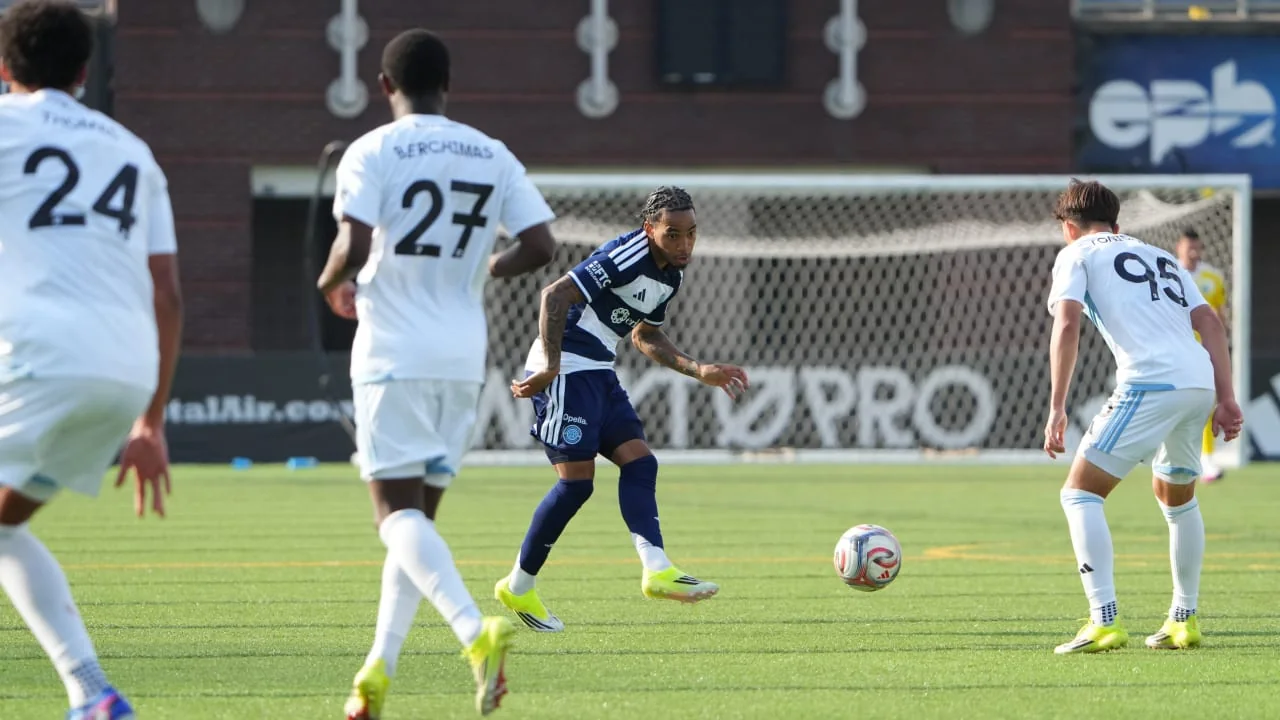
MLS NEXT Pro is a professional men's soccer league that connects academy development with senior football. In 2026 it has 30 clubs across the United States and Canada, including MLS second teams and three independent clubs. Its regular-season draws lead to penalty shootouts for an extra standings point, and its player pool can include professionals, academy players and first-team loanees.
Those details explain why a match listing marked “II” can be interesting without being an MLS first-team fixture. This guide, checked on October 11, 2026, identifies the teams and explains the points, player categories and calendar changes that matter when you start following the competition.
What MLS NEXT Pro is, and where it fits
Major League Soccer launched MLS NEXT Pro in 2022. It is a separate professional competition, classified at Division III in the U.S. system. MLS is Division I. That distinction describes the league's position; it does not mean that winning the NEXT Pro championship automatically promotes a club into MLS. A player can progress to an MLS first team through a contract, loan or another permitted roster mechanism, while the club remains in its own competition.
The similar names can hide three different things. MLS is the senior league where clubs such as Seattle Sounders and Philadelphia Union play. MLS NEXT is the youth development platform, which includes the Homegrown and Academy divisions. MLS NEXT Pro is the professional league between youth football and first-team competition. An MLS NEXT academy tournament is therefore not a NEXT Pro league match, and a youth club's membership does not establish that it fields a professional NEXT Pro team.
This matters when searching for a player. An academy profile explains a young player's development background. A NEXT Pro roster shows the team in which he may face professional opposition. An MLS roster identifies his first-team registration. The names can overlap, but those records answer different questions. The word “Pro” identifies the competition; the participant's individual status still needs checking.
The league also has clubs with their own identity rather than an MLS reserve-team name. Supporting Chattanooga FC, Carolina Core FC or CT United FC means following an independent professional club in this same league. Their results count in the same conference competition as results earned by affiliated second teams. For the broader national picture, our U.S. soccer league hierarchy guide explains how the divisions fit together.
All 30 MLS NEXT Pro teams in 2026
The 2026 field comprises 27 MLS-affiliated teams and three independent clubs. Connecticut's CT United FC is the newest member, giving the Eastern Conference sixteen teams. The Western Conference has fourteen. The directory below groups clubs by conference and then alphabetically; it is not a standings table.
Eastern Conference: affiliates and independent clubs
| MLS NEXT Pro team | MLS affiliate or status |
|---|---|
| Atlanta United 2 | Atlanta United |
| Carolina Core FC | Independent club |
| Chattanooga FC | Independent club |
| Chicago Fire FC II | Chicago Fire FC |
| Columbus Crew 2 | Columbus Crew |
| Crown Legacy FC | Charlotte FC |
| CT United FC | Independent club |
| FC Cincinnati 2 | FC Cincinnati |
| Huntsville City FC | Nashville SC |
| Inter Miami CF II | Inter Miami CF |
| New England Revolution II | New England Revolution |
| New York City FC II | New York City FC |
| Orlando City B | Orlando City SC |
| Philadelphia Union II | Philadelphia Union |
| Red Bull New York II | Red Bull New York |
| Toronto FC II | Toronto FC |
Crown Legacy and Huntsville show why looking only for an “II” suffix misses affiliated clubs. Their names identify Charlotte's and Nashville's development teams respectively. Conversely, the three independent clubs have no MLS first-team parent in this directory. Chattanooga and Carolina Core were already part of the competition before CT United's inaugural 2026 season.
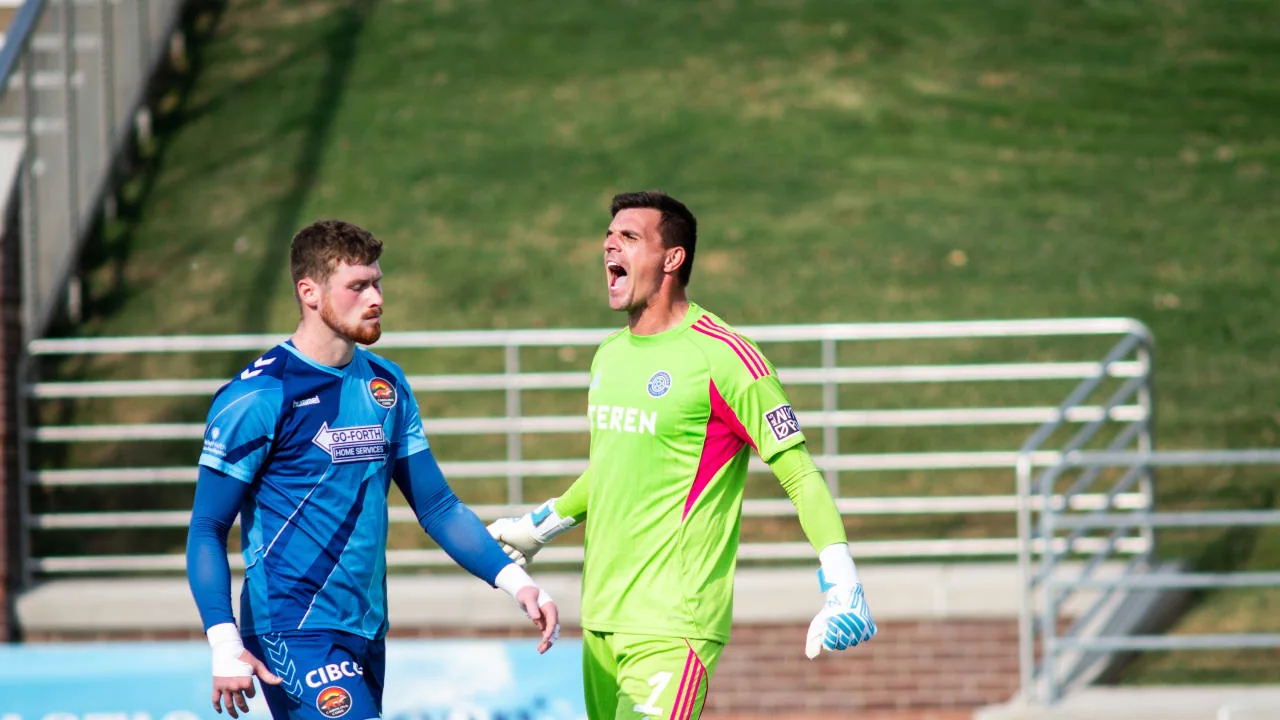
Within the East, CT United joined the Northeast Division in 2026 and Chicago moved to the Southeast. Division membership influences opponents, but the club's broader conference is also important for postseason qualification. A new fan can start with the conference list without treating every other club as a team it must face equally often.
Western Conference: the fourteen-team field
| MLS NEXT Pro team | MLS affiliate |
|---|---|
| Austin FC II | Austin FC |
| Colorado Rapids 2 | Colorado Rapids |
| Houston Dynamo 2 | Houston Dynamo FC |
| LAFC 2 | Los Angeles FC |
| MNUFC2 | Minnesota United FC |
| North Texas SC | FC Dallas |
| Quakes II / San Jose Earthquakes II | San Jose Earthquakes |
| Real Monarchs | Real Salt Lake |
| Sporting Kansas City II | Sporting Kansas City |
| St Louis CITY2 | St. Louis CITY SC |
| Tacoma Defiance | Seattle Sounders FC |
| Timbers2 | Portland Timbers |
| Ventura County FC | LA Galaxy |
| Whitecaps FC 2 | Vancouver Whitecaps FC |
All fourteen Western clubs are affiliated with MLS teams. Familiar first-team brands do not always appear in the second team's name: North Texas is Dallas's affiliate, Real Monarchs belongs to the Real Salt Lake pathway, and Tacoma is Seattle's second team. Ventura County FC is the Galaxy affiliate, while LAFC 2 belongs to LAFC; they are separate clubs in this competition.
San Jose's team returned to its Quakes II identity for 2026 after its two-year commercial partnership with The Town FC ended. Some older pages and directory text still show The Town FC. That is an outdated label for this team, not an additional league member. Searching both names can help locate historical reports, but current fixtures should be checked under San Jose Earthquakes II or Quakes II.
How points and penalty shootouts work
A NEXT Pro regular-season match has two possible stages: the football played through regulation and, if that finishes level, a penalty shootout. The standings reward a regulation victory more heavily than a shootout victory. Describing both simply as “wins” hides an important difference.
A regulation draw is worth one or two points
| Your team's outcome | Standings points |
|---|---|
| Win in regulation | 3 |
| Draw in regulation, win shootout | 2 |
| Draw in regulation, lose shootout | 1 |
| Lose in regulation | 0 |
Both teams keep one point for a regulation draw. The shootout winner collects one additional point, making two in total. The losing team still leaves with one. A shootout win therefore does not earn the three points available for winning before the penalty competition.
For a real 2026 example, CT United drew 2-2 at Huntsville City on May 30 and won the subsequent shootout 3-0. Connecticut earned two standings points, while Huntsville earned one. The official report records the drawn match score and the penalty result separately. On September 4, Carolina Core likewise earned two points after a 2-2 draw with New England Revolution II and a 4-2 shootout victory.
Here is a hypothetical five-match record: two regulation wins, one shootout win, one shootout loss and one regulation loss. The calculation is six points plus two plus one plus zero, giving nine points. Counting the three occasions on which the team beat its opponent, including the shootout, as three ordinary wins would produce the wrong total.
Reading the standings without counting shootout goals
A display may separate shootout wins and losses or group the regulation draws in a draw column and identify bonus points elsewhere. Read its legend before reconstructing a record. The relevant arithmetic is three times regulation wins, plus two times shootout wins, plus shootout losses. Games played must include every outcome once.
The May 30 match illustrates a second trap: adding CT United's three successful penalties to its two regulation goals would incorrectly turn a 2-2 game into a 5-2 score. The shootout is a separate contest for the extra point. Its conversions are not additional match goals to add to that game's goals-for or goals-against totals, and the scorer's regulation goal tally must not be inflated by them.
For position in the table, use points and the official league's ordering rather than an informal combined “wins” figure. The league's published rules distinguish regulation wins from shootout wins in its tiebreaking framework. If clubs are level, consult the current official standings and season guidance before assuming that a better goal difference alone settles the order. A penalty shootout resolves a particular match's extra point; a standings tiebreak resolves equal totals across the season.
Who can play, and how the development pathway works
The league's development purpose describes an opportunity, rather than one uniform type of player. A team sheet can bring together footballers at different career stages. To understand a prospect's progress, separate his contract, his registration and the matches in which he actually plays.
Professional contracts and academy appearances
The 2026 NEXT Pro rules allow both professional and amateur players. Professionals execute a contract with their NEXT Pro club. An academy player's appearance in the competition therefore does not, by itself, establish that he has signed that professional agreement. Look for the signing announcement and its stated contract category instead of treating the phrase “professional debut” as a complete contract record.
Philadelphia's Cavan Sullivan provides a useful historical example. The Union's May 9, 2024 announcement confirmed a first-team Homegrown contract through 2028 and noted that he had already appeared for Union II. The appearance and the signing were separate milestones. Our Cavan Sullivan development guide follows that specific progression in more detail.
Roster limits are not an under-23 age restriction
For 2026, the overall active-roster ceiling is 35 players. Within that ceiling, up to 30 slots may be professional and up to eleven may be amateur. Those category limits are not permission to add them together into a 41-player active roster. A maximum of five youth academy players per team can be on the field in an official match.
There is no league age limit, so NEXT Pro is not an under-23 competition. It also has no salary cap and no league minimum or maximum player compensation. That flexibility does not remove the roster ceiling or imply that every participant earns the same amount. A development environment can include adults as well as teenagers.
Moving between a second team and MLS
A first-team contract is different from a temporary call-up. For example, Minnesota's January 2026 signing of goalkeeper Kayne Rizvanovich established an MLS Homegrown agreement through 2027, with options through 2029. He had played seventeen regular-season and playoff matches for MNUFC2 the previous season. The announcement documents a contract progression; it does not promise a particular number of future MLS starts.
Ordinary MLS affiliate short-term agreements have their own 2026 limits. Eligible affiliate players aged 25 or younger can receive up to four agreements of up to four days each. They can be included on up to four MLS league-season match rosters but ordinarily appear in no more than two such matches. Off-Roster Homegrown players are a separate category, eligible for up to six league-season appearances through short-term call-ups. International-player restrictions and other conditions still apply.
For a match after the October 9 roster freeze, ordinary short-term call-ups are also more restricted: the permitted number per MLS league-season match falls from four to one, with Extreme Hardship provisions separate. A strong NEXT Pro performance cannot bypass those registration requirements. Check the club's announcement and the relevant roster category before assuming a player is available to the first team.
When judging development, minutes and role add context that a contract headline cannot supply. A substitute appearance, a run of starts and a new position represent different experiences. Follow the player's match records in each competition separately, then ask whether he is gaining the responsibility needed for his next step. The pathway offers opportunities; the individual evidence shows which of them he has actually taken.
The calendar is changing after the 2026 season
The 2026 regular season began on February 27 and ended on Decision Day, September 20. Each club's schedule comprised 28 matches, split evenly between fourteen home and fourteen away, within a 420-match league program. NEXT Pro continued during the World Cup rather than adopting the MLS first-team pause. It is a separate schedule, even when parent and second teams share a badge.
For future planning, the league's August 27 announcement establishes a different sequence:
| Competition period | Announced structure |
|---|---|
| 2027 Sprint Season | Fourteen regular-season matches from mid-February through late April; four playoff rounds, with the Cup in late May. |
| 2027-28 full season | Twenty-eight regular-season matches beginning in July 2027; a winter break, followed by the second half and playoffs, ending with the Cup in June 2028. |
The Sprint Season is a transition competition with the weight of a traditional season, rather than an extended preseason. The subsequent full season crosses two calendar years. The announced first-half window is mid-July to mid-December, followed by a winter break and a second-half window from early February to early May. The Cup is planned for early June.
These are announced windows, not a complete fixture list. They establish the sequence but do not supply every opponent, venue or kickoff time. The league intends the new calendar to align the MLS, NEXT Pro and MLS NEXT player pathway from 2027-28; individual roster eligibility still needs its own check.
Season labels will become especially important for statistics. “2027” can identify the short Sprint competition, while “2027-28” identifies the full season beginning later that year. Record the competition period alongside goals, appearances and team points. Comparing an unlabelled total from fourteen scheduled matches with one from twenty-eight can make a player's production appear to change for reasons that partly reflect the available games.
How to follow a team through the postseason
Start with the complete second-team name, then follow its own schedule, standings and roster. That habit connects the league's development stories with the actual competition instead of mixing them with the parent club's MLS matches.
The 2026 playoff qualification bridge
Eighteen clubs enter the 2026 postseason, but only sixteen reach the Conference Quarterfinals. Seven teams qualify directly from each conference: the two division champions and the next five teams by points. The eighth and ninth seeds meet in a Play-in Round, hosted by the eighth seed. Each winner becomes the eighth quarterfinal seed in its conference.
The actual 2026 play-in date is October 11. The tournament then uses its Pick-Your-Opponent process in the Conference Quarterfinals and Semifinals, before the Conference Finals and MLS NEXT Pro Cup. The Cup's announced window is November 6-8. This championship belongs to NEXT Pro, distinct from the MLS first-team postseason.
Our 2026 MLS NEXT Pro playoff guide explains opponent selection, pairings and dated results. Use that detailed bracket coverage alongside the points explanation here: reaching a seed and selecting an opponent are different steps.
Finding the right fixtures, results and players
For 2026, the league announced live, free matches worldwide through OneFootball and free live broadcasts on MLSNEXTPro.com, including the playoffs and Cup. Our MLS NEXT Pro viewing guide explains how to find the official streams and replays. The senior club's MLS television listing is not a substitute for its second team's match link.
Use the official NEXT Pro schedule for fixtures and completed scores, and check the timezone shown on a listing before setting a reminder. The league club directory supplies team-specific links, while its statistics portal separates player and club leaders. Current club reports can resolve an old alias or a result whose regulation and shootout scores appear together.
For a player you want to track, keep the competition and season beside each appearance: academy, NEXT Pro or MLS; 2026, the 2027 Sprint, or 2027-28. Add the starting role and minutes when available, then check contract announcements separately. That small record makes it possible to follow both the team's points race and the player's development without confusing a match appearance with a new first-team agreement.
Comments
Comments are reviewed before publication.
Spam, abusive content, personal information and policy-violating links are not published.
Sign in with Google to comment or reply.
Loading comments…