
Lionel Messi remains Inter Miami's captain and a central figure in its attack. His final Argentina appearance on October 6, 2026 ended his international career; it did not announce retirement from club football. Understanding his Miami role requires three separate questions: where he contributes on the field, what the latest completed match demonstrates, and what is actually confirmed about the next match.
This guide is current through October 11, 2026. It focuses on those questions rather than repeating a career biography or a season-by-season goals table. A player can be under contract, absent from an injury list and still not start a particular game. Equally, an old report about an injury does not establish his current condition.
Messi remains Inter Miami's captain after Argentina retirement
Inter Miami's official account of Argentina's October 6 farewell against Benin describes Messi as the club captain. Argentina won 3-0, and the club directed supporters toward his remaining Miami commitments. The change concerns the national team. It leaves the club relationship intact, so headlines about retirement need to be read with their full context.
For a Miami supporter, that distinction changes the right question. Asking whether Messi has retired altogether produces an inaccurate picture of an active club player. Asking whether he is available for Miami's next fixture requires match-specific information. Neither a farewell ceremony nor an emotional international headline supplies that information on its own.
There is also a difference between a possible future effect and a confirmed present fact. Removing national-team matches from a player's calendar may reduce one source of travel and competition demands. It does not prove how a club coach will manage training, recovery or selection. No fixed increase in appearances or minutes should be inferred from the international decision.
What his contract confirms
Inter Miami announced Messi's contract extension on October 23, 2025, stating that it runs through the 2028 MLS season. That is the relevant official commitment. The original 2023 signing announcement described a deal through 2025; finding that older page in search does not mean his current agreement has expired.
The contract establishes his continuing place in the club's plans, while the lineup establishes his place in a specific game. Those are different kinds of evidence. A multi-season agreement cannot guarantee a start, a full match or even inclusion in every matchday squad. Fitness, eligibility and the coach's decisions still have to be assessed for the fixture being discussed.
Read the extension's historical details with the same care. Career totals and trophy counts in a signing announcement describe the moment it was published. They are useful background, but they should not be carried forward as live statistics. A contract term can remain valid while an appearance total on the same page has become outdated.
Speculation about a later return to another club belongs in a separate category until an official transaction establishes it. A commentator's preferred destination, a childhood connection or a reported ambition does not supersede Miami's announced agreement. The practical starting point for following Messi today remains his active club, Inter Miami, rather than a hypothetical next move.
How Messi's attacking role works alongside Miami's other forwards
MLS lists Messi as a forward. That is a useful starting label, but it does not mean he spends every possession waiting on the last defender's shoulder. To understand his contribution, look at where he receives the ball, who moves ahead of him and whether his next action is a pass, a carry or a shot.
A dated example helps. In its analysis of Miami's May 17 victory over Portland, MLS described a narrow attacking trio with Berterame in the middle, Suárez to the left and Messi to the right. That was an account of a specific period under Guillermo Hoyos, rather than a promise that the same arrangement would remain unchanged through October.
A forward who can also organize the attack
Messi scored and assisted Berterame in that Portland match. The move for the assist involved Suárez, Messi and Berterame in sequence. It demonstrates why the categories of scorer and creator overlap: the player who threatens to finish an attack can also supply the teammate who finishes it.
When watching a similar combination, follow the defender's decision. A defender stepping toward the ball carrier may leave a passing route behind him. A defender protecting that route may allow the carrier to advance. Messi's value in such a situation is not explained simply by which spot an app assigns him on a formation diagram.
That is a way to read the action, rather than a claim that every Miami possession follows the same pattern. Opponents can deny central access, force an attack toward the touchline or reduce space around the box. The interesting question is how Miami responds when the first route closes, and whether Messi receives the ball with a usable next option.
Why Suárez and Berterame change the picture
Suárez and Berterame can coexist instead of representing a compulsory either-or choice. MLS's April analysis considered how two center forwards could alternate between occupying defenders, connecting play and attacking space. Its point was a developing partnership, not a permanent selection rule.
For Messi, two nearby attackers can provide different passing targets. The important detail is whether they move into different spaces at the right moment. Two famous names standing in the same lane do not automatically make an attack more effective; coordinated movement can make the next decision easier for the player on the ball.
The October 10 lineup again included all three. Berterame supplied both Suárez goals before Suárez assisted Messi. That example supports looking at the whole attacking relationship rather than treating Messi as an isolated attraction. It also cautions against assigning a teammate a single function: the scorer in one sequence may become the provider in another.
For a closer examination of that partnership, the Suárez MLS career and role guide follows the center forward's contribution. Here, the focus remains on how those connections affect what to watch when Messi plays.
What the October 10 appearance tells us
Four days after his Argentina farewell, Messi started Miami's October 10 home game against D.C. United and scored twice in a 4-0 win. That completed appearance is stronger evidence of club participation than speculation prompted by the national-team ceremony. It establishes what happened that night; it cannot settle selection for a later fixture.
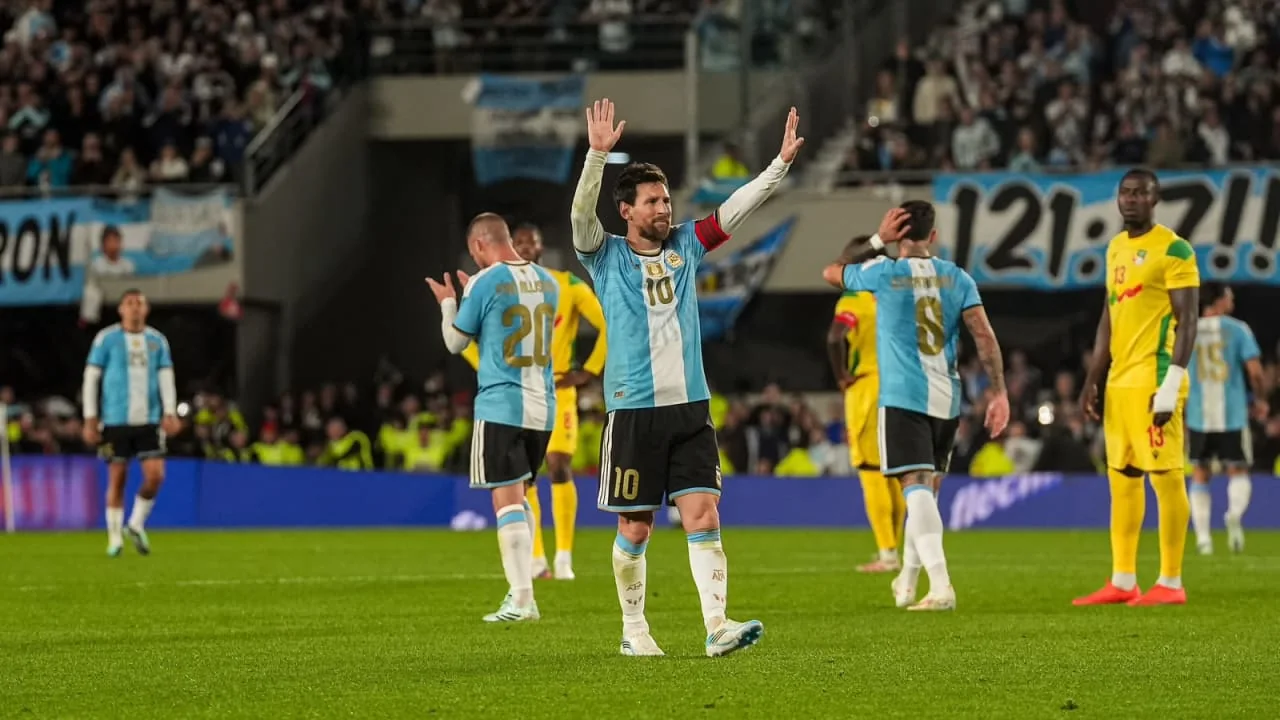
The two goals offer a useful contrast. At 47 minutes, he finished a ball supplied by Suárez. At 60 minutes, he received from Rodrigo De Paul and advanced past defenders before scoring. One sequence made use of a teammate's delivery; the other required Messi to carry the attack toward the finish himself.
Watch those actions as examples of different attacking problems being solved. The first asks whether a player reaches the right area when a teammate can provide the ball. The second asks whether the receiver can move past resistance and create a shooting position. Grouping both simply as goals loses the distinction between the movements that produced them.
The match also supplied an update on the team's current context. MLS's reaction identified Cristian “Kily” González as Miami's head coach. References to earlier coaches in spring coverage are historical, even where the same forwards appear in both reports. A useful account of Messi's role should retain the date attached to its tactical examples.
This was a completed regular-season game, not an upcoming Miami-D.C. fixture. The club's recap named New York City FC at home on October 14, 7:30 p.m. Eastern Time, as its next match. That announcement identifies Miami's next scheduled opponent and kickoff; it does not announce Messi's starting status for that Wednesday.
Reading Messi's numbers without mixing competitions
Following the October 10 match, MLS reported Messi at 23 goals and 13 assists in the 2026 league campaign. Those are dated league figures. They should not be presented as a completed season total or combined with a national-team farewell contribution to produce a larger Miami number.
The first step in a comparison is identifying the competition. Regular-season MLS, MLS Cup Playoffs, Leagues Cup and other club tournaments represent different sets of matches. A headline referring to all competitions can be correct while disagreeing with a regular-season table. The difference needs to be explained before either source is called inaccurate.
The second step is checking the cutoff. A recap written after a Saturday game may include goals that a cached preview or player table has not yet incorporated. Use the date and completed fixture to reconcile the figures. Do not add the new goals yourself if the updated total already includes them.
For the completed 2023–2025 league record, our Messi MLS goals by season guide separates the relevant scoring categories. This article uses the current campaign only to describe his present contribution, leaving the historical tables in their dedicated guide.
Creation matters alongside finishing
The assist figure provides another part of the picture. It shows that finishing is not the only recorded outcome of Messi's attacking involvement. Even so, goals plus assists cannot describe every useful action: a pass before the final pass, movement that opens a lane or a carry that changes the defense may matter without earning either credit.
When reviewing a match, compare the numbers with the sequences that produced them. Did he receive with a runner already moving? Did a teammate's movement make the shot possible? Was a dangerous pass followed by a missed chance? Those questions help explain performance without inventing advanced statistics that have not been checked.
Minutes also matter when comparing players or periods. A lower raw total over fewer appearances can answer a different question from a full-season total. Where a reliable minutes figure is unavailable, leave the rate uncalculated. A transparent description of what was observed is more useful than a precise-looking ratio built from incompatible match sets.
How to verify Messi's availability for a particular match
There is no reliable permanent answer to “Will Messi play?” without identifying the match. The latest verified appearance is October 10. For the next fixture, use information published for that fixture, and separate health information from eligibility and selection. Each addresses a different reason a player might appear or miss out.
Start with a dated official report
At the October 11 check, MLS's Player Availability Report was updated through Matchday 29. Miami's listed absences were Yannick Bright with a foot issue and Facundo Mura with an ankle issue; Messi was not listed. That is an accurate description of that report, not medical clearance for October 14 or a guarantee of a start.
Check the report's update label before reading the player entry. A list covering the previous round can be relevant background while still being too old to answer a new match question. Also read any fresh club statement or coach update in full: an expectation to train, a return to training and a confirmed matchday decision are different statements.
Older search results need especially careful treatment. A May injury article describes a past concern, not his October condition. A photograph of Messi at training can establish that he was present in the photographed session; it cannot establish a diagnosis, the intensity of his participation or the medical staff's recommendation.
Medical availability is also separate from disciplinary eligibility. MLS links a disciplinary summary alongside its availability report. If the concern is suspension rather than injury, consult the applicable disciplinary information. An injury list should not be stretched into an answer about every possible absence.
Separate starting, bench selection and actual minutes
The official matchday lineup is the clearest published evidence of the coach's intended starting team. Miami's October 10 Starting XI post listed Messi among the forwards and marked him as captain. It also published a separate substitutes list. That is materially different from an app's predicted lineup or a journalist's probable formation.
A starting selection does not specify that the player will complete 90 minutes. A place on the bench does not establish that he will enter. A missing name establishes absence from that published squad, but the reason still needs a separate explanation before being labeled an injury or a tactical decision.
Once the match begins, follow the official match record for appearances and substitutions. Afterward, the recap can confirm what actually happened. This sequence moves from a status report to a selection to a completed appearance, with each step answering a narrower question. It avoids turning a plausible expectation into a claimed fact.
As of this guide's cutoff, Miami had announced the October 14 NYCFC fixture, but the material checked here did not establish Messi's starting status for it. That status should remain unconfirmed until the relevant matchday information is published.
What to watch in his next Inter Miami appearance
If Messi is selected, start with the players around him. Does Miami again field Suárez and Berterame together, or does the coach use different attacking support? The answer changes the available runs and combinations. The Inter Miami squad guide provides the wider personnel context beyond the captain.
Then follow his first reception in each important attack. Is he facing the goal, turning under pressure or receiving with a defender close behind? Those situations place different demands on the same player. A quick release to a runner can be as revealing as a dribble, especially when the opponent is trying to close the central route.
Watch what happens after he releases the ball. Does the attack return it to him near the box, or does another forward finish the move? The October 10 goals and the earlier Portland assist provide useful examples of the distinction, without predicting that the next opponent will allow the same opportunities.
Finally, keep the score and substitutions in view. A team protecting a lead faces a different task from one chasing an equalizer, and a changed front line changes the supporting options. Judge the actual sequence in its match context. That approach explains Messi's contribution more clearly than expecting every appearance to reproduce a familiar highlight.
Comments
Comments are reviewed before publication.
Spam, abusive content, personal information and policy-violating links are not published.
Sign in with Google to comment or reply.
Loading comments…