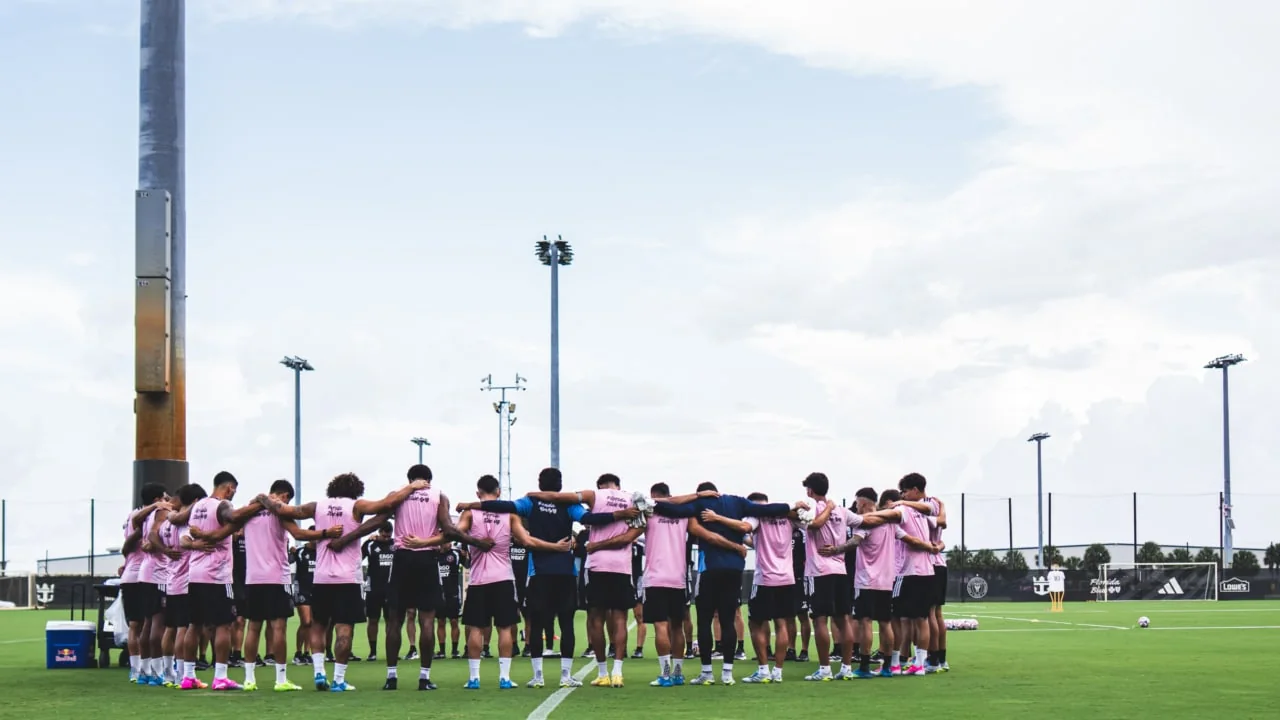
Inter Miami's 2026 roster includes Lionel Messi, Luis Suárez, Rodrigo De Paul and Casemiro, but those famous names explain only part of the squad. The club's official roster also includes three goalkeepers, a large defensive group, several younger midfielders and multiple options across the forward line. This guide groups the players listed by Inter Miami as of October 11, 2026, then explains how to read that list before watching a match.
A roster answers who belongs to the squad. It does not announce the next starting eleven, certify that everyone is fit, or promise that a player will travel. Use the position tables as a dated reference, then check the match-specific team news when you need today's lineup. The distinction matters especially for Miami, where international duty, competition changes and a prominent attacking cast can make an old lineup look deceptively current.
Inter Miami's current 2026 squad by position
Inter Miami's official club roster, checked on October 11, lists 31 players. The position groups contain three goalkeepers, eleven defenders, nine midfielders and eight forwards. The table preserves the club's names and displayed numbers, grouping them by position so readers can find a player quickly. It is a dated directory of club-listed players, rather than a certified MLS registration sheet or a ranking of the squad.
| Position | Number | Player |
|---|---|---|
| Goalkeeper | 13 | Luis Barraza |
| Goalkeeper | 34 | Rocco Ríos Novo |
| Goalkeeper | 97 | Dayne St. Clair |
| Defender | 2 | Gonzalo Luján |
| Defender | 3 | Sergio Reguilón |
| Defender | 4 | Facundo Mura |
| Defender | 15 | Fricio Caicedo |
| Defender | 16 | Micael dos Santos Silva |
| Defender | 17 | Ian Fray |
| Defender | 26 | Tyler Hall |
| Defender | 37 | Maximiliano Falcón |
| Defender | 62 | Israel Boatwright |
| Defender | 70 | Daniel Sumalla |
| Defender | 76 | Cesar Abadia |
| Midfielder | 5 | Casemiro |
| Midfielder | 7 | Rodrigo De Paul |
| Midfielder | 8 | Telasco Segovia |
| Midfielder | 20 | Santiago Morales |
| Midfielder | 22 | David Ayala |
| Midfielder | 42 | Yannick Bright |
| Midfielder | 59 | Preston Plambeck |
| Midfielder | 80 | Matías Galarza |
| Midfielder | 88 | Alexander Shaw |
| Forward | 9 | Luis Suárez |
| Forward | 10 | Lionel Messi |
| Forward | 19 | Germán Berterame |
| Forward | 21 | Tadeo Allende |
| Forward | 24 | Mateo Silvetti |
| Forward | 54 | Lovend’s Delinois |
| Forward | 56 | Daniel Pinter |
| Forward | Not displayed | Riquelme Fillipi |
Riquelme Fillipi is included on the full official roster without a displayed shirt number. The table therefore records that absence instead of supplying a number from a previous club, an older database or a guess. Before ordering a personalized shirt or identifying him in a particular match, use the current official profile and match sheet.
A number and a position label answer two limited questions. The number helps identify a player; the label describes the club's broad grouping. Neither tells you exactly where he will stand during every phase of a match. A forward can move toward midfield to receive, a midfielder can enter the box and a defender can provide attacking width. Those movements require match evidence, not a change to the table whenever a player leaves his usual area.
Current directories and season archives can also serve different purposes. An archive preserves earlier participation, while a live club page presents the squad as the club currently lists it. A reserve player's first-team appearance can add another kind of record. Check the date and purpose of each list before treating a difference as a missing player or an automatic change of contract.
The later sections explain the goalkeeper, defensive, midfield and attacking groups without assigning an invented depth order. Being listed is separate from being healthy, traveling or starting. For a match you plan to follow, pair this reference with the MLS games today page, then consult Miami's specific lineup announcement. That sequence connects the player names to the correct first-team event while leaving selection to the club's actual team sheet.
Goalkeepers and defenders: how to read the depth chart
Miami's roster is easiest to understand when the defensive unit is treated as several connected jobs. The goalkeeper protects the goal and starts possessions. Central defenders manage the space directly in front of that goalkeeper. Fullbacks defend the outside channels and may provide width in possession. A list that places all eleven outfield defensive options under one label leaves those relationships hidden.
Depth therefore means more than the number of defenders on the page. Two players with the same broad classification may solve different problems, while a versatile player can cover more than one position. Injuries, opponent strengths and the balance of the midfield can change the best combination. Count the names, but then ask which roles the selected lineup can actually cover.
Three goalkeeper options
Dayne St. Clair, Rocco Ríos Novo and Luis Barraza form the club-listed goalkeeper group. St. Clair wears No.97, Ríos Novo No.34 and Barraza No.13. St. Clair's official profile also documents his Canadian national-team involvement and his earlier MLS career with Minnesota United. That history helps explain his experience, but it should not be used as a substitute for Miami's next team sheet.
The presence of three goalkeepers does not mean the club rotates them equally. Nor does a previous start guarantee the next one. Selection can depend on fitness, workload, training and the competition. If you want to know who will play tonight, the announced lineup is the useful evidence. A preseason depth chart or an old cup lineup answers a different question.
When comparing a goalkeeper's performance, look beyond whether the result was a clean sheet. Notice how he handles crosses, whether he communicates when the defensive line advances, and how calmly he chooses between a short pass and a longer clearance. Those are viewing questions rather than numerical claims about any of Miami's three players. They also explain why the same keeper can look different behind a changing back line.
Defensive roles beyond the position label
Sergio Reguilón's signing announcement identifies him as a left back. Micael's announcement identifies him as a left-footed center back, arriving on loan from Palmeiras through the 2026 season with an option for a permanent move. Those specific descriptions provide more tactical information than the generic defender category, while still leaving the coach free to adjust assignments.
A left back's starting position near the touchline can create a passing outlet and stretch the opponent. Moving forward also leaves space behind, so the nearest midfielder and center back must coordinate their cover. A center back, by contrast, usually begins deeper and more centrally. His decisions about stepping into a challenge or holding the line affect the entire defensive shape. These are general role relationships, not a claim that Miami always attacks in one formation.
Ian Fray also illustrates the squad's development side. His official profile identifies him as a Homegrown player and records his first-team signing in January 2021. That makes the roster a blend of external recruitment and an academy pathway. It does not make every younger listed defender a guaranteed starter, and it does not make a reserve appearance equivalent to a regular first-team role.
For the remaining defenders, use the table to identify names and numbers, then follow their actual starting locations during the match. Gonzalo Luján, Facundo Mura, Maximiliano Falcón and the younger defensive options should not be placed into a rigid order solely because they appear earlier on a website. The more useful test is whether the selected group protects central space, deals with wide attacks and supports the goalkeeper when possession changes.
A midfield built from different responsibilities
Miami lists Casemiro, Rodrigo De Paul, Telasco Segovia, David Ayala, Yannick Bright, Matías Galarza, Santiago Morales, Preston Plambeck and Alexander Shaw in its midfield group. The important question is how the selected combination balances winning the ball, moving it forward and supporting the attack. Nine names under one category do not mean nine interchangeable players.
Casemiro's official profile provides a useful starting point because it specifically identifies him as a defensive midfielder. De Paul's profile identifies him as a midfielder and Designated Player. Those descriptions refer to different kinds of information: one narrows an on-field role, while the other describes a league roster mechanism. A Designated Player label does not specify whether someone must defend deep, play as a number ten or start every match.
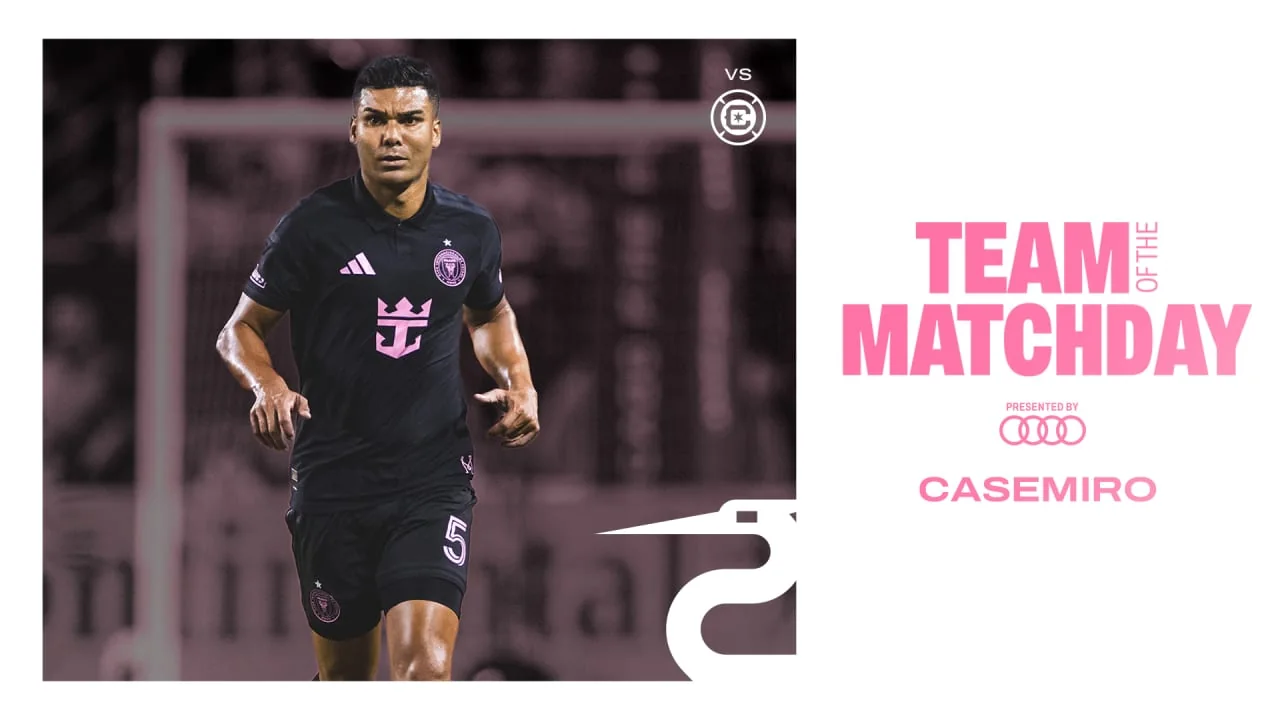
Even a defensive midfielder can contribute near the opposing goal. Miami's Matchday 25 feature records Casemiro scoring a header from a Messi corner against Chicago. That specific episode shows why a position label is a starting description rather than a boundary. It is not a current season total, and it does not mean every Miami set piece uses the same routine.
Experience, ball progression and younger options
Segovia wears No.8 and appears as a midfielder on his official profile. Ayala's signing announcement records his move from Portland and his arrival under the U22 Initiative. Galarza's announcement records a loan from River Plate through the end of the 2026 MLS season with a buy option. These are different acquisition histories, so the group should not be described as one undifferentiated set of summer recruits.
Bright also illustrates why a roster reader should compare related official pages. The main club directory calls him a midfielder, and current club stories describe his midfield appearances, while his individual profile header displays a forward label. This guide follows the main directory grouping. When a field conflicts with the surrounding evidence, it is better to acknowledge the difference than build an elaborate tactical conclusion on that single word.
During a match, watch the midfield before watching only the final pass. Which player offers the goalkeeper a safe outlet? Who receives facing forward? Who stays behind the ball when a fullback advances? Who moves toward Messi to create a short combination, and who holds a different lane? Those observations explain the selected unit more reliably than assuming a famous name performs every responsibility.
Morales, Plambeck and Shaw complete the listed midfield group. Their presence makes the roster useful for following development as well as established stars. A younger player can gain experience through training, substitute appearances and other competitive opportunities without immediately becoming a regular starter. Avoid treating a squad listing as a projection of his future minutes. Instead, compare official team sheets across several matches to see when the staff actually uses that option.
Messi, Suárez and the rest of the attack
The forward group includes Messi, Suárez, Germán Berterame, Tadeo Allende, Mateo Silvetti, Lovend’s Delinois, Daniel Pinter and Riquelme Fillipi. That is a larger list than a first-choice attacking line. It includes different career stages and, critically, players whose presence in the directory should not be mistaken for present match availability.
Berterame's official announcement records his arrival from Monterrey as a Designated Player. Suárez's current profile identifies him as Miami's No.9 forward. Those current records are useful; an older biography lower on a player page can retain historical wording. Always read the current club header and recent announcements before relying on a career-summary paragraph that may not have been refreshed.
Messi's listed position and freedom between the lines
Messi is listed as a forward and wears No.10. His official profile also identifies him as left-footed and a Designated Player. A viewer may nevertheless see him receive the ball in areas usually associated with midfielders. Moving toward the ball to combine or create an angle does not turn the roster's forward category into an error.
The useful question is what his movement creates for others. If Messi comes toward midfield, another attacker can occupy the space closer to goal. If an opponent follows him, a passing lane may open behind that defender. If the opponent holds its shape, he may have room to turn or connect with a nearby teammate. These are possible relationships to watch, rather than a guarantee of how every Miami possession develops.
This roster guide deliberately does not repeat a Messi scoring archive. Goals and appearances require a named competition and a cutoff date. For completed MLS-season numbers, use our Messi MLS goals by season guide. To understand the current squad, focus on his relationship with the other selected attackers and midfielders.
Central forwards and wide attacking choices
Suárez and Berterame give the directory recognizable senior forward names, while Allende, Silvetti and the younger options broaden the list. How many play together depends on selection and tactical balance. An attacking lineup needs more than finishers: it also needs passing connections, movement away from the ball and enough protection behind the attack to cope when possession is lost.
Availability changes the practical picture. As checked on October 11, Allende's official profile displays a season-ending injury status, and the club's latest notice describes a right-knee arthroscopy with recovery progress determining his return. Silvetti's latest club update reports left-shoulder surgery and a recovery process focused on the upcoming season. They remain listed in the squad, but they should not be described as healthy choices for the next match on the basis of that listing.
The same care applies to Delinois, Pinter and Fillipi. A reader can identify them in the directory without assigning an unsupported place in the hierarchy. Watch confirmed team sheets and substitutions to see how each player is used. A reserve-team record, a first-team training photo and a first-team start are three different kinds of evidence.
Why the roster is not a predicted starting XI
Listing every forward does not solve the next lineup. A coach must also choose midfield cover, width, defensive assignments and a workable substitute bench. An attractive combination of famous names can leave those needs unanswered. Without a match-specific announcement, a predicted eleven should be labeled a prediction and should never be presented as confirmed.
For a reliable answer, separate the stages: this directory identifies the players; current team news describes relevant availability; the official starting lineup identifies the eleven chosen for that event. Even a player who is available may begin on the bench, and appearing on the bench does not ensure he enters the match. Those distinctions keep a squad guide useful without giving false certainty about an individual appearance.
How to check the squad before an Inter Miami match
Start with the event, then work toward the player. Confirm that the fixture is an Inter Miami first-team match, identify the competition and check the venue and kickoff time. The MLS calendar helps with league dates, while the official club match page supplies event-specific detail. A Miami player appearing for his national team is not an Inter Miami fixture, and a second-team match is not a first-team MLS game.
Next, check current team news. The club publishes injury notices and international-duty updates; its September/October announcement, for example, listed nine players called up across senior and youth national teams. Such a notice explains a particular window, not a permanent absence. Read the dates before transferring that information to another match. Similarly, a player's presence in training footage does not by itself announce a medical clearance or a starting place.
The official lineup is the final selection reference. It distinguishes starters from substitutes and identifies the group selected for that match. If a player is missing, do not infer the reason from absence alone. Injury, suspension, international duty, registration and a coaching decision are different explanations and need different evidence. A confirmed injury announcement can support an injury claim; a blank space in a lineup cannot.
League registration rules add another layer. The 2026 MLS rules describe an active roster of up to 30 players, while also explaining supplemental mechanisms, a qualifying loan slot, injured-list exceptions and off-roster Homegrown status. This guide's 31-name count is a count of website cards. It is not a finding that Miami has 31 simultaneously eligible active players, and it does not identify which exception applies to any individual.
That distinction also prevents confusion about the term Homegrown. It describes an acquisition and roster pathway, not an automatic starting place or a fixed playing position. A young player can be part of the club's broader development system while his eligibility for a particular first-team competition depends on the applicable rules and selection. Follow the official transaction and lineup rather than treating all club-associated players as interchangeable.
For a repeatable routine, save three references: the current club roster for names and numbers, the latest official team news for availability context, and the match lineup for selection. Check all three again when the date matters. The tables in this article remain a useful October 11 snapshot, but the next transfer, injury update or squad announcement can change what a live viewer needs to know.
Comments
Comments are reviewed before publication.
Spam, abusive content, personal information and policy-violating links are not published.
Sign in with Google to comment or reply.
Loading comments…