The best MLS team to watch depends on what you enjoy about a match. Try Inter Miami for combinations around a star, LAFC for forward runs, San Diego FC for the puzzle of build-up play, or FC Cincinnati for a creative midfielder's decisions. Seattle and Portland offer another route in through their rivalry and matchday traditions.
This is an unranked editorial shortlist, checked on November 10, 2026. Each choice comes with a concrete watching task and dated evidence. Some examples are most useful as replays, and a club's results or lineup can change; the aim is to find the kind of football experience that makes you want to return.
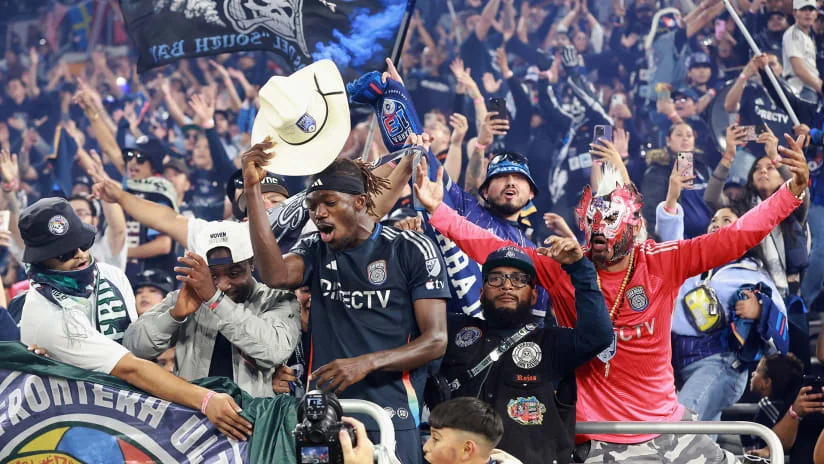
Cover image: a San Diego FC matchday celebration, published in MLS's 2026 fandom guide.
Match the club to the kind of game you enjoy
Begin with what keeps you interested during a whole match. Some viewers want quick attacks and forward runs. Others enjoy the puzzle of working the ball through pressure, or following a creative player's decisions. A supporter might become attached through a stadium, a city or the meaning of a rivalry before learning every tactical detail.
Those preferences lead to different choices. An efficient contender can produce a match that leaves you cold; a team having a difficult season can still offer a player, pattern or atmosphere that makes you return. The selections below are therefore an editorial shortlist by experience. They are not ordered by strength, and they do not imply that the other MLS clubs are less worthy of your time.
Give geography a chance as well. A nearby team offers the possibility of sharing matchdays with people around you, while a manageable kickoff window makes a distant club easier to follow regularly. Our MLS teams map and club directory can help identify the local options.
For each selection, choose one thing to watch beyond the ball. Look at a runner, the space around a playmaker or the passing options near the goalkeeper. The question is whether that process interests you, including when an attack fails. You will learn more about your own taste than by selecting whichever team happens to sit highest in the standings.
Inter Miami for combinations around a star
Inter Miami is an accessible starting point if a recognizable player helps you settle into a new league. Lionel Messi gives you someone to locate immediately. The more rewarding viewing task is to follow how a move develops around him, including the contributions that do not appear as the final shot.
Miami's late-season 2–1 comeback at New England in 2026 offers two useful examples. For the equalizer, Telasco Segovia delivered into the box, Messi headed the ball back and Germán Berterame finished. For the winner, Luis Suárez supplied Messi, who combined with Segovia before scoring. The attraction is the exchange of roles: the famous scorer can become a provider, while another player helps create his shooting opportunity.
Watch the supporting movement
When Messi receives, look briefly away from him. Who offers a short return pass? Who moves beyond the defensive line? Does a teammate hold a wider position or enter the space a defender has left? You do not need to identify a formation to notice how one decision opens another.
Try following the same supporting player through several attacks. A run can be useful even if the ball never arrives, because it may change the space available to someone else. Equally, a promising combination can fail through a poor touch or a defender anticipating the return pass. Those incomplete attacks help you understand the contest that a highlights package compresses.
Watch how the match changes, too. On November 7, 2026, Miami led Charlotte 3–0 but finished with a 3–3 draw. That result is a concrete reminder that attractive attacking moments do not tell the whole story of controlling a game. The opponent's response and the choices made after taking a lead can be part of the enjoyment.
This is a good fit if you enjoy a player's decisions becoming a way into the wider team. Check the lineup before choosing a specific match for that purpose; our Messi role and match-availability guide explains the context without promising an appearance.
LAFC for forward runs and changes of pace
Try LAFC if the moment an attack accelerates is what draws you into a game. Son Heung-min and Denis Bouanga provide a clear pair to follow, with opportunities to watch the relationship between the first forward pass and the movement that makes it useful.
A specific example came in LAFC's 2–2 draw at Real Salt Lake on September 5, 2026. A long transition pass found Bouanga in the penalty area, and his cutback allowed Son to finish first time. The interest lies in the timing between players: reaching advanced space is only part of the move; someone must also be available when the receiver needs the next action.
For a viewing exercise, look for the runner as soon as possession changes. Does he head toward goal, move into a channel or stay wide enough to stretch a defender? Then find the passer. Is an immediate ball available, or must the team take another touch and allow support to arrive? Following that order makes the speed of a move easier to appreciate.
Allow the setup to vary. In its November 1 preview, LAFC described Bouanga moving between the center and his familiar left-wing role during a period of coaching change. That is a reason to watch the actual positions on the day rather than expecting a fixed diagram to explain every match.
An opponent defending deeper may offer much less room for the first forward run. The question then becomes how LAFC creates a new opening, and whether a change of pace can arrive later in the attack. The appeal is the decision about when to accelerate, rather than a guarantee of constant end-to-end football.
Start with one of the forwards and follow several sequences, including those that do not produce a shot. Our Son Heung-min at LAFC guide provides more background on the partnership and his role.
San Diego FC for build-up under pressure
San Diego FC offers an interesting entry point if you enjoy watching a team solve pressure with the ball. In its analysis after the first five matchdays of 2026, MLS described San Diego's patient passing and coordinated movement, along with the risks of playing short close to its own goal.
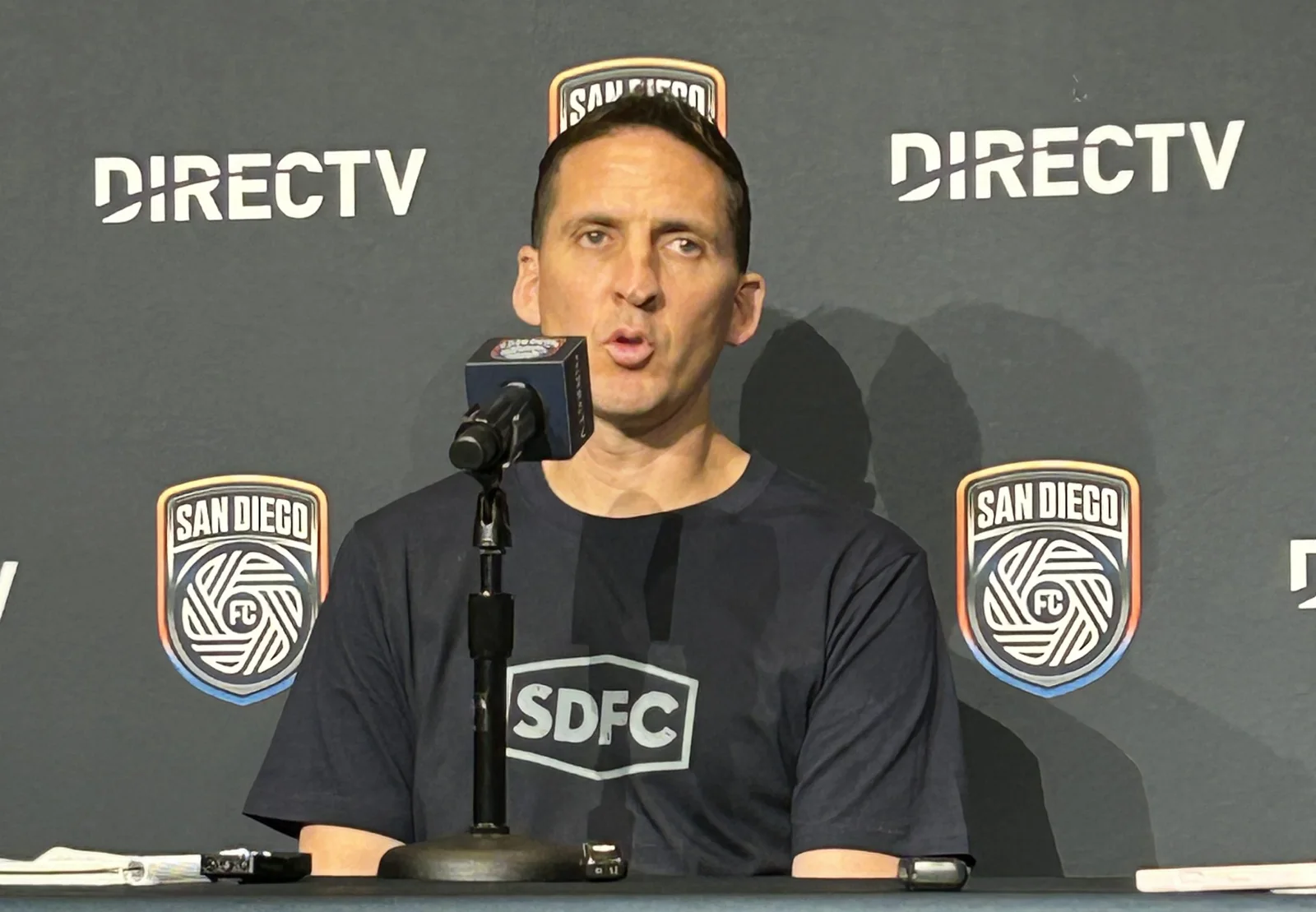
Keep the season's outcome in view: San Diego did not qualify for the 2026 playoffs. The attraction here is studying a playing idea, including its difficulties. Head coach Mikey Varas was still discussing those difficulties after the November 7 finale; an early-season description of an unbeaten team should not be mistaken for its final standing.
Watch the goalkeeper's passing options
When an attack starts near San Diego's goal, widen your attention. Find the nearby defenders, a central passing option and the player offering width. Then watch how the opponent chooses to press. Does one forward close the goalkeeper while another blocks a midfielder? Is there space beyond that first pair?
The next pass becomes a small puzzle. A return to the goalkeeper can change the angle rather than end the attack. A defender carrying the ball can make an opponent choose between following him and protecting another route. The interesting moment may be the one that creates a forward-facing receiver, several passes before the chance you would see in highlights.
Judge the escape, not the possession total
Keeping the ball and progressing with it are different things to observe. Try asking whether a sequence moves San Diego beyond a line of pressure with useful support ahead. If it merely returns to its starting point, look at what the opponents prevented. If a pass is lost, notice how close that happens to goal and who can respond.
This makes room for appreciating defending as well as passing. An opponent can close the intended route or persuade a receiver to take a risky touch. You can enjoy reading that contest even when the possession approach fails.
Sample both a successful sequence and a difficult spell before deciding whether this style holds your attention. The reward is following how a team tries to create space, with the result remaining a separate part of the assessment.
FC Cincinnati for a creator-centered attack
FC Cincinnati is a useful choice if you enjoy following the decisions of a creative midfielder. Evander gives you a focal point, but the viewing challenge is to connect his choices with the movement around him. A chance can depend as much on the teammate moving a defender as on the player making the final pass.
Cincinnati's 2–0 win at D.C. United on October 24, 2026 provides a clear example. Evander first scored from outside the penalty area after receiving centrally from Pavel Bucha. He later supplied Tom Barlow for the second goal, with Bryan Ramirez's run helping occupy defenders as the move developed.
Watch where Evander is before the pass reaches him. Can he receive facing goal, or must he turn? Is there room to shoot, a forward available through the middle or a runner moving across his view? You can pause a replay at that moment and consider the options before letting the sequence continue. It becomes easier to see why a shot and a pass can both be plausible decisions from similar positions.
Then spend a few attacks following a teammate who does not get the final touch. A runner can create room for the eventual receiver, while a defender refusing to follow that run changes the creator's choices again. The successful pass is the visible endpoint of several players making decisions.
Set pieces add another version of the same interest. In the October 21 meeting with D.C., Evander delivered the free kick that Teenage Hadebe converted for Cincinnati's winner. Watch the available targets and the timing of their movement as well as the delivery itself.
This lens also works during quieter spells, when an opponent limits access to the creator or closes the obvious passing route. Our Evander at FC Cincinnati guide supplies more player context; the attraction here is learning to read an attack through its choices.
Seattle and Portland for the rivalry experience
A club can become interesting through the people and rituals around it. Seattle Sounders and Portland Timbers offer two recognizable entry points into Pacific Northwest soccer culture, with a rivalry that gives their meetings meaning beyond a single set of league points.
Both clubs' 2026 coverage treated their meetings as special matchday occasions. That does not guarantee a high-scoring game. It does give a newcomer another story to follow: what the fixture means to the people watching, and how that context changes the feeling of an otherwise ordinary challenge, chance or goal.
Seattle at Lumen Field
Seattle's matchday traditions extend outside the stadium. The March to the Match, started by Emerald City Supporters, brings fans from Occidental Park toward Lumen Field. The club also has its Sound Wave band. These are concrete parts of the setting a new viewer can learn about, rather than a claim that Seattle's fans must be ranked above everyone else's.
On a broadcast, try listening as well as following play. Notice when the crowd responds to pressure, a challenge or an attacking opening. Knowing that supporters have gathered before kickoff helps connect those reactions to an ongoing club experience. A particular broadcast may show only part of the prematch activity, so use club material if you want to understand more of it.
Portland at Providence Park
Portland has an especially identifiable goal ritual. At Providence Park, Timber Joey cuts a slab from the Victory Log after a Timbers goal, with the slice presented to the scorer after the match. Learning that tradition makes a celebration easier to understand when you encounter the team for the first time.
Let the setting become part of your comparison without asking it to explain every football decision. You might find yourself returning because of the supporters, the home ground or the meaning attached to a regional opponent, then gradually become more interested in how the team plays.
If that is your route into MLS, sample a home match and read a little of the club's own matchday material alongside it. You can develop an attachment through the whole occasion. There is no need to settle which fanbase is objectively best before deciding which experience interests you.
Try three matches before making your choice
Choose one club from the shortlist and give yourself a small, varied sample. Try a home match, an away match and a game against an opponent that creates a different problem. Published replays can supply that comparison when the next confirmed fixture is some way away or the team's season has finished.
Watch substantial stretches of each game rather than only the goals. Keep one task from this guide in mind: the support around a star, the timing of a forward run, the attempt to escape pressure or the choices facing a creator. Afterward, note which sequences held your attention and which left you wanting a different experience.
That is an editorial sampling suggestion, not a formula that proves which club is most entertaining. The useful outcome is a reason to come back. You might decide to follow a team regularly, sample another club or enjoy different teams for different kinds of matches.
Check the fixture, lineup and viewing route
As checked on November 10, 2026, the regular season had finished on November 7 and the playoffs were scheduled to begin on November 19. A team-selection guide should therefore not suggest that every club still has another 2026 match. Use the current playoff page or the weekend schedule to find a confirmed option, then check the actual matchup and local date.
Read match-specific club information and the announced lineup if your choice depends on a player. A roster listing and a previous appearance do not guarantee the next one. Convert the listed kickoff into your own timezone, including any change in calendar date.
For 2026, MLS matches are included with an Apple TV subscription. Our Apple TV viewing guide explains the current arrangement and the change from the old standalone Season Pass. Confirm the listing and access for your location, then settle in with a viewing task that interests you.
Comments
Comments are reviewed before publication.
Spam, abusive content, personal information and policy-violating links are not published.
Sign in with Google to comment or reply.
Loading comments…