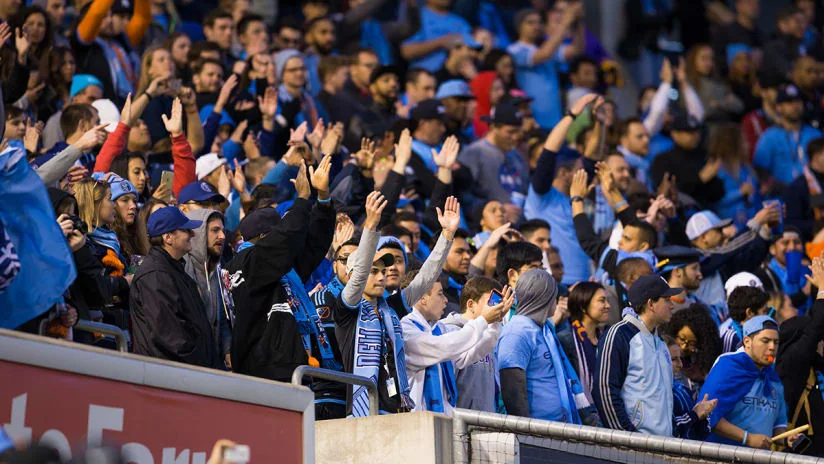
Updated October 18, 2026. Buy New York City FC tickets through the club's official ticket page, then confirm the stadium on the exact fixture before choosing seats. NYCFC home listings can involve Yankee Stadium in the Bronx or Citi Field in Queens. That venue decision changes your seating map, journey and entry preparation. This guide focuses on buying a match you can use and a view you will enjoy.
Start with the match and stadium, then buy the ticket
Begin at New York City FC's ticket hub. It links the club's account services, seating and pricing information, and ticket policies. Follow the route for the product you actually want: a single match, a membership or another advertised package. An account login is for managing an order; it is not itself evidence that a particular match is included in your purchase.
Before selecting seats, write down the opponent, competition, match date, stadium and local kickoff time. Cross-check those against the official club schedule. A marketplace search can mix home and away events, while a cached club description may summarize one familiar venue even when a particular fixture is at another. The fixture's own stadium field is therefore more useful than a generic statement about where the team plays.
Keep the stadium name visible throughout the comparison. If you are arranging a New York visit, do not reserve a restaurant, parking space or meeting point around the Bronx simply because a previous NYCFC match took place there. Equally, the club name in a listing does not mean the event is in New York at all. Open the details and check who is hosting before building the rest of the day around it.
Yankee Stadium, Citi Field and future-stadium offers
The club's initial 2026 schedule announcement assigned matches to both Yankee Stadium and Citi Field and left the final three home venues dependent on the baseball postseason. That original release explains why a saved schedule can contain unresolved stadium information. It should not override a later fixture assignment. Use the current event page when buying and recheck the venue after any club schedule-update notice.
Future-stadium marketing needs a different reading. The announcement also described priority access connected with Etihad Park, scheduled for 2027. A future seat-selection opportunity or membership priority is distinct from admission to a 2026 match. Read the season, event list and deposit terms before assuming that an attractive stadium image depicts where your immediate ticket will be used.
For someone choosing between two available dates, compare the complete outing rather than just the opponent. One match may fit your accommodation, transit connections and group schedule better than another. If seeing a specific player is the reason for the trip, remember that a match ticket establishes admission to the event; assess player availability separately rather than treating a promotional photograph as a lineup promise.
Once you have the correct fixture, save its event link and confirmation alongside your travel notes. Share that same link with everyone in the party. A clear common reference prevents one friend from buying a road match or using the wrong stadium map while the rest select home seats. If the listing still leaves the venue or date unclear, seek an answer from club ticket services before paying for inflexible travel.
The club's late-season venue update supplies a concrete example: Atlanta United on October 28 and Montreal on October 31 were assigned to Citi Field, and the LAFC match moved from November 4 to October 17 at Citi Field. Those are announced 2026 assignments, not a reason to assume every future home match will use Queens. They show why a calendar saved at the beginning of the season needs checking against the newer event notice.
For future purchases, the later Etihad Park announcement is more precise than the original reference to 2027: the planned first match is at the start of the 2027-28 season in summer 2027. The club says the preceding transition season will use Yankee Stadium and Citi Field. A buyer comparing offers should therefore record the season name as well as the year. An early-2027 package and an inaugural Etihad Park season offer concern different event lists, even though both mention 2027. Ask which schedule and venue are covered before comparing their deposits or installments.
Choose a soccer view rather than a baseball section number
At a baseball venue, the best-known section is not automatically the most useful soccer seat. Open the club's soccer seating charts, select the correct stadium and locate the actual pitch. Check where the touchlines, goals and team benches sit relative to the available seats. Then use a virtual view when provided, remembering that a generic baseball photograph may not depict the match configuration you are buying.
Compare two or three acceptable areas before concentrating on a row number. A seat can be close to the field yet have a less helpful angle on the far end; an elevated position can make passing patterns easier to follow. Those are viewing tradeoffs to evaluate, not a claim that every high seat is superior. If a listing mentions an obstruction, restricted view or unusual layout, obtain a clear explanation instead of assuming the price compensates for it.
Sideline views, endline atmosphere and elevation
For someone who wants to understand shape and movement, a broad view along the side of the soccer pitch is a useful starting preference. For someone drawn to goalmouth action and supporter energy, an endline location may be more appealing. Compare the actual angle and distance on the soccer map, rather than transferring a baseball ticket recommendation from another event at the stadium.
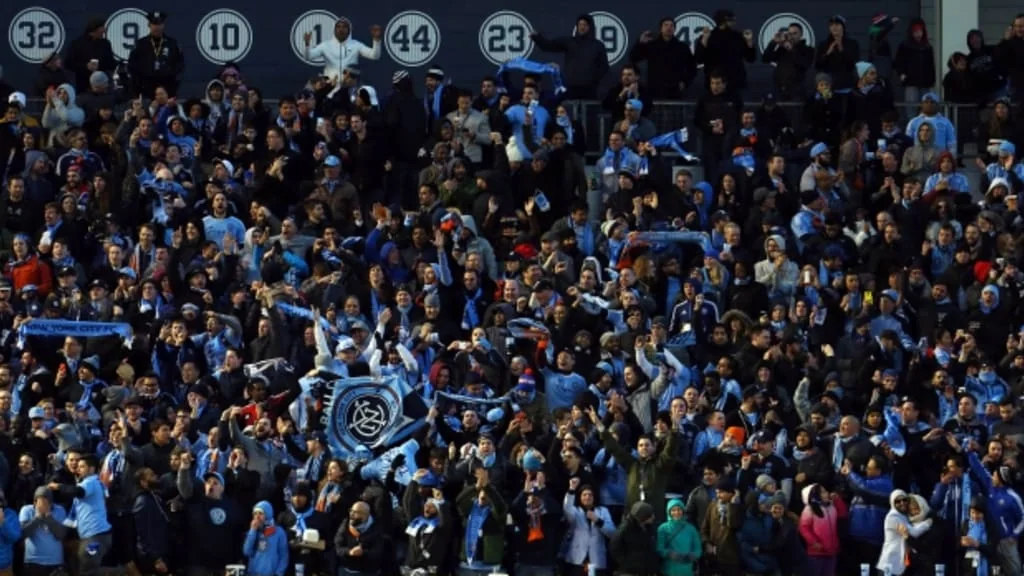
If you are considering an active supporters area, ask about standing expectations, flags and any ticket restrictions before choosing it for your group. A photograph communicates energy but cannot establish the unobstructed view from a particular row. Someone who needs to remain seated should make that requirement part of the purchase discussion, rather than discovering a mismatch after arrival.
Seats for families and accessibility needs
Families should compare the entire route from entrance to seat, including stairs, restroom access and the child's ability to follow play from that angle. Ask about the applicable child-admission rule at the named venue. The club's Citi Field guide uses a 32-inch height threshold for requiring a ticket and says a smaller unticketed child must sit on a parent's lap. Do not assume that policy also answers a Yankee Stadium purchase.
For accessibility, contact ticket services with the actual requirements: wheelchair position, companion seating, step-free route, captioning sightline or sensory support. The club publishes a Citi Field accessibility guide, but the match configuration and available inventory still need checking. Explain what would make the visit workable before buying surrounding seats for the rest of the party.
Finally, distinguish a seat upgrade from a hospitality inclusion. A premium-sounding area name does not tell you whether food, a lounge, parking or a particular entrance is part of the order. Ask for the benefit list tied to that exact ticket. That keeps the comparison useful for both a first-time visitor and someone accustomed to a different venue's naming system.
Compare NYCFC ticket prices and package commitments
A useful NYCFC ticket price is the total for your chosen match, stadium, quantity and location. It is not the lowest isolated seat shown in a search result. The club's pricing page explicitly says prices can change. This guide therefore avoids presenting an old average as today's quote. Open the event you can attend, enter the number of seats you need and compare the resulting options before setting a budget.
Use a compact worksheet: date, venue, section, row, adjacent-seat quantity, ticket type, total payment and included benefits. For visitors browsing from abroad, note the currency too. Two pages showing similar numbers can represent different currencies or different quantities. If one offer includes hospitality and the other is admission only, separate the extra benefit before deciding which is cheaper.
For a flexible traveler, compare another match at a similar viewing angle. That gives a more useful choice than repeatedly refreshing one expensive section. If your dates are fixed, compare a modestly different location and decide which tradeoff matters: view, atmosphere, walking route or group adjacency. Avoid paying for an upgrade whose benefit your party will not use.
Primary inventory and resale should be compared on the same terms. A resale label does not automatically make a ticket better or worse value. Check the seller's delivery process, guarantee, event-change policy and support route. Retain the order reference until you have usable tickets. If admission depends on a later transfer, find the stated delivery deadline before paying for the rest of the trip.
A package deserves its own calculation. List the matches explicitly included and count those you realistically expect to attend. Divide the total commitment by that usable attendance figure, then compare against single-match choices that would actually suit you. Do not assume unused tickets can always be returned, traded or sold. The club publishes ticket policies and separate City Member terms; check the current offer and invoice for the program applicable to your account.
Questions to resolve include automatic renewal, payment dates, additional-event charges, playoff access and any deadline for declining an offer. Access to buy another event is different from that event being prepaid. A manageable installment should also be distinguished from the full balance you authorize. Write that balance into your comparison instead of evaluating only the first payment.
Budget the outing alongside the ticket: transport, accommodation if needed, parking if chosen and the amount you want available for food or merchandise. Keep optional spending optional. For a family, an affordable admission price can still produce a costly day if the stadium assignment changes the journey. The existing MLS buying guide covers broader marketplace comparisons; the key NYCFC addition is to repeat those calculations for the correct Bronx or Queens event.
Prepare mobile admission and a venue-specific arrival plan
Open the club account linked from your purchase confirmation before leaving for the match. The City Member access instructions direct members through the NYCFC app and account tools, with completed orders available under My Events. Use the route specified for your own order; a marketplace receipt is not the same thing as displaying a valid admission ticket.
Check the match, quantity and delivery status inside the account. If tickets are being transferred to friends, complete the permitted transfer and ask them to confirm receipt before separating. Someone who will arrive later needs access to their own ticket, not merely a message saying that you bought one. Do not share account passwords as a substitute for understanding the ticket-delivery process.
The club's ticket policy says print-at-home PDFs have been discontinued. Follow the current mobile instructions supplied with the order and prepare any supported wallet option ahead of time. If admission is not displaying as expected, use the club's ticket-service route with the order reference while there is still time to resolve the issue. Carry a charged phone and keep enough battery for both entry and the journey afterward.
A final checklist for the Bronx or Queens
Review the guide for the actual stadium on your fixture. Yankee Stadium's entry information asks supporters to budget additional time for screening. Citi Field's guide has its own bag restrictions and says there are no bag-check facilities inside. A bag acceptable on a previous trip should therefore be checked again against the venue's current policy, particularly if it is a backpack or contains equipment you do not need at the match.
Plan the route in both directions. Use the club's matchday hub to reach venue-specific public-transport, parking and accessibility information. Check operating changes and the return journey close to the event. A route that looks simple on a map can be inconvenient after the final whistle if you have not checked the last useful connection or arranged a meeting point for a split group.
Choose a meeting place outside and a backup inside. Share the venue name, entrance plan and account holder's contact information with everyone. If a child or guest needs a quieter arrival, build that into the timing. Verify any gate-opening notice for that match rather than using a baseball event's routine, an old advisory or another stadium's opening time.
Before joining a queue, confirm that you have usable admission, the correct bag, a workable return plan and the details needed for any assistance request. Once inside, assume that leaving to retrieve a forgotten item may not permit routine re-entry; ask staff before exiting. The point of buying carefully is to make the visit straightforward: correct fixture, correct stadium, suitable seat and a ticket ready when it is needed.
Comments
Comments are reviewed before publication.
Spam, abusive content, personal information and policy-violating links are not published.
Sign in with Google to comment or reply.
Loading comments…