
MLS announced undisclosed fines for Robin Fraser and Philippe Eullaffroy on August 28, 2026, following their public criticism after separate matches. The sanctions confirm a policy violation, but they do not decide whether the disputed calls were correct. Here is what the published record establishes, checked September 6, 2026.
What MLS announced on August 28, 2026
Two coaches, two separate matches
MLS fined Toronto FC head coach Robin Fraser and CF Montréal head coach Philippe Eullaffroy for violations of its public criticism policy. The MLS news release carried by OurSportsCentral links each sanction to a different August match.
| Coach | Match identified in the notice | Match date | Announced fine |
|---|---|---|---|
| Robin Fraser, Toronto FC | Toronto FC against Charlotte FC | August 19, 2026 | Undisclosed amount |
| Philippe Eullaffroy, CF Montréal | CF Montréal against LA Galaxy | August 22, 2026 | Undisclosed amount |
The August 28 notice announces fines. It does not announce a suspension for either coach or publish a technical assessment of the disputed decisions. Those limits matter when interpreting a headline about punishment.
What an undisclosed amount means
An undisclosed fine is an amount the announcement does not reveal. It should not be replaced with a guessed figure, treated as zero or assumed to match a penalty imposed in an older case. The use of the same wording for two coaches also does not establish that they paid the same amount.
There are three questions to keep separate: what the coach said, whether the league considered that public statement a policy violation, and whether the underlying match decision was correct. A disciplinary notice can answer the second question without resolving the third. Conversely, showing that a call was questionable would not, by itself, tell a reader how a separate communications policy was applied.
That distinction makes it possible to discuss both accountability and officiating without forcing one issue to stand in for the other. The useful next step is to examine the reported comments and any incident-specific evidence, rather than treating the existence of a fine as a complete explanation of the match.
Robin Fraser's complaint after Toronto against Charlotte
The two incidents identified in the reporting
Toronto's August 19 match at BMO Field ended 3-3. In its report on Fraser's postgame comments, Sportsnet identified two incidents behind his frustration: Walker Zimmerman's dismissal and a late injury to Niklas Dorsch.
Zimmerman received a red card in the 56th minute after a challenge on Idan Toklomati. Fraser questioned the interpretation of an obvious goal-scoring opportunity given the distance from goal, while acknowledging that another person might interpret the situation differently. He also objected to the lack of a card in the incident involving Dorsch and said the midfielder was going to hospital for a CT scan.
The reported concern about Dorsch should remain a description of what Fraser said at that time. It is not a confirmed medical diagnosis. Likewise, Fraser's broader feeling that officiating worked against Toronto is his assessment, not evidence that officials deliberately disadvantaged the club.
Why distance alone cannot settle a dismissal
The 2025-26 edition of IFAB's Law 12 identifies several considerations for denying an obvious goal-scoring opportunity: distance from goal, the direction of play, the likelihood of controlling the ball and the position and number of defenders. Distance is relevant, but it is not the entire test.
To assess a specific incident, a viewer therefore needs the wider sequence. A close-up can show contact while hiding the defender who might have recovered or the direction in which the attacker was moving. A useful explanation should connect those visible details to the stated reason for the dismissal, rather than relying on the location of the foul alone.
The Dorsch incident calls for a separate examination. A player's apparent pain can explain a coach's concern, but it does not replace analysis of the action that caused it. These are two distinct refereeing questions within the same match. The later public criticism fine does not provide the missing technical findings for either one.
Philippe Eullaffroy's complaint after Montréal against LA Galaxy
A penalty appeal and a concern about respect
Montréal drew 2-2 with LA Galaxy at Stade Saputo on August 22. Sportsnet's report on the fines described Eullaffroy's strong disagreement with a penalty decision and his view that the officials were treating his team disrespectfully. Those were the coach's criticisms, not findings announced by MLS.
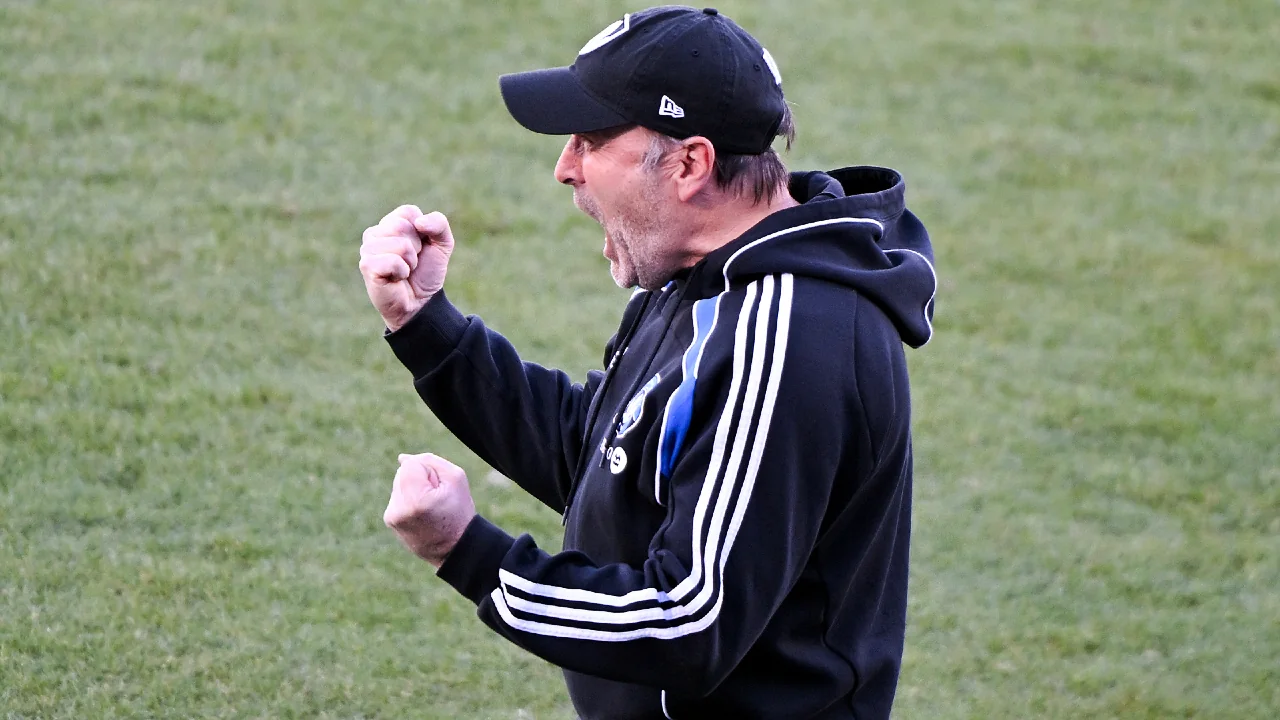
The distinction between the penalty appeal and the complaint about communication is important. One asks whether an action should have produced a penalty. The other asks whether the explanation given to the team was adequate and respectful. A technical answer could address the first without resolving the second.
Frustration after repeated replays also does not establish that every spectator reached the same conclusion. A coach's rhetorical reference to the crowd should not be presented as a measured poll. Nor should the confidence of a reaction replace the need to identify the relevant contact, location and sequence.
What would make the incident easier to evaluate?
A helpful account would identify the exact appeal, preserve the action before contact and show the available angles. It would then explain the on-field decision and, where documented, the reason video intervention did or did not follow. Without those details, a reader may be comparing a forceful postgame statement with an incomplete clip.
It is reasonable to ask for that explanation without first deciding that the officials were right or wrong. Equally, disagreement with a decision does not establish disrespectful intent. The two claims require different evidence: footage can help evaluate a challenge, while a communication complaint needs a reliable account of what was actually said or conveyed.
The August 28 notice does not supply that conversation or an incident-by-incident ruling. It should therefore be used for the disciplinary fact it establishes, while leaving the disputed technical and communication questions open to further evidence.
Public criticism fines are distinct from other MLS discipline
A financial sanction does not automatically mean a suspension
A fine and a suspension have different consequences. One imposes a financial penalty; the other limits participation for a stated period or match. Readers should look for both terms in the actual announcement rather than assuming that one necessarily includes the other.
Historical MLS notices show why precision matters. A March 29, 2024 announcement gave Caleb Porter an undisclosed fine for public criticism. A separate September 10, 2024 announcement explicitly stated a $20,000 fine and a one-match suspension. These older cases illustrate different published sanctions; they do not establish the amounts imposed on Fraser or Eullaffroy in 2026.
The 2026 MLS Competition Guidelines describe the commissioner's authority to impose supplemental discipline for detrimental off-field misconduct. That broader framework is useful context, but it is not a published price list for every possible postgame remark.
Appeal procedures depend on the decision being challenged
The same guidelines describe Independent Review Panel appeals for specified on-field disciplinary decisions and explicitly exclude off-field incidents from that panel's consideration. It would therefore be misleading to present the player red-card appeal procedure as an established route for overturning these public criticism fines.
That limitation does not justify inventing a different private procedure or claiming that no communication between the clubs and league is possible. It means the public material examined here does not establish a case-specific appeal process for these sanctions. A report that either coach appealed would need its own reliable confirmation.
When reading a disciplinary story, identify the subject of each decision. A player dismissal, a coach's touchline conduct and a later press-conference statement may arise around the same match but involve different actions and different rules. Combining them into a single judgment can obscure what the league actually announced.
For these two August cases, the careful reading remains narrow: the notices concern public criticism. They are not substitutes for a match report, a medical update, a red-card appeal ruling or an explanation from the officials about a particular incident.
Why a VAR check may not lead to an on-field review
A check and a review are different steps
The 2025-26 IFAB VAR protocol, the Laws edition referenced by MLS's 2026 guidelines, distinguishes checking footage from initiating a review. Potential penalty incidents are checked automatically. If the check finds no clear and obvious error or serious missed incident, it can remain a silent check without a visit to the monitor.
When the VAR identifies a probable qualifying error, the referee decides whether to initiate a review and retains the final decision. Coaches do not need to request a check for it to occur. These principles explain why the absence of a visible monitor visit does not establish that an incident was ignored.
They do not establish what happened during either disputed August match. To make that case-specific claim, a reader would need reliable information about the particular sequence. General knowledge of the protocol cannot substitute for a record of its application.
Different replay views can answer different questions
The protocol also distinguishes replay speed: slow motion can help locate contact, while normal speed is important when judging its intensity. That is a reason to examine more than a single frozen frame before reaching a confident conclusion.
Imagine a hypothetical clip in which one player's leg hides the point of contact. Repeating that angle several times does not necessarily reveal what is obscured. A second view might clarify the contact but crop out the ball or the players' earlier movement. The strongest explanation identifies what each view contributes and where uncertainty remains.
Fans can use the same discipline when comparing analyses. Does the commentator show the sequence being discussed? Is the explanation about whether an offense occurred, or about whether the evidence met the threshold for intervention? Are those two judgments being treated as interchangeable?
Those questions are more informative than counting how often a clip has been replayed. They also allow disagreement to become specific: two viewers may agree about the visible contact while disagreeing about its effect, or agree that an incident was close while disagreeing about the strength of the available evidence.
What PRO's published reviews do and do not show
The two relevant written roundups cover other matches
PRO's Matchday 21 edition of The Definitive Angle, published August 29, lists four video reviews. The matches are Cincinnati against New York City, Philadelphia against Inter Miami, Sporting Kansas City against St. Louis and Vancouver against Houston. Toronto against Charlotte is not among its entries.
The Matchday 22 edition, also published August 29, lists two reviews: St. Louis against Houston and Vancouver against Dallas. It does not include a Montréal-LA Galaxy entry. These are specific findings about the contents of those two written articles, checked September 6, 2026.
The pages distinguish the outcome of a review from PRO's assessment of it. That structure is useful when an incident is included: readers can see what the referee ultimately decided and what explanation PRO published. It is much more specific than assuming a later disciplinary headline answers the same question.
Absence from a roundup is not a verdict
Neither omission establishes that the disputed decisions were correct. Neither proves that no VAR check occurred. A list of published review explanations cannot be treated as a complete log of every check, conversation or later communication concerning every match.
It would also go too far to say that PRO has never discussed the incidents anywhere. The finding here is limited to the two identified articles. If another official statement, pool report or incident-specific explanation becomes available, it should be evaluated on its own content and date.
MLS's guidelines identify PRO as the organization that trains, assigns and evaluates its referees. An assessment of officiating therefore has a different purpose from a notice sanctioning a coach's public comments. Looking for the appropriate document helps prevent the absence of one kind of answer from being filled with assumptions drawn from another.
For readers following these cases, the practical result is a clear limit: the two reviewed roundups do not resolve the Toronto or Montréal complaints. They remain useful official resources for understanding how published video-review explanations are presented, but their unrelated incidents should not be used to declare a winner in these disputes.
How fans can assess the two cases fairly
Build a record of the incident before arguing the conclusion
Start with the exact match and incident. Record the match minute, players involved, initial decision and the specific point being disputed. A discussion of Zimmerman's dismissal should not drift into the Dorsch incident as though evidence about one automatically resolves the other.
Then collect the most complete available sequence. Our MLS highlights and full-match replay guide explains the viewing formats. A full replay can preserve the buildup and restart that an isolated social clip omits. Keep the match clock visible when possible so another reader can locate the same action.
A compact incident record can separate four elements:
- Observation: what is actually visible or audible in the material.
- Rule: the relevant provision and the edition being applied.
- Interpretation: why the observed action does or does not meet that provision.
- Uncertainty: an obscured angle, missing sequence or explanation that has not been published.
This format makes disagreement easier to test. Someone can challenge the interpretation without disputing the observation, or provide another angle that changes the factual starting point. It also makes corrections more useful than a simple declaration that one side won the argument.
Look for evidence that answers the remaining question
If the question concerns the size of a fine, look for a confirmed disclosure. If it concerns a claimed apology, look for the actual statement or reliable reporting that identifies its scope. If it concerns the match decision, look for an incident-specific explanation rather than another headline about the coach's punishment.
Apply the same standard to claims that favor either side. A supporter should not need to accept every call to recognize that an allegation lacks evidence. A defense of the officials should not dismiss a well-supported technical criticism merely because the coach was later fined.
The best next piece of information would make a particular issue clearer: the reasoning behind a decision, a fuller account of the communication, or a more detailed disciplinary announcement. Until then, keep the confirmed sanction, the coaches' reported objections and the unresolved officiating questions distinct.
Comments
Comments are reviewed before publication.
Spam, abusive content, personal information and policy-violating links are not published.
Sign in with Google to comment or reply.
Loading comments…