The 2022 MLS Cup Playoffs ran from October 15 to November 5, with fourteen clubs entering a single-elimination tournament. This archive follows the complete bracket through all thirteen games, separates match scores from penalty shootouts, and explains the rules that applied in that particular season.
It is a historical results guide. If you need the present postseason, use the current MLS playoffs page. Later changes to qualification and opening-round series should not be applied retrospectively to the matches below.
The 2022 playoff format and the fourteen qualifiers
Seven clubs qualified from each conference. Their regular-season positions determined the seed numbers shown here, with the first seed in each conference receiving a bye into the conference semifinals.
| Seed | Eastern Conference | Western Conference |
|---|---|---|
| 1 | Philadelphia Union | LAFC |
| 2 | CF Montréal | Austin FC |
| 3 | New York City FC | FC Dallas |
| 4 | New York Red Bulls | LA Galaxy |
| 5 | FC Cincinnati | Nashville SC |
| 6 | Inter Miami CF | Minnesota United FC |
| 7 | Orlando City SC | Real Salt Lake |
A seed was a starting position, not a guarantee of reaching the next round. Its practical value was the route and, for the higher-ranked team in a matchup, the opportunity to host. An opening-round defeat ended a club's championship campaign regardless of how many regular-season points it had collected.
How the bracket and home advantage worked
Round One paired the second seed with the seventh, the third with the sixth and the fourth with the fifth. The first seed then faced the winner of the fourth-versus-fifth game. The other two opening-round winners met in the remaining conference semifinal. Winners advanced to the conference final, with the two conference champions meeting for MLS Cup.
Every round consisted of one decisive match. A tie after regulation led to two fifteen-minute periods of extra time; a tie after that led to penalties. There was no second leg in which to recover an aggregate deficit. The shootout decided advancement, while the match score remained the score after extra time.
Home advantage followed the higher seed within each conference. For MLS Cup, hosting priority came from the overall regular-season order. LAFC and Philadelphia had each earned 67 points, but LAFC ranked ahead on the wins tiebreaker. Our historical MLS standings show the complete regular-season tables and explain that distinction.
The structure made the two first seeds' routes shorter. They needed three playoff wins to become champions, while a team entering Round One needed four. Fourteen entrants also meant thirteen eliminations before one champion remained. That explains why this archive contains six opening games, four conference semifinals, two conference finals and one MLS Cup final.
Read each result with that progression in mind. A club could win a playoff game without having a better season-long record than its opponent, and a strong regular season could earn a bye without deciding the title. The bracket rewarded regular-season achievement with position and hosting opportunities, then required the teams to settle advancement on the field.
Round One results: October 15–17, 2022
The opening round eliminated six teams over three days. Home clubs appear first in the table. “After extra time” records the score after 120 minutes; the separate shootout column records the penalty contest that decided which club advanced.
| Date | Match | Match score | Shootout |
|---|---|---|---|
| October 15 | New York Red Bulls vs FC Cincinnati | 1–2 | None |
| October 15 | LA Galaxy vs Nashville SC | 1–0 | None |
| October 16 | Austin FC vs Real Salt Lake | 2–2 after extra time | Austin won 3–1 |
| October 16 | CF Montréal vs Orlando City SC | 2–0 | None |
| October 17 | New York City FC vs Inter Miami CF | 3–0 | None |
| October 17 | FC Dallas vs Minnesota United FC | 1–1 after extra time | Dallas won 5–4 |
The Eastern Conference opening games
Cincinnati produced the only opening-round win by a lower seed. The fifth seed came back at the fourth-seeded Red Bulls, with Luciano Acosta converting a penalty before Brandon Vazquez scored the late winner. That sent Cincinnati toward Philadelphia rather than into a newly drawn matchup. The fixed bracket mattered as soon as the first result was complete.
Montréal beat Orlando with goals from Ismaël Koné and Djordje Mihailovic. NYCFC's three goals against Miami came from Gabriel Pereira, Maxi Moralez and Héber at Citi Field. Those results established a Montréal–NYCFC semifinal, while Philadelphia waited for Cincinnati after its bye.
The New York teams had very different weekends. The Red Bulls' loss ended their run immediately; NYCFC advanced with a clean sheet. Keep the club identities separate when reading short result labels. “New York” alone can obscure which team hosted Cincinnati and which hosted Miami, particularly when results are copied into a compact bracket graphic.
The Western Conference and two shootouts
The Galaxy advanced through Julián Araujo's winning header against Nashville. That result created another postseason meeting with LAFC. Nashville belonged to the Western Conference bracket in 2022, so it should not be moved into the East when this historical tournament is reconstructed from present-day conference familiarity.
Austin's game required a far more complicated recovery. Sergio Córdova scored twice for Real Salt Lake, Sebastián Driussi brought Austin back, and Rubio Rubin's second yellow card left the visitors a player short. Driussi's stoppage-time penalty forced extra time before Austin won the shootout. The match therefore belongs in the archive as a 2–2 draw with Austin advancing, not as a 5–3 game formed by adding the shootout kicks.
Dallas also had to recover from falling behind. Facundo Quignon equalized against Minnesota, and the teams remained level through extra time. Dallas then converted all five of its shootout attempts, with Alan Velasco taking the decisive fifth kick. Maarten Paes' work in goal helped put Dallas through to face Austin.
The two shootouts produced similar bracket consequences through different contests. Austin and Dallas advanced as the higher seeds and then met at Austin's home ground because Austin held the better seed. The Galaxy, also a higher-seeded opening-round winner, instead had to travel to the first seed. Following those paths makes the next round intelligible without treating every home win as earning another home game.
Conference semifinal results: October 20–23
The two first seeds entered the tournament on October 20. Both survived, although their games unfolded very differently. The other two semifinals followed on October 23, completing the field for the conference finals without another shootout.
| Date | Home club | Away club | Score |
|---|---|---|---|
| October 20 | Philadelphia Union | FC Cincinnati | 1–0 |
| October 20 | LAFC | LA Galaxy | 3–2 |
| October 23 | CF Montréal | New York City FC | 1–3 |
| October 23 | Austin FC | FC Dallas | 2–1 |
Philadelphia's first match was decided by Leon Flach's goal, with André Blake recording five saves to protect the lead. Cincinnati's opening-round comeback had earned another opportunity, but not another recovery. The Union advanced by keeping a clean sheet rather than by producing the kind of high-scoring contest seen in Los Angeles that same night.
LAFC and the Galaxy delivered another dramatic El Tráfico. Denis Bouanga scored twice for LAFC, while Samuel Grandsir and Dejan Joveljić kept the Galaxy in the contest. With the score level late, Cristian Arango converted the rebound after Jonathan Bond saved a Bouanga attempt. The stoppage-time winner gave LAFC a 3–2 victory and kept its home route to the championship alive.
That finish also illustrates why a result table is only the outline of a match. The winning corner followed pressure that kept a seemingly lost attack alive. The final scorer supplied the decisive touch, but the sequence involved teammates forcing and then exploiting one last opportunity. Watching the buildup changes how the goal is understood without changing the score recorded in the archive.
NYCFC supplied the round's away win, taking a three-goal lead in Montréal through Moralez, Héber and a Talles Magno penalty before Mihailovic scored a late consolation. The defending champion had now beaten Miami at home and Montréal away. Its next assignment was another road game, this time against the Eastern first seed.
In Texas, Moussa Djitté and Driussi put Austin ahead before Alan Velasco reduced the deficit for Dallas. The 2–1 result sent Austin to Los Angeles. Its first two playoff games had both been at Q2 Stadium, but the conference final would be away because LAFC held the first seed.
After this round, the West retained its first and second seeds; the East retained its first and third. Philadelphia and LAFC had each won their opening match after a bye, while NYCFC and Austin had each survived two games. Those different workloads are part of the bracket history, though they do not by themselves explain what happened in the conference finals.
The conference finals set up LAFC versus Philadelphia
Both conference finals took place on October 30, 2022. LAFC beat Austin 3–0 in Los Angeles, and Philadelphia beat NYCFC 3–1 at Subaru Park. The results sent both first seeds to their first MLS Cup final and established LAFC as the host.
LAFC's Western Conference title
Arango opened the scoring with a header, an own goal by Maximiliano Urruti extended the lead, and Mahala Opoku completed the 3–0 result. Compared with the late uncertainty against the Galaxy, this was a more comfortable scoreline for LAFC. Austin's first playoff campaign ended one match short of MLS Cup.
The venue was then named Banc of California Stadium. Historical accounts should preserve that name when identifying the 2022 games, even though supporters now know LAFC's ground as BMO Stadium. A later naming change does not move the match or create a different championship venue.
For LAFC, the result completed the Western path: a bye, a derby win and a conference final victory. It also secured the opportunity to finish the campaign at home. The conference trophy confirmed winning the West's playoff bracket; the league championship still required a separate victory against the Eastern winner.
Philadelphia's comeback against NYCFC
Philadelphia's route through its conference final included a reversal. Moralez gave NYCFC the lead in the second half before Julián Carranza equalized. Dániel Gazdag scored shortly afterward, and Cory Burke added the third. The Union scored three times between the 65th and 76th minutes, changing the match in a short stretch.
That turnaround ended NYCFC's title defense and took Philadelphia to its first MLS Cup. The Union's earlier semifinal had required protecting a narrow lead; the conference final required responding after falling behind. Reading the two results together provides more context than treating a first seed's progress as automatic.
The match was played on October 30 even though the club's detailed box-score release is dated October 31. That is a common archival distinction: publication date and event date can differ. The bracket should use the date the match occurred, just as its score should identify the match outcome rather than a headline's shorthand.
Our MLS conference champions archive places these two trophies in the wider history. Here, they are the final steps in the two 2022 routes: Philadelphia eliminated Cincinnati and NYCFC; LAFC eliminated the Galaxy and Austin. Neither finalist had needed a shootout before the championship match.
MLS Cup 2022: the 3–3 final and LAFC's shootout win
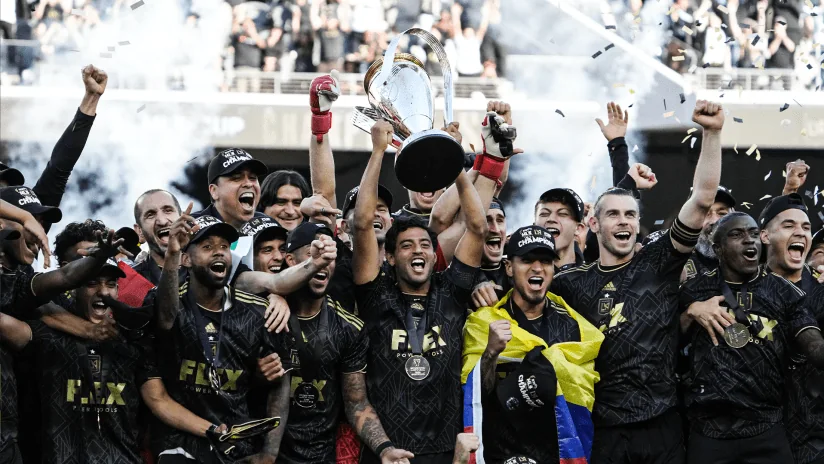
On November 5, LAFC and Philadelphia drew 3–3 after extra time at Banc of California Stadium. LAFC won the penalty shootout 3–0, becoming MLS Cup champion for the first time and completing the Supporters' Shield–MLS Cup double.
Kellyn Acosta and Jesús Murillo scored LAFC's regulation-time goals, with Gazdag and Elliott answering for Philadelphia. The score was 2–2 after ninety minutes. Elliott then put Philadelphia ahead in added time at the end of extra time, before Gareth Bale's header made it level again at 120+8.
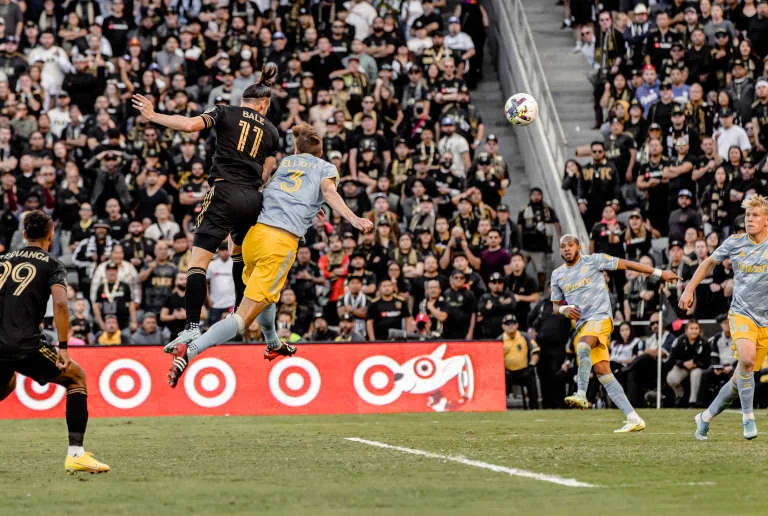
The extra-time period had already brought a major change in goal. Maxime Crépeau was injured and sent off following a collision with Cory Burke, leaving LAFC with ten players. John McCarthy entered as the replacement goalkeeper and later made two shootout saves, earning MLS Cup MVP honors. The substitution is essential to understanding why the goalkeeper receiving that award had begun the final on the bench.
Why the score and the championship result differ
Philadelphia failed to convert its three attempts: Gazdag shot over, and McCarthy saved from José Martínez and Kai Wagner. LAFC converted through Bouanga, Hollingshead and Ilie Sánchez. The shootout finished 3–0, but the match remained a 3–3 draw after extra time. Recording the final as a 6–3 win would combine two different scoring contests and misstate what happened.
This distinction also explains why an archive might list the game as a draw while a championship list names LAFC as the winner. The match score describes the goals during play. The shootout identifies which tied team won the title. Both pieces of information belong in a complete record, with neither replacing the other.
The minute notation needs similar care. “120+8” means the eighth minute of added time after the nominal end of extra time. It is not a separate third extra-time period. Describing the header as arriving in the 128th minute is a common shorthand, while preserving 120+8 in a scoring log makes the structure of the match clear.
For anyone revisiting the highlights, watch the sequence in order. The two regulation-time equalizers explain why the game reached extra time; the goalkeeping change explains the shootout personnel; Philadelphia's later lead explains the stakes of Bale's header. A compilation beginning only with the penalties loses several of the decisions and reversals that made the final distinctive.
The complete bracket can now be read backward from the champion. LAFC entered after a bye, beat the Galaxy, beat Austin and then prevailed against Philadelphia in the final. Philadelphia also entered after a bye, eliminated Cincinnati and NYCFC, and finished as runner-up after the shootout. That gives each final result a place in the tournament rather than leaving the championship as an isolated famous match.
For the broader title history, the MLS Cup winners list records the champions across seasons. For this particular year, retain the defining archival details: fourteen qualifiers, a single-elimination bracket, thirteen matches and a championship decided after a 3–3 final. Those facts belong to 2022 even as MLS schedules, club rosters and postseason rules continue to change.
Comments
Comments are reviewed before publication.
Spam, abusive content, personal information and policy-violating links are not published.
Sign in with Google to comment or reply.
Loading comments…