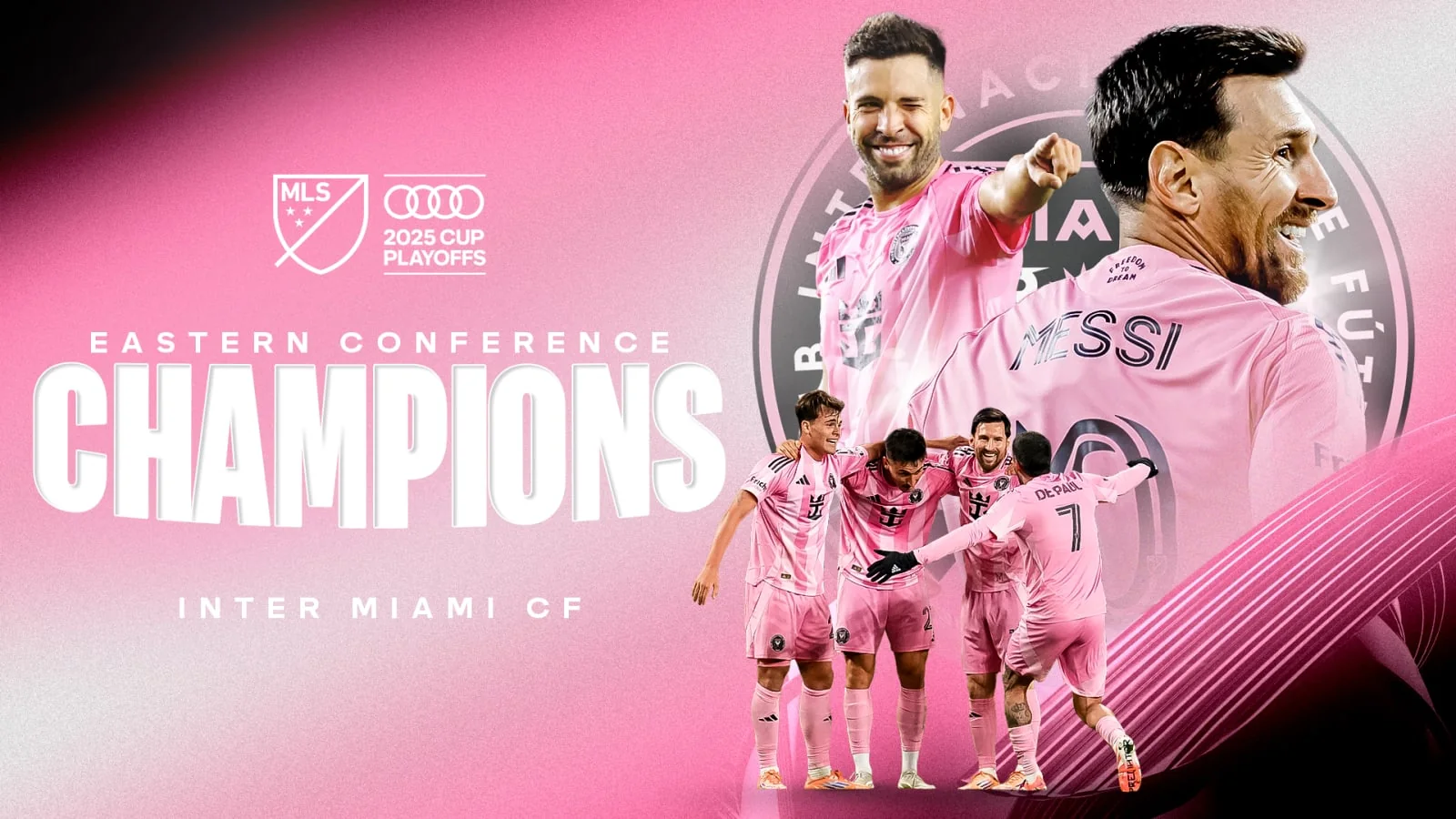
Inter Miami CF and Vancouver Whitecaps FC are the most recent MLS conference champions. Miami won the Eastern Conference playoffs in 2025, Vancouver won the Western Conference playoffs, and both advanced to MLS Cup. The 2026 conference titles remain undecided as of August 28 because the regular season and postseason are still in progress.
This article uses “conference champion” in the postseason sense. That is not always how search results use the phrase. Some pages call the club at the top of the Eastern or Western regular-season table a conference winner, while others mean the club that survives the Conference Final. MLS history treats the playoff winner as the conference champion, so that is the definition behind every row below.
What an MLS conference championship means
Modern MLS playoffs are divided into Eastern and Western paths. The winner of each Conference Final receives the conference title and advances to MLS Cup, where the two paths meet for the league championship. Winning the conference is therefore a postseason achievement. It says a club won its side of the bracket; it does not necessarily say the club finished first during the regular season.
Three related labels should stay separate:
- Regular-season conference leader: the team that finishes with the best record in its conference table.
- Conference champion: the team that wins its conference playoff bracket or Conference Final.
- MLS Cup champion: the conference champion that wins the final.
A single club can claim all three, but the honors are not automatic. In 2024, LAFC finished as the West's No. 1 seed, yet LA Galaxy won the Western Conference playoffs. New York Red Bulls entered the Eastern playoffs as the No. 7 seed and still became East champion. Those examples show why a standings table cannot substitute for a conference-winners list.
The historical record also requires caution because MLS changed its playoff structure repeatedly. Three seasons had no conference playoffs at all, and older wildcard rules sometimes placed a club in the opposite conference bracket. This guide preserves the bracket that was actually played instead of retroactively forcing modern geography onto old results.
Complete Eastern and Western Conference champions table
The “result” column records the Conference Final or championship series, not MLS Cup. “Agg.” marks a two-leg aggregate result, while “pens” and “a.e.t.” mark penalty shootouts and extra time. An asterisk identifies a club that won a bracket outside its usual conference under historical crossover rules.
| Season | Eastern champion | East result | Western champion | West result |
|---|---|---|---|---|
| 2025 | Inter Miami CF | 5-1 vs NYCFC | Vancouver Whitecaps FC | 3-1 at San Diego |
| 2024 | New York Red Bulls | 1-0 at Orlando | LA Galaxy | 1-0 vs Seattle |
| 2023 | Columbus Crew | 3-2 a.e.t. at Cincinnati | LAFC | 2-0 vs Houston |
| 2022 | Philadelphia Union | 3-1 vs NYCFC | LAFC | 3-0 vs Austin |
| 2021 | New York City FC | 2-1 at Philadelphia | Portland Timbers | 2-0 vs Real Salt Lake |
| 2020 | Columbus Crew | 1-0 vs New England | Seattle Sounders FC | 3-2 vs Minnesota |
| 2019 | Toronto FC | 2-1 at Atlanta | Seattle Sounders FC | 3-1 at LAFC |
| 2018 | Atlanta United FC | 3-1 agg. vs RBNY | Portland Timbers | 3-2 agg. vs Sporting KC |
| 2017 | Toronto FC | 1-0 agg. vs Columbus | Seattle Sounders FC | 5-0 agg. vs Houston |
| 2016 | Toronto FC | 7-5 agg. a.e.t. vs Montréal | Seattle Sounders FC | 3-1 agg. vs Colorado |
| 2015 | Columbus Crew | 2-1 agg. vs RBNY | Portland Timbers | 5-3 agg. vs Dallas |
| 2014 | New England Revolution | 4-3 agg. vs RBNY | LA Galaxy | 2-2 agg.; away goals vs Seattle |
| 2013 | Sporting Kansas City | 2-1 agg. vs Houston | Real Salt Lake | 5-2 agg. vs Portland |
| 2012 | Houston Dynamo | 4-2 agg. vs D.C. | LA Galaxy | 4-2 agg. vs Seattle |
| 2011 | Houston Dynamo | 2-0 at Sporting KC | LA Galaxy | 3-1 vs Real Salt Lake |
| 2010 | Colorado Rapids* | 1-0 vs San Jose* | FC Dallas | 3-0 at LA Galaxy |
| 2009 | Real Salt Lake* | 0-0; 5-4 pens at Chicago | LA Galaxy | 2-0 a.e.t. vs Houston |
| 2008 | Columbus Crew | 2-1 vs Chicago | New York Red Bulls* | 1-0 at Real Salt Lake |
| 2007 | New England Revolution | 1-0 vs Chicago | Houston Dynamo | 2-0 vs Kansas City |
| 2006 | New England Revolution | 1-0 at D.C. | Houston Dynamo | 3-1 vs Colorado |
| 2005 | New England Revolution | 1-0 vs Chicago | LA Galaxy | 2-0 at Colorado |
| 2004 | D.C. United | 3-3; 4-3 pens vs New England | Kansas City Wizards | 2-0 vs LA Galaxy |
| 2003 | Chicago Fire | 1-0 a.e.t. vs New England | San Jose Earthquakes | 3-2 a.e.t. vs Kansas City |
| 2002 | No conference playoffs | |||
| 2001 | No conference playoffs | |||
| 2000 | No conference playoffs | |||
| 1999 | D.C. United | 2 matches to 1 vs Columbus | LA Galaxy | 2 matches to 1 vs Dallas |
| 1998 | D.C. United | 2 matches to 1 vs Columbus | Chicago Fire* | 2 matches to 0 vs LA Galaxy |
| 1997 | D.C. United | 2 matches to 0 vs Columbus | Colorado Rapids | 2 matches to 0 vs Dallas |
| 1996 | D.C. United | 2 matches to 0 vs Tampa Bay | LA Galaxy | 2 matches to 0 vs Kansas City |
The three blank seasons are deliberate, not missing research. From 2000 through 2002, MLS used league-wide playoff semifinals without conference playoff brackets, so assigning East and West champions would create honors the competition did not award. The eventual MLS Cup finalists still exist in the record, but they were semifinal winners rather than conference champions.
The starred rows are equally important. Chicago's 1998 West-bracket title and the 2008-10 crossovers reflect the rules and seedings of those seasons. The label describes the path won, not a permanent realignment of the club.
Recent conference champions in the single-elimination era
MLS returned the Conference Final to a single match in 2019. The change increased the value of one performance and made hosting useful but not decisive. Toronto and Seattle both won away in the 2019 Conference Finals. Seattle then defended the West in 2020, while Columbus took the East and went on to beat the Sounders in MLS Cup.
The next two seasons widened the field. New York City FC and Portland won in 2021; Philadelphia and LAFC followed in 2022. Three of those four clubs were first-time conference champions in those particular bracket histories, while Portland added a third West title. LAFC then repeated as Western champion in 2023, showing that single elimination creates volatility without making sustained excellence impossible.
2023: rivalry drama in the East, control in the West
Columbus's 2023 East title came through one of the great Conference Finals. The Crew trailed FC Cincinnati 2-0, forced extra time and won 3-2 through Christian Ramírez's 115th-minute goal. Hours later, LAFC beat Houston 2-0 to retain the West. Columbus then won MLS Cup, so the East comeback became the turning point of the entire postseason.
2024: the No. 7 seed wins the East
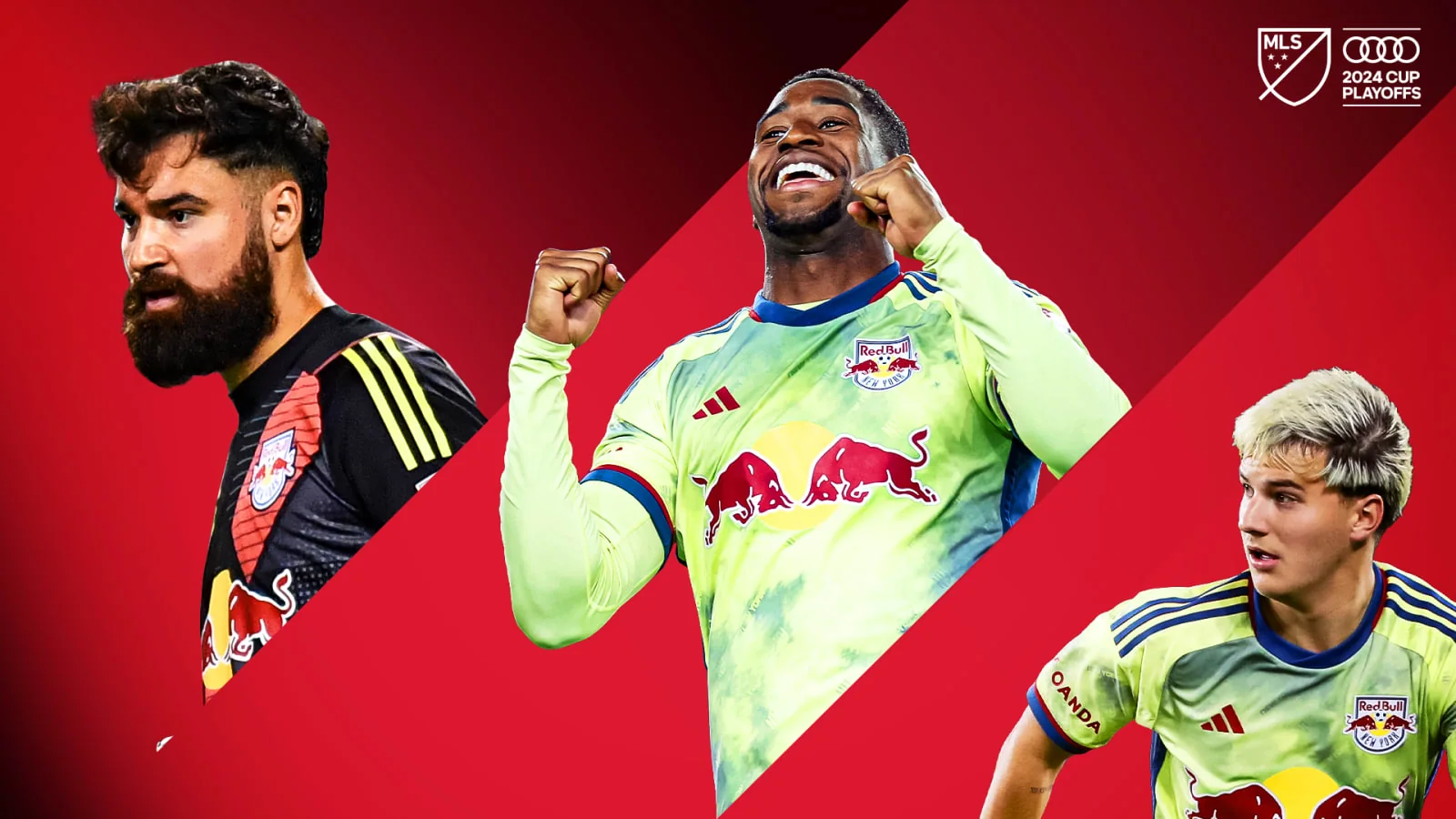
New York Red Bulls made the sharpest possible argument against equating seed with champion. New York entered seventh in the East, eliminated defending champion Columbus, beat NYCFC and then won 1-0 at Orlando through Andrés Reyes' headed goal. MLS described the Red Bulls as the lowest seed ever to reach MLS Cup. LA Galaxy won the West 1-0 over Seattle and later completed the title run.
2025: first conference titles on both sides
Inter Miami routed NYCFC 5-1 for its first Eastern title, powered by Tadeo Allende's hat trick. Vancouver won 3-1 at San Diego for its first Western title. Their meeting guaranteed a first-time MLS Cup champion, and Miami finished the run with a 3-1 final victory.
Across these seven seasons, 11 different clubs filled 14 conference-champion places. Seattle and LAFC repeated on the West side; every East champion was different. That is a concise picture of modern MLS parity, although it describes outcomes rather than proving that the conferences are equally strong.
Clubs with the most conference playoff titles
LA Galaxy dominates the Western Conference count with eight playoff titles. The club won the West bracket in 1996, 1999, 2005, 2009, 2011, 2012, 2014 and 2024. That total exceeds LA's six MLS Cups because two conference-winning runs ended in final defeats. Conference titles measure how often a club reached the last step, not how often it completed it.
| Eastern leaders | Titles | Western leaders | Titles |
|---|---|---|---|
| D.C. United | 5 | LA Galaxy | 8 |
| New England Revolution | 4 | Seattle Sounders FC | 4 |
| Columbus Crew | 4 | Portland Timbers | 3 |
| Toronto FC | 3 | Houston Dynamo | 2 |
| Houston Dynamo | 2 | LAFC | 2 |
D.C. United leads the Eastern bracket count with five, four of them from 1996-99 and the fifth in 2004. New England and Columbus follow on four. Their stories differ sharply: New England's four East titles produced no MLS Cup, while Columbus converted three of four conference wins into league championships. Toronto won three East titles in four seasons from 2016 through 2019.
Seattle's four West titles all arrived from 2016 through 2020, making the Sounders the defining Western playoff team of that period. Portland's three titles came in 2015, 2018 and 2021. Houston is unusual because its two West titles came in 2006-07, then the same club won two East titles in 2011-12 after a conference move.
Counts follow the bracket, not the club's usual geography. New York Red Bulls therefore owns one West-bracket championship from 2008, while Real Salt Lake and Colorado own East-bracket titles from 2009 and 2010. Removing those results because the labels look strange today would make the totals easier to read but historically wrong.
How the MLS Conference Final format changed
1996-99: a series, not one final
The first four seasons used best-of-three conference series. The table therefore says “two matches to zero” or “two matches to one” rather than presenting an aggregate score. Early MLS also used shootouts to resolve tied regular-time matches, so modern readers should not interpret those series through today's draw rules.
2000-02: conference titles disappear
MLS reorganized the playoffs into league-wide semifinal structures for three seasons. Teams still advanced to MLS Cup, but there was no Eastern Conference Final or Western Conference Final to win. That is why this article shows “No conference playoffs.” Calling New England the 2002 Eastern champion or LA Galaxy the Western champion may feel intuitive because they met in MLS Cup, but it retroactively applies a title that was not part of that bracket.
2003-11: one match, plus crossover complications
Conference Finals returned as single matches in 2003. Extra time and a shootout decided ties. Wildcard rules could move teams across the bracket, producing the unusual 2008-10 rows. New York Red Bulls represented the West bracket in 2008; Real Salt Lake and Colorado won the East bracket in 2009 and 2010 even though both were Western clubs. In 2010, both teams in the nominal Eastern Conference Final—Colorado and San Jose—were normally from the West.
Those examples are not typos and do not mean the clubs permanently changed conferences. MLS seeded wildcard entrants into available bracket positions, and the champion label followed the side of the playoff tree.
2012-18: two legs and aggregate goals
From 2012 through 2018, the Conference Finals became home-and-away series decided by aggregate goals. MLS introduced the away-goals tiebreaker in 2014, which immediately mattered when LA Galaxy and Seattle finished 2-2 on aggregate. LA advanced because its goal in Seattle counted as the decisive away goal. The method rewarded performance across two venues but could make the end of a series difficult to understand without knowing the tiebreaker.
2019 onward: single-elimination returns
Since 2019, one Conference Final determines each champion, normally hosted by the higher remaining seed. If level after 90 minutes, the match proceeds to two full extra-time periods and then penalties if needed. The format creates a clear event and a direct path to MLS Cup, while leaving more room for a lower seed to win one road match—as the 2024 Red Bulls demonstrated.
Comparing title counts across these eras is valid as a record, but not perfectly neutral as a measure of difficulty. Some champions survived a best-of-three series, some won over two aggregate legs and others needed one decisive performance.
Regular-season leaders, conference champions and the open 2026 race
A reader asking for “MLS Eastern Conference title” may want one of two different pages. For the current table, playoff line and games played, use the MLS standings. For the actual postseason path and Conference Final, use the MLS playoffs bracket. This historical list is the right destination only after a conference champion has been decided.
Regular-season leadership still matters. It determines seeding and can provide home-field advantage, and the best record across the entire league earns the Supporters' Shield. But the standings leader does not receive the postseason conference championship merely for finishing first. The 2024 West illustrates the distinction: LAFC won the No. 1 seed, while LA Galaxy won the conference playoffs and MLS Cup.
Who are the 2026 MLS conference champions?
They are not known as of August 28, 2026. The regular season is scheduled through November 7, followed by the postseason. Nashville's lead in the East and Vancouver's position in the West at this checkpoint affect seeding races, but neither team can be added to the conference champions table before it wins the relevant playoff bracket.
After the 2026 Conference Finals, this article should be updated in a strict order:
- Verify each result through an official match report.
- Add the two winners and their deciding scores to the table.
- Recalculate East and West title counts, preserving bracket crossover conventions.
- Update the current-champion introduction only after both finals are complete.
For old regular-season conference tables, use the MLS standings history. Keeping that record separate from this one prevents a common error: crediting the strongest team over 34 matches with a playoff title it did not win.
The complete answer through 2025 is now stable. Inter Miami and Vancouver are the latest East and West champions; D.C. United leads Eastern bracket history with five; LA Galaxy leads Western history with eight; and 2000-02 remain seasons without conference playoff champions.
Comments
Comments are reviewed before publication.
Spam, abusive content, personal information and policy-violating links are not published.
Sign in with Google to comment or reply.
Loading comments…