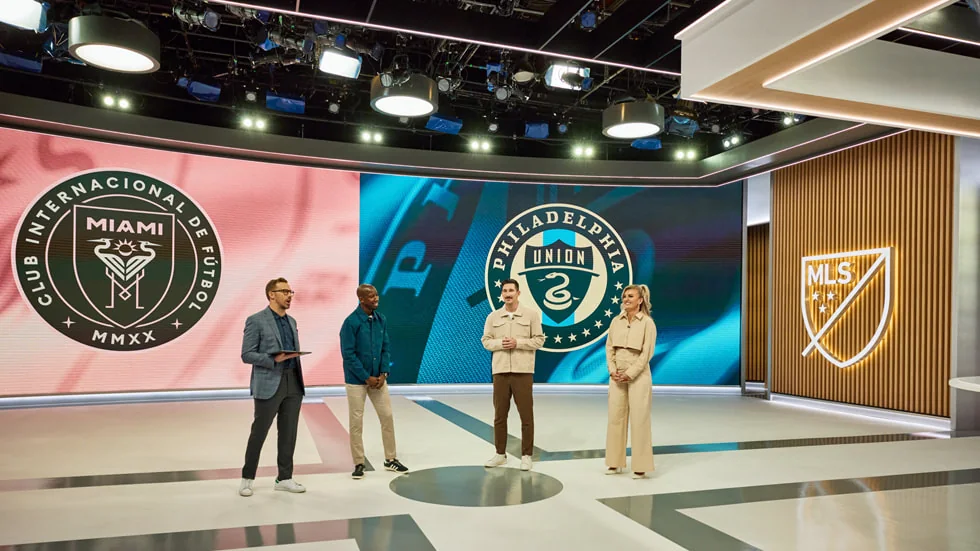
Some MLS fans miss the sustained analysis and familiar voices that helped them follow the league between matches. The documented changes tell a more specific story than claims that all coverage has disappeared. This guide separates confirmed developments from fan speculation and identifies useful current options, checked September 6, 2026.
What some MLS fans say is missing
The frustration expressed in an August 2026 MLS discussion goes beyond whether a match is available to stream. Participants missed sustained debate, familiar presenters, documentaries and a regular way to follow clubs other than their own. Other commenters preferred independent coverage and questioned whether the league should be the main producer of analysis. Those are competing preferences within one discussion, not a survey of the MLS audience.
Access and understanding are different benefits
A full broadcast answers whether you can watch your team. An analytical program helps answer why the team played that way, what changed during the match and whether the result fits a larger pattern. A viewer can be satisfied with the first service while finding the second difficult to replace.
Consider a supporter who watches one club every weekend but wants to understand its next opponent. A collection of goals may identify the opponent's dangerous striker. It will not necessarily explain how that side creates space, why its midfield has changed or which recurring weakness a coach is trying to fix. Those questions require someone to connect evidence across games.
A familiar show also creates a routine
Long-running programs give listeners a shared vocabulary. A prediction made in February can be revisited in August; a host can explain why an earlier judgment was wrong. That continuity makes the rest of the league easier to follow, even when a viewer cannot watch every fixture. Losing the routine can feel larger than losing an equivalent number of video minutes.
Discoverability is another issue. In a separate supporters' discussion, a poster initially struggled to find a weekly recap and later reported finding it. That experience does not prove a program was removed. It shows why a viewer's complaint needs a precise diagnosis: is the desired content unavailable, difficult to locate, or simply different from the discussion they wanted? Each problem calls for a different response.
What changed, and what the evidence does not establish
Two documented departures belong to different dates
Extratime's ending is documented by its own publisher. The farewell episode featuring Andrew Wiebe, David Gass and Matt Doyle appeared in January 2025. Its description explicitly presented the episode as the end of the show's run. That is stronger evidence than a listener noticing an empty feed.
Doyle's departure from MLSsoccer.com came later. In a February 11, 2026 personal announcement, he said he had been told his services were no longer needed amid organizational restructuring and a change in the site's written coverage. He also described plans to continue his newsletter and join Kickback Soccer Media. The explanation should be attributed to Doyle, rather than expanded into an independently verified account of the league's entire media strategy.
These dates matter. Calling both changes a single August 2026 cancellation would distort the sequence. The August discussion revisited losses and changes that listeners had experienced over a longer period. It did not, by itself, announce a new personnel decision.
A show listing is not a guarantee of an unchanged format
Apple's MLS catalog still identifies MLS Wrap-Up. That makes a blanket statement that the show has disappeared misleading. At the same time, retaining a title does not prove that every episode has the same presenters, length or balance of clips and discussion as an earlier season. Availability and format are separate questions.
The public material examined here does not establish a total production budget or prove that artificial intelligence replaced particular writers or editors. Those explanations appear in fan speculation, but an unsatisfying article or awkward highlight edit is not enough to identify how it was produced. A criticism can be specific and valid without attaching an unverified cause: a viewer can identify a missing explanation, an incorrect label or a hard-to-find program and ask for that problem to be fixed.
Why highlights cannot replace every kind of analysis
Moments and patterns answer different questions
A goal clip answers an immediate question: how did the ball reach the net? A useful analytical segment can ask why the same opening kept appearing. Both are worthwhile, but the second may need sequences that produced no shot and never reached a conventional highlights package.
Consider a hypothetical match in which a fullback repeatedly advances while a midfielder moves wide to cover. A short clip might show the fullback delivering a decisive cross. A longer explanation could compare several earlier possessions, identify the opponent's pressing trigger and show when the covering midfielder was pulled out of position. The goal then becomes part of a tactical story rather than an isolated piece of skill.
The same distinction applies to a substitution. Showing the player entering and later scoring establishes the outcome. Explaining the change requires looking at the team's shape, the opponent's response and the chances that did not go in. An analyst should also admit when the footage cannot settle whether a change was planned or improvised.
Familiar voices can provide continuity

A recurring analyst can connect this week's performance with an earlier prediction. Listeners can remember what the analyst expected, hear why the explanation changed and decide whether the reasoning remains convincing. That continuity is one reason a program can matter beyond its running time or the number of matches it mentions.
Personality alone does not make analysis reliable. A favorite host still needs to distinguish observation from inference and correct mistakes. Equally, a new presenter deserves to be judged on the explanation offered, rather than rejected simply for replacing a familiar voice. The useful standard is whether the coverage helps a viewer notice something meaningful on the next matchday.
That is also why adding more clips may leave a particular complaint unanswered. Someone seeking a quick score recap can be satisfied while someone seeking a sustained explanation still has a gap. A broad media offering should make those different purposes easy to recognize.
League coverage and independent reporting serve complementary needs
Start with the question, then choose the source
For a confirmed kickoff change or an announced broadcast arrangement, the organizer's release is an important starting point. For an assessment of whether a club's roster construction makes sense, a reader may want several explanations, including work produced outside the league's own channels. Those are different information needs, and a single outlet does not have to satisfy all of them.
The distinction is especially useful when a story mixes fact and judgment. A club can confirm that it signed a player. An analyst can argue that the signing leaves a weakness elsewhere. A reporter can investigate how the deal developed. Reading those pieces together helps separate the transaction from the competing interpretations of its value.
Doyle's writing illustrates that a change of publisher does not necessarily mean the analysis itself has vanished. His Tactics Free Zone newsletter carried new transfer grades, power rankings and a matchday roundup in late August and early September 2026. Readers who miss his work on the league website can follow the author at the current destination.
Ownership alone cannot settle credibility
A league-produced interview can contain revealing answers. An independent podcast can offer a weak argument. The more useful questions are whether the author identifies the evidence, distinguishes reporting from opinion, acknowledges uncertainty and deals fairly with counterexamples. A recognizable brand is a starting point for attention, not a substitute for those checks.
For example, an argument that a team struggles against a high press should show more than one unfortunate turnover. It should explain the sample, consider opponent quality and recognize any matches that point the other way. That standard is equally applicable to a studio discussion, a newsletter and a supporter-created video.
Readers can also support variety without expecting every creator to cover every club. A specialist who follows one team closely may supply details that a league-wide show cannot fit into its running time. The broader program can provide comparisons across conferences. Used together, those perspectives reduce the burden on any one voice and give fans more ways to challenge an explanation that feels incomplete.
What the 2026 programming announcements actually add
New ways to experience selected matches
The current picture also includes additions. Apple's February 2026 season announcement introduced Saturday Showdown with enhanced production and confirmed the return of Sunday Night Soccer, including dedicated in-stadium pregame and postgame shows. Those are documented programming commitments, even though viewers can disagree about the finished presentation.
A more recent MLS announcement about Yahoo Sports and The Cooligans describes two upcoming alternate broadcasts with Alexis Guerreros and Christian Polanco. The announced dates are September 16 for Inter Miami against Cruz Azul in Campeones Cup and October 28 for Inter Miami against FC Cincinnati. As of September 6, both broadcasts are still ahead.
The announced Yahoo Sports website and app coverage includes pregame programming and the full match, alongside the main Apple TV broadcast. This gives a viewer a concrete example of an additional presentation style to try. It does not yet provide evidence of how well the shows will work in practice.
A match presentation is different from a weekly editorial service
An alternate broadcast can offer a different conversation during a game. A weekly analytical program can revisit developments across the league after the matches are over. Neither format automatically supplies the other's strengths. Someone who enjoys a new commentary team may still want a Monday discussion of clubs that were not in the featured game.
The same applies to production technology. An unusual camera angle can reveal movement or make an event feel closer. It cannot, by itself, explain a club's recruitment policy or assess a coach's decisions over several months. Those subjects depend on reporting, preparation and time devoted to the argument.
Fans can therefore assess the new offerings with two separate questions: did the presentation improve this match, and does the overall selection of programs help me follow the league between matches? A positive answer to one does not require a positive answer to the other. Keeping the questions distinct makes feedback more useful and avoids treating an announced experiment as either a complete solution or a failure before it airs.
Build a manageable MLS reading and listening routine
Choose a mix that answers your own questions
Replacing a familiar program does not require subscribing to every soccer feed. Start with three needs: keeping up with your club, understanding the wider league and checking a claim that deserves a closer look. One dependable source for each purpose can be more useful than a long queue of overlapping episodes.
For listeners looking for a current discussion format, Soccerwise's official creator hub links to its podcast, YouTube channel and newsletter. Its podcast description names David Gass, Tom Bogert, Matt Doyle and Jordan Angeli across coverage of MLS, NWSL and U.S. soccer. Check individual episode titles and participants rather than assuming every release is an MLS roundtable with the same panel.
For written analysis, Tactics Free Zone provides a direct route to Doyle's current work. Check the access label on the article you want to read before subscribing; the existence of a public headline does not mean the full piece is freely available. Sample an accessible article and decide whether its depth and style suit the questions you follow.
Use chapters, then test an explanation against the match
Episode chapters can make a long discussion practical. If your question concerns a particular club, start with that segment, then listen to a comparison involving its next opponent. This gives the broader league context a purpose instead of making the entire episode feel like required homework.
When an analyst points to a recurring pattern, return to the relevant match sequence if you can. Our MLS highlights and full-match replay guide explains those viewing options. A replay is particularly helpful when an argument depends on positioning away from the ball, since a short goal clip may omit the earlier movement.
For official studio programming, the MLS 360, Countdown and Wrap-Up guide separates the shows' purposes. Use that distinction to choose live updates, pregame context or a recap, then add independent work where you still want more explanation. Review the mix after a few matchdays: keep the sources that teach you something, and remove duplication that only consumes time.
How to give feedback that identifies a useful improvement
Separate a missing program from a discovery problem
The edited Columbus supporter post offers a useful lesson: the author eventually found the Wrap-Up replay that had seemed unavailable. That does not erase the frustration of searching. It changes the problem from restoring a missing show to making an existing show easier to find.
If you encounter the same difficulty, record the program name, episode date, device and route you tried. Describe whether search returned no result, a series page lacked the expected episode, or the player opened the wrong item. Those details give a support team something reproducible to investigate. A general complaint that all coverage is gone does not identify which step failed.
A format complaint needs different evidence. Identify the episode and the segment that left a question unanswered. Explain whether the issue was too little tactical detail, insufficient attention to an opponent, unclear labels or a discussion that moved on before explaining its conclusion. None of those observations requires guessing how much the program cost.
Ask for a specific editorial result
A useful request might be a clearly labeled weekly analysis archive, chapters that identify each club discussed, or a recurring segment that revisits earlier predictions. These are examples of improvements a viewer could evaluate. They are more concrete than asking a broadcaster to recreate an entire remembered era of coverage.
For a written piece, the equivalent request might be a link to the underlying roster rule, an explanation of the comparison period or a correction to an inaccurate player description. For a podcast, it might be clearer separation between reported information and the hosts' own transfer preferences. The aim is to improve understanding, not to require agreement with every opinion.
After a change, judge the result against the original request. Can you find the episode more easily? Does the analysis answer the question it raised? Are different clubs receiving meaningful explanation rather than a passing mention? Those checks allow fans to recognize progress while continuing to ask for the depth, continuity and range of voices that made following MLS enjoyable between matchdays.
Comments
Comments are reviewed before publication.
Spam, abusive content, personal information and policy-violating links are not published.
Sign in with Google to comment or reply.
Loading comments…