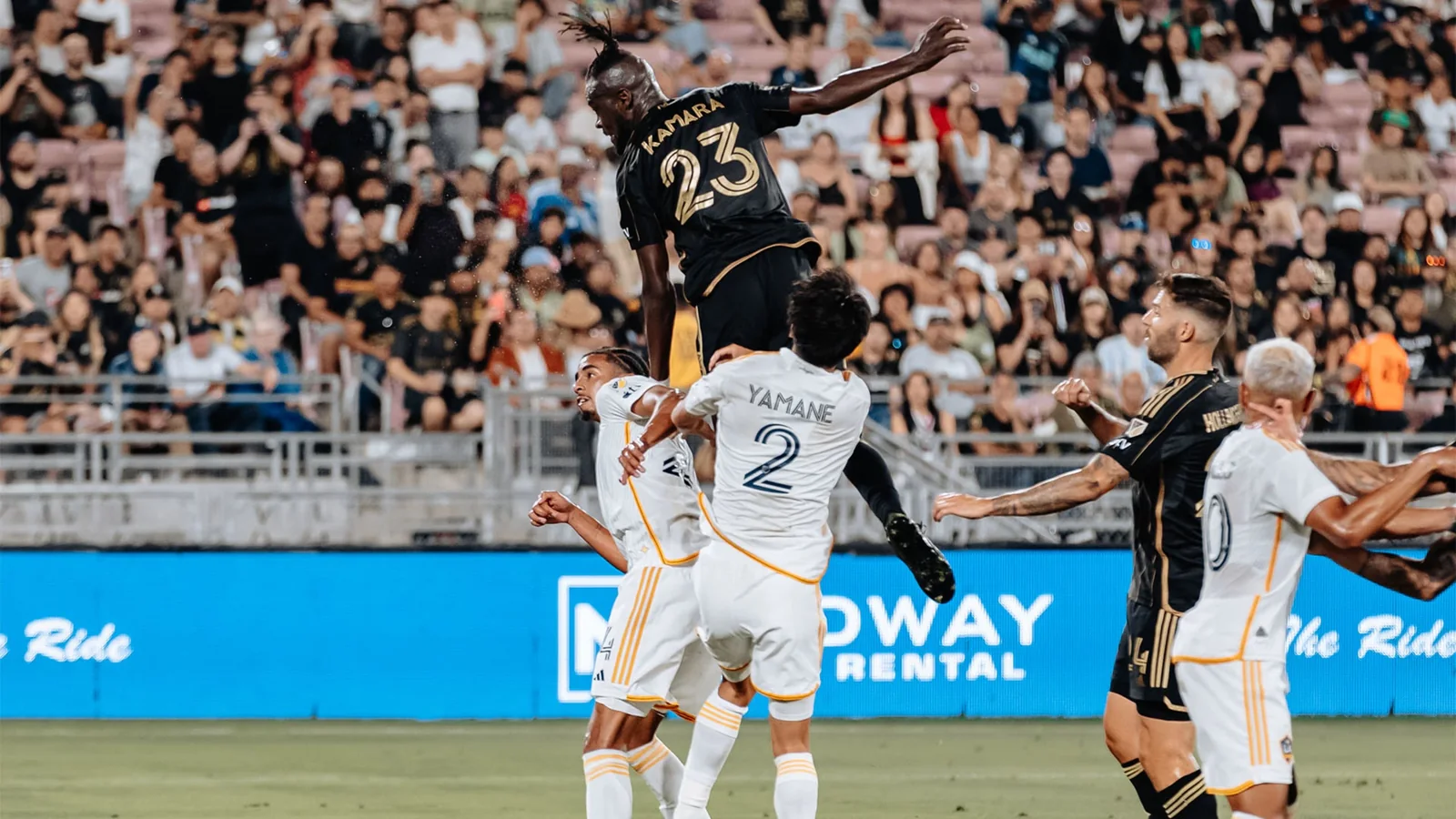
Los Angeles has two MLS clubs: LA Galaxy and Los Angeles Football Club, usually called LAFC. They are distinct teams with different histories and home grounds. The Galaxy normally plays at Dignity Health Sports Park in Carson, while LAFC's home is BMO Stadium in Exposition Park. Their meetings are known as El Tráfico.
The broader phrase “Los Angeles soccer teams” also includes women's professional soccer, with Angel City FC competing in the NWSL. This guide, checked on October 18, 2026, introduces that wider scope before comparing the two MLS clubs and helping you choose what to watch.
Los Angeles soccer includes more than one kind of team
Start by deciding which question you mean. If you want men's MLS in the Los Angeles market, the answer is LAFC and the Galaxy, both in the Western Conference. If you want a professional women's match, Angel City is a separate club in a separate competition. If you are looking for a youth team to join, a college program or a reserve match, a first-team MLS comparison will not answer the participation or development question.
Angel City uses BMO Stadium, so a search for the building can display events for either Angel City or LAFC. The shared address does not make an Angel City ticket an LAFC ticket, and it does not put the women's club in MLS. Read the organizer, competition and event name together. This matters especially when someone chooses a date based only on a stadium calendar and assumes the familiar ground means the familiar team.
The city label also needs care. In sports, “Los Angeles” often means a broader metropolitan community rather than only the municipal boundary. Carson is a different city from Los Angeles, yet the Galaxy's identity and support are part of the region's soccer history. LAFC's stadium is within Los Angeles proper. Those are geographical facts, not instructions about which residents are allowed to support which club.
For planning, use three columns: club, competition and venue. Add the specific date only after identifying the match you want. This keeps a first-team league fixture separate from an international friendly, a cup event or a development match that happens to involve a similar name. It also makes it easier to compare a trip fairly: your choice is a particular event and experience, not simply a badge on a search result.
This article concentrates on the two MLS clubs because that is the central comparison behind the query. It is not an exhaustive inventory of every professional, semi-professional, college, amateur or youth side across Southern California. For the rest of MLS geography, the existing MLS teams map provides the wider league context. Keep that broader map in mind without assuming that nearby clubs in another city are automatically Los Angeles teams.
LA Galaxy and LAFC have different starting points
The central historical difference is time. The Galaxy helped establish MLS; LAFC entered an older and much larger league. That shapes how their stories are told, but it does not decide who will win the next game. Historical trophies measure completed achievements. Current form requires current results, and a comparison should say which one it is discussing.
The Galaxy and the original MLS era
The Galaxy began league play in 1996 as one of MLS's original ten teams. Their supporters can connect the present club with the competition's earliest seasons and multiple championship periods. That continuity is a major part of the club's appeal for someone who enjoys following a long institutional story, including the seasons when the team fell short as well as the years when it won.
Through the completed 2025 season, the Galaxy had six MLS Cups: 2002, 2005, 2011, 2012, 2014 and 2024. The spread matters as much as the total. It includes different groups of players and different stages of MLS, rather than a single short run. For a broader comparison of league achievements, the site's most successful MLS teams guide explains its ranking method.
That history gives the Galaxy a strong answer to a trophy-based question. It does not establish that every current player is more accomplished than an LAFC counterpart, or that every match favors the older club. Keep the unit of comparison consistent: a club's decades of results and a present squad's ability are related context, not the same measurement.
LAFC and the expansion era
LAFC was announced in October 2014 and began MLS play in 2018. Its story therefore includes the opportunity to build a new club identity and a new home in an established soccer market. Supporters joining that launch could help create traditions from the start, while later fans inherit a history that is shorter but already contains substantial competitive milestones.
LAFC won the Supporters' Shield in 2019 and 2022, MLS Cup in 2022 and the U.S. Open Cup in 2024. A Shield rewards the regular season; MLS Cup comes through the postseason; the Open Cup is a separate tournament. Counting them accurately requires keeping those competition labels attached rather than presenting every trophy as another MLS championship.
The different starting points also caution against permanent style labels. A comparison written during one coach's tenure may accurately describe that season's pressing or buildup, yet become a poor guide after personnel and coaching changes. Watch the current team before deciding that a club always plays one way. The useful historical contrast is original MLS institution versus later expansion institution; the useful sporting comparison comes from what each is doing now.
Their home grounds create different journeys
For a visitor, geography may be the most immediate difference between the clubs. Compare the journey from where you actually stay, including the trip home, rather than choosing by the apparent distance between names on a map. Neither a Los Angeles address nor a Carson address predicts how easy an evening will be for every traveler.
BMO Stadium in Exposition Park
LAFC's normal home is BMO Stadium, formerly Banc of California Stadium. The 22,000-seat ground is in Exposition Park at 3939 South Figueroa Street. BMO Stadium is its own name and location; it should not be confused with BMO Field in Toronto. Historical pictures bearing the former sponsor name can still show the same Los Angeles stadium.
LAFC's travel guidance identifies the Metro E Line to Expo Park/USC and the J Line's 37th Street/USC station as possible approaches. Plan the complete route for your date, including the final walk and return service. If driving, use the current event parking map and the lot attached to your pass. A car trip and a Metro trip should be compared as complete door-to-seat experiences.
Dignity Health Sports Park in Carson
The Galaxy's normal home is Dignity Health Sports Park at 18400 Avalon Boulevard, Carson. Its venue guidance includes event parking, a designated rideshare area and information about the Galaxy Express for eligible home MLS matches. Check the current event instructions before relying on a service described in an older guide, particularly when the match is in another competition.
A visitor staying south of central Los Angeles may evaluate the Carson journey differently from someone staying near an E Line station. Test your own route at the relevant departure time. Add security, walking and a comfortable buffer rather than planning to reach a car-park entrance exactly at kickoff. Recheck traffic controls and any transit alerts on the day.
Both clubs can also appear in fixtures at special venues. El Tráfico has been staged at the Rose Bowl, so the badge alone cannot settle where a particular derby will be played. Confirm the stadium printed on the named event before booking a hotel, parking or transport. This matters more than a general description of where a club usually plays.
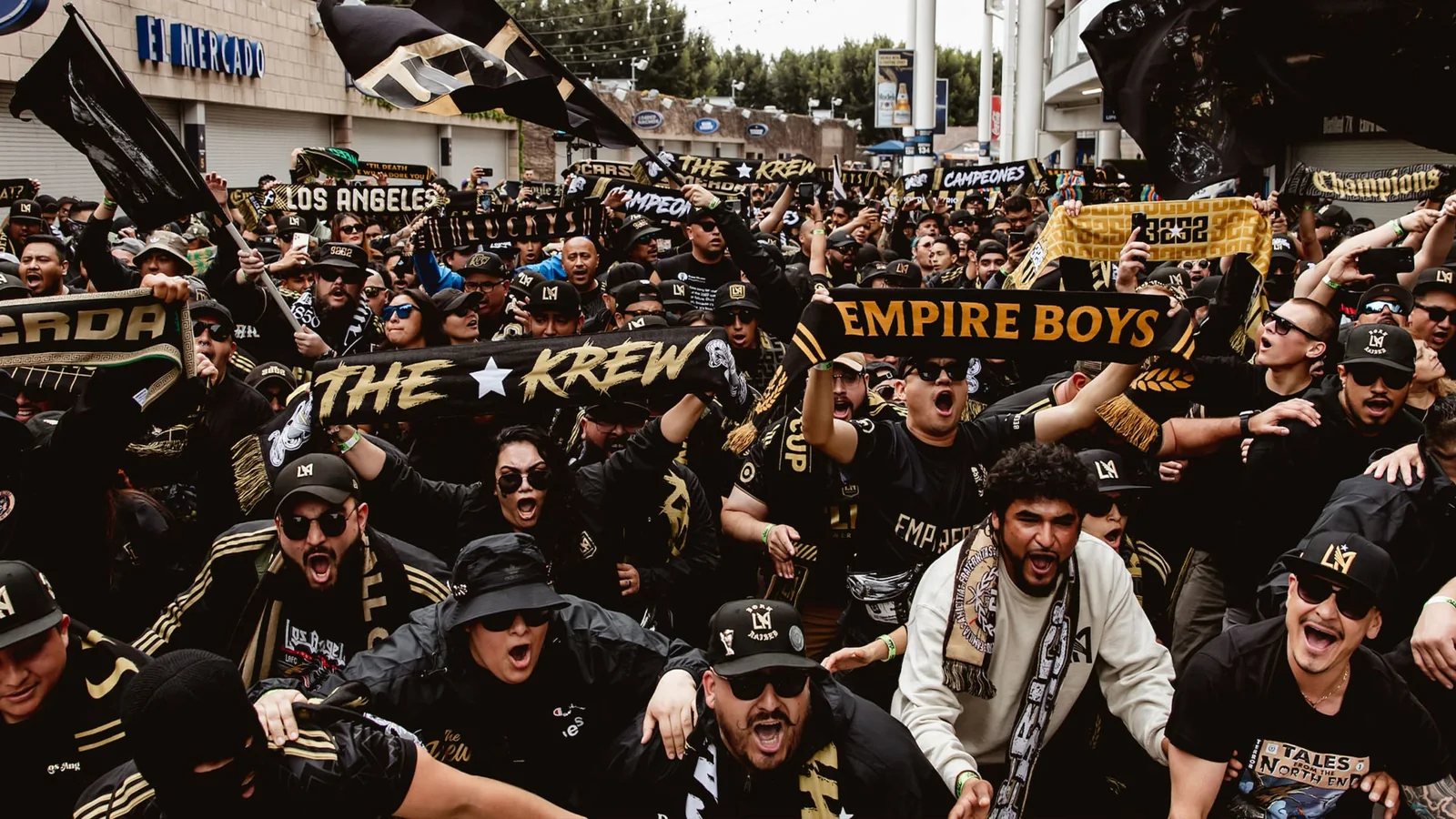
Once the location is clear, compare the viewing environment you want: a sideline perspective, organized support, a seated family visit or a hospitality area. Read the section's actual rules and inclusions. Stadium geography helps choose a practical match, but it should not turn into a claim that every supporter of one club lives in the city and every supporter of the other lives elsewhere.
El Tráfico turns the comparison into a rivalry
El Tráfico is the name attached to the LAFC-Galaxy rivalry, playing on the region's familiar traffic theme. The matches provide a recurring sporting argument about Los Angeles representation. That argument can be lively without requiring a rigid social, ethnic or class boundary between the fan bases. Individual supporters have their own reasons for choosing a side, often involving family, friends, a particular season or a first stadium visit.
The first league meeting on March 31, 2018 established a memorable pattern of drama. The Galaxy recovered to win 4–3 in Zlatan Ibrahimović's MLS debut. That match became an immediate reference point, but later meetings gave LAFC its own defining nights. A rivalry's identity develops through the responses as well as the opening event.
LAFC's 5–3 playoff win in 2019 was its first victory in the series. Another postseason meeting in 2022 ended with a late Cristian Arango winner on LAFC's path to that year's championship. Those examples explain why supporters remember more than a routine regular-season scoreline. The competition and consequence of a match can make it central to the clubs' stories.
Do not treat the old examples as a forecast. A derby that once produced many goals can later be cautious, and a favorite in the standings can struggle against its neighbor. Lineups, coaching, availability and the competition all matter. Historical entertainment is a reason to be interested; it is not a guarantee of a specific score or a sound basis for a betting claim.
Likewise, a head-to-head total is only useful with a cutoff and competition scope. League matches, playoff matches and cup meetings are not interchangeable categories. This guide uses selected documented milestones instead of presenting a number that will become outdated after the next fixture. A current match preview should verify the complete series record separately.
If attending a derby, read the ticket's supporter-area restrictions and use the official away allocation where appropriate. Choose the atmosphere deliberately, respect other visitors and follow staff instructions. Being a visitor does not require pretending to support the home team, but it does require recognizing the rules of the section you buy. Organize transport and tickets early enough that the rivalry's occasion does not overwhelm the basic plan.
The clubs compete within the same league structure as everyone else. The MLS standings show the current points picture, and the playoff guide explains postseason stakes when relevant. Reading that context alongside the derby's history produces a richer comparison than declaring one club permanently superior because of a single memorable night.
Choose a club or a match on your own terms
If you are choosing a team to follow, start with what creates a connection for you. Family history may make the Galaxy the natural choice. Seeing LAFC's launch, visiting its ground or following a particular player may make the newer club feel familiar. A close friend can introduce you to either. None of those reasons requires a demographic explanation for every other supporter in the region.
Watch several matches before deciding what the present team offers. Pay attention to the players around the most recognizable star, how the team responds when behind and whether you enjoy following its week-to-week story. One highlight video can attract interest, but it cannot describe every match or guarantee the same personnel will stay for the years you support the club.
If you are choosing a single outing, make the decision more practical. Compare the date, venue, journey, available section and full cost for your party. A normal home match may be a better first visit than a derby if you want more flexibility, while the rivalry may be the occasion you specifically want to experience. Check real listings rather than assuming that one club is always cheaper or one stadium is always easier to reach.
Match the seating environment to your companions. Organized support is an attractive feature for someone who wants to sing and stand; it can be the wrong setting for someone expecting a quiet seated evening. Both clubs offer more than a single kind of experience. Ask about the section you are buying, accessibility needs and current entry rules instead of relying on a blanket label such as “the family club.”
You can also choose Angel City when the goal is a women's professional match. Its NWSL calendar and supporter culture deserve to be considered on their own terms, even though its home building is shared with LAFC. There is no need to force every Los Angeles soccer outing into the same men's derby comparison.
For a trip involving more than one match, use the MLS weekend schedule to compare dates, then verify each club's event details. Check the displayed time zone, allow for travel between places and avoid treating a stadium name as a reservation. Your best choice can be the club you feel attached to, the match that fits the visit or a chance to experience several parts of the region's soccer scene. The two MLS teams provide a compelling starting point, while Los Angeles soccer extends beyond the rivalry between them.
Comments
Comments are reviewed before publication.
Spam, abusive content, personal information and policy-violating links are not published.
Sign in with Google to comment or reply.
Loading comments…