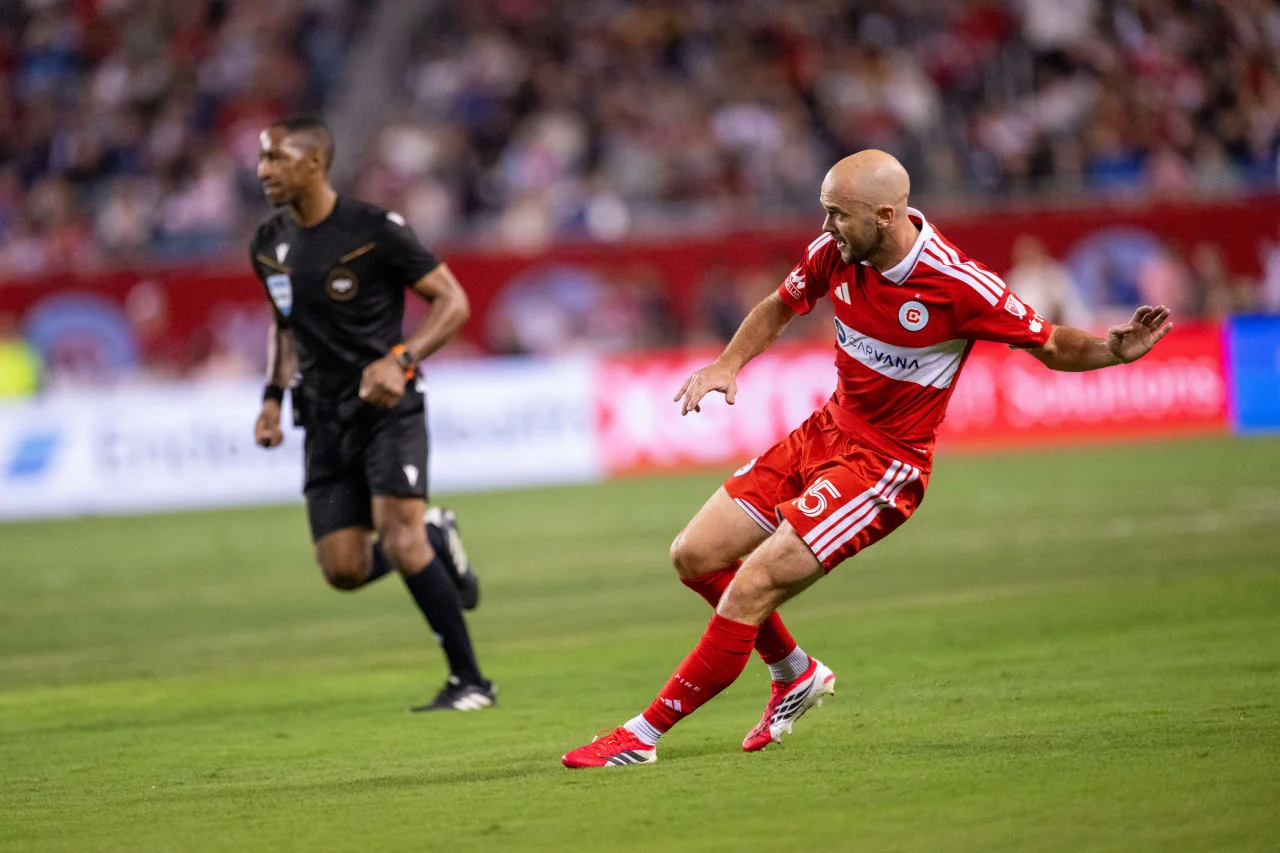
The Chicago Fire FC player group in October 2026 includes goalkeeper Chris Brady, defenders Jack Elliott and Mbekezeli Mbokazi, midfielders Robin Lod and Anton Salétros, and an attack featuring Robert Lewandowski, Jonathan Bamba and Philip Zinckernagel. Understanding the squad means looking beyond its most recognizable striker to the combinations around him.
This is a dated guide checked on October 18, 2026. The complete table below follows names displayed on the club's first-team roster page, with numbers and broad positions checked against official profiles or current club player cards. A website listing is different from a medical clearance or a confirmed starting lineup.
The Chicago Fire roster snapshot for October 2026
The official club page displayed the following 31 names when reviewed. This is a directory snapshot, not an active squad certification: it still included Chris Mueller, whose retirement Chicago announced on September 4, as well as players with loan flags. Williams had a temporary August recall with a scheduled return to Colorado on August 24; that announcement does not establish current Chicago availability. The table records these distinctions. Broad profile positions also need interpretation: a player labeled forward can operate wide, while a midfielder can fill more than one role.
| No. | Player | Official broad position | Directory note |
|---|---|---|---|
| 1 | Chris Brady | Goalkeeper | Club-listed |
| 2 | Leonardo Barroso | Defender | Also presented as Leo Barroso |
| 3 | Jack Elliott | Defender | Club-listed |
| 4 | Mbekezeli Mbokazi | Defender | Club-listed |
| 5 | Sam Rogers | Defender | Role confirmed by club acquisition announcement |
| 6 | Anton Salétros | Midfielder | Club-listed |
| 7 | Maren Haile-Selassie | Forward | Club-listed |
| 8 | Chris Mueller | Forward | Retired September 4; name retained in directory |
| 9 | Robert Lewandowski | Forward | Profile specifies central striker |
| 10 | André Franco | Midfielder | Club-listed |
| 11 | Philip Zinckernagel | Forward | Club-listed |
| 12 | Puso Dithejane | Forward | Club-listed |
| 15 | Andrew Gutman | Defender | Club-listed |
| 17 | Robin Lod | Midfielder | Club-listed |
| 18 | Johan Gómez | Midfielder | Current profile classification |
| 19 | Jonathan Bamba | Forward | Club-listed |
| 21 | Andreas Hanche-Olsen | Defender | Number and role from current club card |
| 22 | Mauricio Pineda | Midfielder | Club-listed |
| 23 | Anzor Mekvabishvili | Midfielder | Number from current club card |
| 24 | Jonathan Dean | Defender | Club-listed |
| 25 | Jeffrey “Jeff” Gal | Goalkeeper | Profile uses Jeffrey Gal |
| 26 | Omari Glasgow | Forward | Profile loan flag; 2026 Monterey Bay loan |
| 28 | Dean Boltz | Forward | Club-listed |
| 29 | David Poreba | Midfielder | Club-listed |
| 32 | Noah Allen | Defender | Club-listed |
| 35 | Sergio Oregel Jr. | Midfielder | Club-listed |
| 37 | Robert Turdean | Midfielder | Club-listed |
| 38 | Christopher Cupps | Defender | Profile loan flag; Greenock Morton loan through 2026 |
| 42 | Dje D’Avilla | Midfielder | Club-listed |
| 44 | Josh Cohen | Goalkeeper | Club-listed |
| 47 | Sam Williams | Midfielder | Profile loan flag; temporary August recall, scheduled August 24 return to Colorado |
Names and numbers are a recognition aid, not a depth-chart ranking. A low shirt number does not guarantee a starting place, and a broad position label does not explain every task a player performs. Use the table to identify the person, then use the match lineup and the team's actual shape to understand the role.
The directory should also be read alongside dated club announcements. A signing, loan or departure can change the practical squad before every website component is updated. Older preseason lists are particularly poor guides to an October team. For the next match, the MLS games today page supplies schedule context; the official matchday team sheet settles who is selected.
Goalkeepers and defenders set the platform
The back unit is easiest to understand as a set of relationships. The goalkeeper needs passing options; defenders need protection ahead of them; wide players need someone covering the space they leave. A squad table identifies the candidates, but watching those relationships explains why the selection can change from one opponent to another.
The goalkeeping group
Brady, Gal and Cohen form the three goalkeeping names in the directory. Their presence provides more context than simply identifying a No. 1 shirt. A season can require another goalkeeper because of international duty, rotation or a different availability issue. The announced team sheet is therefore more useful than assuming a number fixes the order permanently.
Chicago's September 26 win at Charlotte supplies a documented example. Cohen made his first Fire appearance and kept a clean sheet while Brady was away with the United States. That is a dated event explaining how depth was used. It is not a statement that the same availability situation continues indefinitely or that one game settles the next selection.
When assessing goalkeeping, watch the work before a shot as well as the save itself: starting position, communication and the decision to play short or longer. Those actions connect to the defensive unit's spacing. A goalkeeper facing fewer difficult chances may be benefiting from effective team defending, while a spectacular save does not erase every earlier decision in the sequence.
Central and wide defensive options
Elliott, Mbokazi, Rogers and Hanche-Olsen are important names to recognize in the defensive group. Barroso, Gutman, Dean and Allen add further defensive options, while Cupps remains in the directory with a loan flag on his profile. Do not convert that list into a declared starting back line without current match evidence.
The Charlotte lineup demonstrates the need to read the actual game. Dean, Elliott, Mbokazi and Barroso started, with Rogers and Gutman entering later. That arrangement belongs to that match. It gives a concrete example of selection and substitutions without proving that Chicago always uses the same shape or that every listed defender was available.
For central defenders, watch how they judge when to step toward the ball and when to protect the space behind. For wide defenders, watch the relationship with the winger: one can advance while the other provides cover or an inside passing option. Those are questions for observing the team, rather than unsupported ratings of who is fastest, strongest or best.
Finally, notice what happens after possession is lost. A defender's difficult recovery can begin with a pass or movement several seconds earlier. Reading the unit this way makes the midfield connection essential and prevents the squad guide from becoming a collection of isolated player names.
Midfield connects progression with chance creation
Chicago's midfield names include Salétros, Lod, Franco, Pineda, Mekvabishvili, Oregel, D’Avilla, Gómez, Poreba and Turdean. Williams is also retained in the directory under a loan flag; his documented August recall was temporary, with a scheduled August 24 return to Colorado. Those names should not be read as interchangeable or all currently available. The relevant question is which selected combination gives the team a route forward while protecting it when possession changes.
Central combinations
Begin by watching who offers a pass to the defenders and who positions farther forward. One midfielder can draw pressure while another waits beyond the first opponent, creating a choice between securing possession and advancing it. This is an observation framework, not a statement that the Fire has published a permanent job description for every player.
Lod's official profile identifies him as left-footed, a useful recognition detail when following his body shape and passing angles. It does not mean every move goes through him or that foot preference alone defines his role. Salétros, Franco and Mekvabishvili are other midfield names to recognize as the team assembles combinations around availability and the opponent.
The September Charlotte lineup included Oregel and D’Avilla in central midfield, with Pineda and Poreba entering later. That gives a concrete example of different members contributing within one match. To assess the changes, watch where the substitute receives and what happens to the players nearby. Replacing a person does not always mean replacing the same tactical function.
Gómez's current club profile calls him a midfielder even though a match sheet can use him farther forward. That is a useful reminder about classification. A roster label is a broad category; a particular match can demand movement into a different zone. Do not force what you see into an old squad list's terminology when the current lineup provides better context.
Width and attacking support
The midfield relationship also reaches the wide attackers. Bamba, Zinckernagel and Haile-Selassie are listed broadly as forwards, but their work around the ball can connect directly to midfield progression. Mueller's directory card also uses that category, although his September 4 retirement means he should not be included as a current attacking option. Watch whether a selected wide player stays outside, moves inside to combine or runs beyond the defense. Those choices influence how much space a central striker receives.
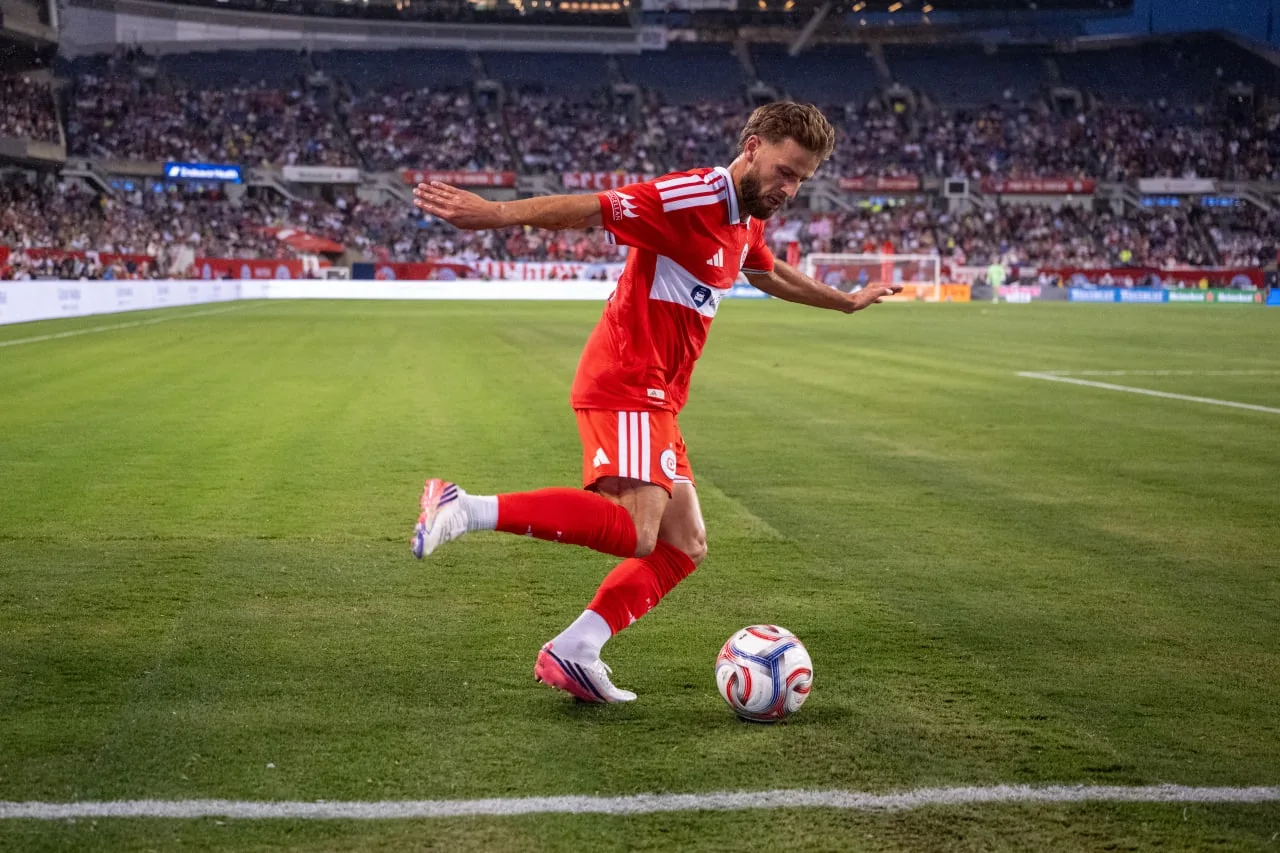
Do not assess the wide player in isolation. A nearby defender's overlapping run can change the available pass, while a central midfielder's position can provide cover if the attack breaks down. A successful delivery is often the final action of several players creating the opening together. Following those links gives a better understanding of the squad than counting only the final scorer and assist provider.
The forward group extends beyond one famous name
Lewandowski is the clear recognition point for many new readers. His official profile identifies No. 9 as a central striker. That describes the area in which to begin watching him, but the quality of the attack depends on more than the finishing action. The supply, supporting runs and positioning of teammates shape which chances reach the striker in the first place.
The August 29 draw at Seattle gives two concrete examples. Lewandowski helped connect the move for Haile-Selassie's goal, then later headed in a Dithejane delivery at the near post. The same match shows the striker contributing as a link and as a finisher. Those actions are more informative than assuming every forward in the group simply waits for the same kind of cross.
For the heading chance, follow the sequence before contact: the ball reaches the wide player, the delivery is prepared and the striker times the run. For the earlier move, watch what the supporting player does after the striker's touch. A goal can depend on several coordinated decisions even when one person receives the scoring credit. These examples belong to that dated match and are not a claim that every later attack follows the pattern.
Dithejane's profile places him among the forwards, and the club also describes him as a winger. Boltz is another forward in the directory. Their broad classifications do not establish a permanent order of preference or a shared role with Lewandowski. A substitution can add width, change the route toward goal or alter how the team presses, rather than simply replacing one central striker with another.
Glasgow is likewise a forward in the directory, with his profile marked loaned out. Keep that qualification attached when discussing the group's practical depth. A name associated with Chicago is not automatically an option for the next first-team bench. Check the transaction and current selection before turning a long directory into a claim of unlimited attacking choices.
The existing Lewandowski at Chicago Fire guide covers his individual Chicago chapter in more detail. Here the useful task is connecting the entire squad: midfield players need receiving options, wide attackers need movement in the box and the forward line needs a way to recover or contest possession when a move ends. Watch those relationships and the roster becomes a guide to the match rather than only a list of famous names.
Read the roster alongside availability and development
The strongest correction to a simple directory reading comes from Mueller. Chicago announced his retirement on September 4, 2026, although his name remained on the roster page when checked for this guide. His card therefore records an association with the club; it does not make him an active attacking option. A dated transaction or retirement announcement can resolve a question that a familiar photograph leaves open.
Loans and the Fire II distinction
Several loan situations also need their own dates and conditions. Chicago announced Glasgow's move to Monterey Bay FC for the 2026 regular season on February 18. Cupps moved on loan to Greenock Morton through the end of 2026 in an August 24 announcement. Both names remained in the first-team directory with loan flags when reviewed. Their continued appearance is a reason to check the transaction, rather than assume a return.
Williams provides a more detailed example. The Fire announced a recall from Colorado Springs on August 18 for two matches, with a return to Colorado scheduled for August 24. That was a temporary recall with an explicit endpoint. It should not be shortened to a claim that his loan had permanently ended or that he is currently available in Chicago. His profile's loan flag and that dated announcement must be read together.
The directory is also not an exhaustive ledger of every player whose contract remains connected to Chicago. September announcements sent Viktor Radojević to CF Montréal through the end of 2026, with an option for six more months, and Dylan Borso to Greenock Morton through the end of 2026. Neither was among the 31 names displayed on the checked directory. These are additional loan contexts, rather than extra rows silently added to a table labeled as a website snapshot.
Chicago Fire II has its own roster and competes at the MLS NEXT Pro level. The academy also publishes separate youth-team lists. Those pages help follow development, but a name there should not automatically be added to an MLS matchday bench. Some names can appear across development and first-team pages; Turdean is an example in the checked directories. The relevant registration and selection still matter for the competition being played.
From a squad list to a matchday team
For a specific fixture, work through the information in a practical order: identify the match and competition, read the latest club transactions, check the applicable availability information, then read the announced lineup and substitutes. A directory supplies names. A transaction explains a change. A team sheet answers the narrower question of who has actually been selected that day.
MLS categories such as Designated Player and Homegrown also describe roster construction rather than an automatic place in the starting eleven. The league's rules govern how squads are assembled and registered; they do not provide a ranking of who will play best against the next opponent. Avoid using a salary category, shirt number or international reputation as a substitute for the match evidence.
Once the game begins, use this guide to connect the names with actions: who offers the first pass, who protects the center, who supplies width and who attacks the final delivery. Keep the date attached to the roster snapshot, especially when revisiting it after a transfer window or a new announcement. That combination of identification, transaction context and observation makes the list useful without pretending it certifies every player's current fitness or eligibility.
Comments
Comments are reviewed before publication.
Spam, abusive content, personal information and policy-violating links are not published.
Sign in with Google to comment or reply.
Loading comments…