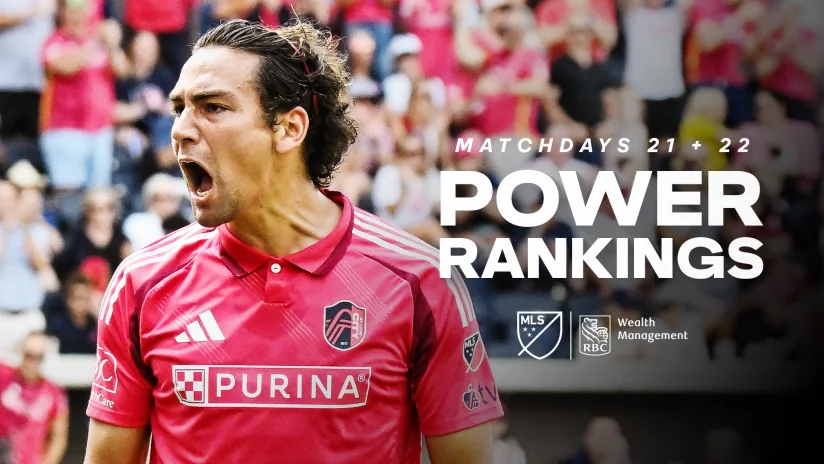
Nashville SC is the best MLS team right now. Vancouver Whitecaps FC is the closest challenger, while Chicago Fire FC and Houston Dynamo FC have played their way into the championship conversation. That is the short answer from this ranking, which is frozen after matches completed on August 27, 2026. It is a current-strength list, not a verdict on the biggest brands or the most decorated clubs in league history.
That distinction matters. A team can own more MLS Cups and still rank below a club playing better soccer in 2026. Readers looking for trophy history should use our ranking of the most successful MLS teams. Readers who need the live table should go to the MLS standings page, because every result after this cutoff can change the evidence below.
The 2026 MLS power rankings at a glance
These rankings blend what teams have earned with how prepared they look for the postseason. Season performance accounts for 50% of the judgment: points per game, goal difference and conference position. Current trajectory accounts for 30%, emphasizing the last ten league matches and results since the World Cup break. The final 20% covers postseason readiness—defensive reliability, match-winners, squad depth and meaningful roster changes.
The first two categories are anchored in results. The third is necessarily editorial. There is no official MLS formula that turns a roster into a playoff probability, so close calls should be read as reasoned comparisons rather than mathematical certainties. The method also avoids using historic trophy totals as a hidden tiebreaker.
| Rank | Team | Aug. 27 snapshot | Why the team is here |
|---|---|---|---|
| 1 | Nashville SC | 49 points, 15-2-4 | League-leading results and an elite defensive floor |
| 2 | Vancouver Whitecaps FC | 40 points, +27 GD | West leader with the strongest goal difference |
| 3 | Chicago Fire FC | 36 points, +11 GD | Winning form and a balanced contender profile |
| 4 | Houston Dynamo FC | 38 points | Within two points of Vancouver after a major road win |
| 5 | Inter Miami CF | 39 points | Defending champion with a high ceiling but falling form |
| 6 | St. Louis CITY SC | 33 points, 7-0-3 last ten | The hottest sustained run among the chasing teams |
| 7 | LAFC | 35 points | Proven match-winners offset an August slowdown |
| 8 | New England Revolution | 34 points | Steady accumulation and a strengthened attack |
| 9 | FC Cincinnati | 31 points | Evander gives every knockout match a decisive edge |
| 10 | Charlotte FC | 32 points | Secure playoff position with added attacking upside |
A power ranking does not award a trophy, seed a bracket or override the table. MLS standings determine playoff position, while this list answers a different question: if the contenders met on neutral ground now, which teams combine the best body of work with the strongest outlook? That is why Miami can remain fifth despite recent defeats, and why fast-rising St. Louis can rank sixth despite sitting below several clubs on total points.
Why Nashville and Vancouver are the top two
1. Nashville SC: the league's highest floor
Nashville owns the most persuasive case because no other team combines its points pace, defensive control and ability to rescue difficult games. The 3-2 comeback against Columbus was the ideal demonstration. Nashville trailed 2-1 entering stoppage time, then Reed Baker-Whiting and Andy Nájar scored to turn a likely defeat into three points. The win moved the club to 49 points after 21 matches—the best 21-game start in MLS history—and nine points clear in the Supporters' Shield race.
The 15-2-4 record is not built on one hot week. Nashville's +26 goal difference shows that the team has generally controlled the scoreboard at both ends. A contender with only two league defeats can survive a quiet attacking night; a contender that also finds late goals can turn draws or losses into wins. That combination produces the highest floor in the league and explains why Nashville stays first even before anyone tries to project playoff matchups.

2. Vancouver Whitecaps FC: the strongest challenger
Vancouver ranks second because its best performances look like those of a champion. The Whitecaps led the West on 40 points and owned a league-best +27 goal difference at the cutoff. After losing 1-0 to Houston in midweek, they answered by scoring four first-half goals in a 5-0 demolition of FC Dallas. That response matters: an elite team does not need to be unbeaten, but it must show that one setback does not become a spiral.
The gap to Nashville is real, so this is not a disguised claim that Vancouver should lead the Shield table. The Whitecaps have played one fewer match, yet nine points remain a substantial deficit. Their argument is about ceiling and balance. A dominant goal difference suggests repeatable control rather than a pile of narrow escapes, and first place in a competitive Western Conference gives the record proper weight.
If these rankings judged the last spectacular result alone, Vancouver might be first. The declared method gives the full season half the weight, which keeps Nashville ahead. For Vancouver to close the gap, it needs to preserve that superior scoring margin while converting more of its high-level performances into a sustained winning run.
Chicago and Houston are the breakthrough contenders
3. Chicago Fire FC: a surge with enough structure behind it
Chicago's rise to third is more than excitement around a recognizable attacker. The Fire had 36 points and a +11 goal difference through August 27, then collected four points during the latest ranking week. That balance is important. A positive scoring margin suggests the team is not merely riding a run of last-minute goals, while continued point accumulation keeps it in the upper tier of the East.
The case for Chicago is also about options. Robert Lewandowski adds penalty-box gravity, but the club's best stretch has involved contributions across the team rather than one player rescuing every match. The risk is workload and expectation. A Leagues Cup quarterfinal loss to Monterrey added another demanding match, and the Fire must show their league surge can persist after tournament intensity and as opponents adjust.
Third does not mean Chicago has overtaken Nashville on evidence. It means the Fire currently offer the best blend among the next group: results strong enough to trust, improving belief and fewer obvious warning signs than the clubs immediately below them.
4. Houston Dynamo FC: the road results make the case
Houston earns fourth after taking three points from an unforgiving two-game sequence. The Dynamo won 1-0 at Vancouver, then lost 2-1 at surging St. Louis. A defeat normally hurts a power ranking, but context matters: beating the West leader away is stronger evidence than padding a streak against the bottom of the table. Houston ended the period on 38 points, only two behind Vancouver.
The Dynamo's profile is less explosive than the Whitecaps'—their goal difference was +4 compared with Vancouver's +27—but knockout soccer often rewards teams comfortable in tight games. Houston has shown it can travel, defend a lead and make an opponent's preferred game uncomfortable. Its biggest question is margin for error. A contender that wins many close matches can move quickly in either direction when finishing or set-piece execution cools.
That is why Houston sits below Chicago despite having more points. The ranking respects the table, but it also asks how repeatable the underlying path looks. Another strong run against top-half Western teams would be enough to challenge for third and possibly second.
Miami, St. Louis and LAFC still have title-winning ceilings
5. Inter Miami CF: champions with an urgent form problem
Inter Miami remains fifth because the defending MLS Cup champion still has the individual quality to decide a knockout game. Lionel Messi and an experienced supporting cast are not theoretical advantages; they have already navigated the pressure of a title run. Miami also had 39 points at the cutoff, third in the overall table, so the ranking is not preserving a famous team with a poor season.
The warning signs are equally real. A 4-1 loss at Nashville was followed by a 2-2 draw with Philadelphia and a 2-1 home defeat to Toronto. That sequence left Miami ten points behind the Shield leader. The Herons' +9 goal difference was healthy but far below the top two, and 40 goals allowed made their defensive floor harder to trust. Fifth balances two truths: Miami can beat anyone, but its recent performances do not justify a top-four spot.
6. St. Louis CITY SC: hottest form, complicated roster
No team outside the top five has a stronger momentum argument. St. Louis went 7-0-3 across its last ten league matches through August 27 and followed a frustrating draw with Sporting Kansas City by beating Houston 2-1. Late winning goals and confidence can become self-reinforcing, especially for a side that does not panic when a match remains level.
Why not rank St. Louis even higher? The full-season total was 33 points, and the midfield changed during the surge. Marcel Hartel left for Hannover 96, while Eduard Löwen moved to San Jose. Strong form deserves weight, but replacing two influential midfielders tests the mechanism that created it. Sixth recognizes the run without pretending roster turnover carries no cost.
7. LAFC: reputation is not enough, but the ceiling remains
LAFC is the clearest test of this article's rules. Historic success and brand power do not earn points, so the club cannot rank above teams currently producing better results. LAFC entered the cutoff without a league win in August, losing 1-0 at Colorado and drawing 1-1 with Portland. It also sat five points behind Vancouver in the West despite having played two more games.
Still, seventh is not a dismissal. LAFC's roster contains match-winners, its +13 goal difference compares well with most of the chasing pack, and experienced knockout teams can look ordinary for a month before finding a decisive performance. The route upward is straightforward: turn territorial control into wins, stabilize the attack after roster changes and re-establish a top-two Western pace. Until that happens, potential cannot outweigh Chicago's, Houston's or St. Louis's current evidence.
New England, Cincinnati and Charlotte complete the top ten
8. New England Revolution: dependable points with a new creator
New England's argument begins with stability. The Revolution took four points from a week that included a 3-0 road win over D.C. United and a 1-1 draw with New York City FC, moving to 34 points. They did not need a perfect week to remain securely in the playoff picture, which is exactly the kind of baseline a power ranking should reward.
Jack Harrison raises the upside. The new Designated Player supplied three assists against D.C. and another against NYCFC, offering immediate evidence that his arrival can change how the attack creates chances. New England sits eighth because its +8 goal difference and recent 3-4-3 league form are solid rather than overwhelming. A sustained burst with Harrison at the center would move the Revs toward the top five.
9. FC Cincinnati: Evander keeps the ceiling high
Cincinnati's 31 points place it below several teams that missed this top ten, but the club owns one of the league's most decisive individual advantages. Evander scored a stoppage-time winner against NYCFC and then found the net again in a 1-1 draw with Seattle. His 13 goals and 11 assists at the cutoff describe more than a good season; they show a creator and finisher capable of changing a postseason match with one action.
The concern is dependence. Cincinnati needs complementary threats and cleaner game control so every result does not hinge on another Evander intervention. Ninth therefore reflects both a dangerous knockout profile and an ordinary 8-6-7 league record. If the supporting attack becomes more reliable, few teams below the top two would want this matchup.
10. Charlotte FC: depth makes the final spot defensible
Charlotte closes the list after taking four points from Toronto and D.C. United. The 3-3 draw in Toronto was frustrating because Charlotte played with a man advantage and held a two-goal lead, but the response—a 3-1 victory over D.C.—prevented that disappointment from becoming a bad week. Thirty-two points and a +8 goal difference kept the club comfortably relevant.
Allan Saint-Maximin's first start adds a different kind of attacking threat after Wilfried Zaha's departure. That does not guarantee an immediate leap; integrating a high-volume dribbler can alter spacing and defensive responsibilities. It does give Charlotte more ways to break a compact playoff opponent. The team edges FC Dallas for tenth because Dallas' 5-0 loss at Vancouver exposed a lower floor at the latest checkpoint, while Charlotte paired its new upside with a positive week.
San Jose and Dallas remain close enough that one matchday could reverse the call. Power rankings should acknowledge that uncertainty instead of manufacturing a hard boundary between tenth and eleventh.
How to use and update these rankings
This list is a checkpoint, not a season-ending prediction. The 2026 regular season runs through November 7 and gives each club 34 matches, so most teams still had more than a third of their schedule ahead at the cutoff. The official MLS table updates after completed matches, while live standings can move during play. Check our current standings before treating any points total here as live.
Three signals should drive the next update. First, head-to-head wins between ranked contenders deserve extra context because they test quality against quality; Houston's win at Vancouver is the model. Second, watch whether recent form survives roster change. St. Louis must replace key midfield influence, while clubs such as Charlotte and New England are integrating important additions. Third, compare goal difference with points. A large mismatch can reveal a team winning many coin-flip games or performing better than its record.
- Likely risers: St. Louis if its unbeaten pace survives the midfield transition; Cincinnati if support around Evander becomes consistent; LAFC if August's winless league run ends.
- Teams under pressure: Miami if defensive concessions continue; Houston if narrow wins reverse; Chicago if tournament workload interrupts its league rhythm.
- The benchmark: Nashville remains No. 1 until results, not reputation, close the gap.
When the playoffs arrive, use the MLS playoff bracket rather than this list to identify actual opponents and paths. Seeding, home field and matchup style can make the nominally stronger team a vulnerable favorite. That is part of the value of a transparent ranking: readers can disagree with the 20% postseason-readiness judgment while still seeing exactly which results support the other 80%.
As of August 27, the clearest conclusion is not merely that Nashville leads. It is that Nashville and Vancouver have separated themselves, Chicago and Houston have earned serious contender status, and the next six remain fluid. The best MLS team in 2026 will ultimately be decided on the field; this ranking explains who has built the strongest case so far.
Comments
Comments are reviewed before publication.
Spam, abusive content, personal information and policy-violating links are not published.
Sign in with Google to comment or reply.
Loading comments…