The confirmed 2026 U.S. Open Cup semifinal schedule
The 2026 Lamar Hunt U.S. Open Cup semifinals will both be played on Wednesday, September 16. Columbus Crew host Orlando City at 7 p.m. Eastern time, followed by Colorado Rapids against St. Louis CITY SC at 9:30 p.m. Eastern. Both matches will air on CBS Sports Network and stream live on Paramount+ in the United States.
The fixtures below were checked against U.S. Soccer and the host clubs' announcements on September 6, 2026. They are upcoming matches, with no semifinal result or finalist yet assigned.
| Semifinal | Venue | Eastern kickoff | Local kickoff |
|---|---|---|---|
| Columbus Crew vs. Orlando City SC | ScottsMiracle-Gro Field, Columbus, Ohio | September 16, 7 p.m. ET | September 16, 7 p.m. EDT |
| Colorado Rapids vs. St. Louis CITY SC | DICK'S Sporting Goods Park, Commerce City, Colorado | September 16, 9:30 p.m. ET | September 16, 7:30 p.m. MDT |
A television doubleheader at two different grounds
The doubleheader description refers to the broadcast evening. These are separate matches in Ohio and Colorado, not two fixtures covered by a single stadium ticket. The two-and-a-half-hour gap between scheduled kickoffs gives viewers a clear order: the Crew and Lions first, then the Rapids and CITY SC.
For Colorado supporters, the local start is 7:30 p.m., not 9:30 p.m. September's daylight-saving time difference places Commerce City two hours behind Columbus. An international viewer should convert from the listed zone rather than treating the Eastern time as the time displayed on every device.
The venue name also matters when locating the first fixture. The Crew's announcement identifies ScottsMiracle-Gro Field. Use that current match listing when arranging tickets or directions, rather than assuming an older stadium reference identifies a different event.
The football stakes are simple: each winner advances to the October final, while each loser exits the competition. A strong MLS league position provides no second leg or additional cup match after a semifinal defeat. That makes both games a direct test of handling one evening with a final place on the line.
How to watch both semifinals
The announced U.S. television channel is CBS Sports Network, with a live stream on Paramount+ for each semifinal. Those are competition-specific listings. The presence of four MLS clubs does not turn the Open Cup into an MLS regular-season broadcast, so an Apple TV league listing is not the right starting point for these two matches.
Watching through a television provider
Search your provider's guide for CBS Sports Network and the exact September 16 fixture. CBS Sports Network is a named sports channel; a local CBS station or a different CBS-branded service should not be treated as interchangeable. Confirm that your package includes the channel before relying on a saved recording or a match reminder.
Because the games are scheduled consecutively, record or select the second fixture as its own event. Keeping the television on after the first match is convenient, but a recording attached only to Columbus-Orlando may stop before Colorado-St. Louis begins. Any studio programming is supplementary to the two match listings.
Streaming on Paramount+
On Paramount+, find the U.S. Open Cup event and confirm that the opponent names and date match the semifinal you intend to watch. Sign in on the device you will actually use before kickoff. A working account on a phone does not by itself confirm that a television app is signed in to the same account.
The official announcements establish the streaming platform, not a universally free viewing offer. Check the service's current subscription terms for your location rather than assuming a trial, promotion or particular price. The U.S. listings also do not establish rights in every other country.
Keep the official Open Cup schedule available for any late listing change. The MLS television schedule helps with surrounding league fixtures, but these semifinals should be followed under their own competition name. That small distinction prevents the most common viewing error: opening the service used for last weekend's league match and expecting the cup tie to appear in the same place.
Columbus and Orlando: two former champions meet
The first semifinal pairs the 2002 Open Cup champion with the 2022 champion. Columbus are seeking another final after reaching the last four for the first time since 2010. Orlando's previous semifinal appearances came in 2019 and during their successful 2022 campaign, making this their third trip to the stage.
Columbus have built their run on controlled results
The Crew opened with a 3-0 victory over Richmond Kickers, followed by a 4-1 win against One Knoxville. Their quarterfinal required a smaller margin: a 1-0 home victory over New York City FC secured the September date with Orlando.
Across those three matches, the scorelines produce eight goals for Columbus and one conceded. That is a description of this cup run, not a claim about their entire league season. It shows that the Crew have progressed without needing to win a shootout or survive a high-scoring comeback in these rounds.
The semifinal asks whether that control can hold against another MLS side with a varied attacking threat. A narrow lead would still require careful management, while an early setback would demand something different from the comfortable margins of the opening two rounds. The previous results provide a useful baseline without deciding how the next game will unfold.
Orlando have survived several kinds of cup match
The Lions' route has been less uniform. They won 1-0 away to FC Naples, then emerged from a seven-goal match against New England with a 4-3 victory. Their quarterfinal against Atlanta United was a 4-1 home win built on four first-half goals.
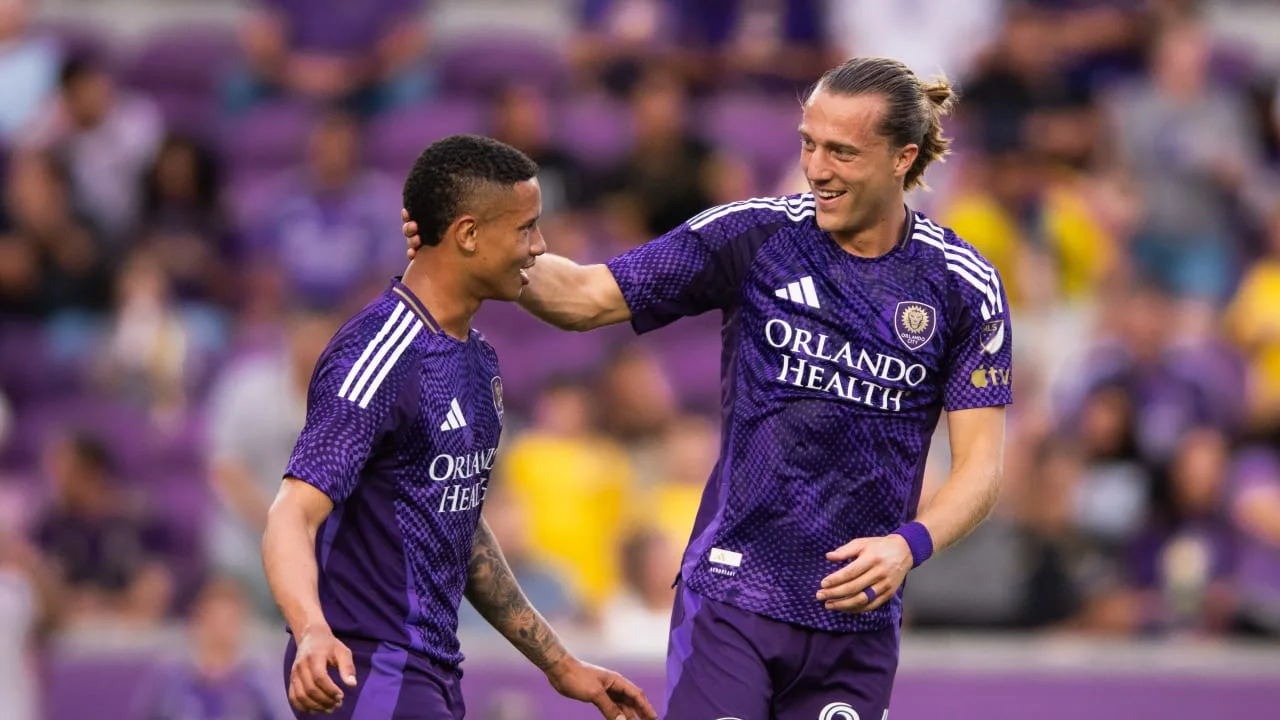
The Naples match is a reminder that a one-goal win can contain significant resistance: Javier Otero made seven saves, while Tyrese Spicer supplied the decisive finish. The New England tie showed that Orlando could keep finding goals in a match where a lead did not settle the contest. Against Atlanta, a fast start created a much larger cushion.
Those experiences give the Lions different examples to draw on, but none guarantees the same response in Columbus. The most revealing early question is whether they can generate the chances that made the Atlanta first half so productive without allowing the semifinal to become as open as the New England match. For the Crew, disrupting that attacking rhythm while preserving their own cup defensive record is the corresponding challenge.
Colorado and St. Louis: a first Open Cup title within reach
The later semifinal guarantees a finalist seeking its first U.S. Open Cup title. Colorado reached the championship match in 1999 but finished as runners-up. St. Louis CITY SC are in their first Open Cup semifinal, with a chance to turn an already significant run into a first appearance in the final.
Colorado's route included a demanding derby
The Rapids began with a 1-0 victory over Union Omaha. Their Round of 16 encounter with Colorado Springs Switchbacks then went well beyond a routine home win: the match finished 2-2 after extra time, with Colorado advancing 5-4 in the shootout.
That derby forced the Rapids to respond after a very late setback. They had taken the lead in extra time before a Switchbacks penalty restored the tie near the end. Winning the shootout required them to recover immediately from losing what had looked like a decisive advantage.
The quarterfinal against San Jose was cleaner. Darren Yapi and Rafael Navarro scored in a 2-0 victory, with the Rapids protecting the lead and keeping the Earthquakes out. Colorado have therefore demonstrated two different ways of advancing: holding a regulation lead and surviving the additional demands of extra time and penalties.
The semifinal will test which kind of match they can impose. A controlled lead would reduce the need for another long night, but St. Louis have already shown that falling behind does not necessarily end their cup challenge. The quality of Colorado's response to any change in the score may be as revealing as the opening period.
St. Louis survived Houston's comeback
CITY SC's path went through FC Tulsa and Chicago Fire before a quarterfinal against Houston Dynamo. Marcel Hartel opened the scoring against Houston, only for the visitors to turn the match around and lead at halftime. Hartel's second-half penalty brought St. Louis level again.
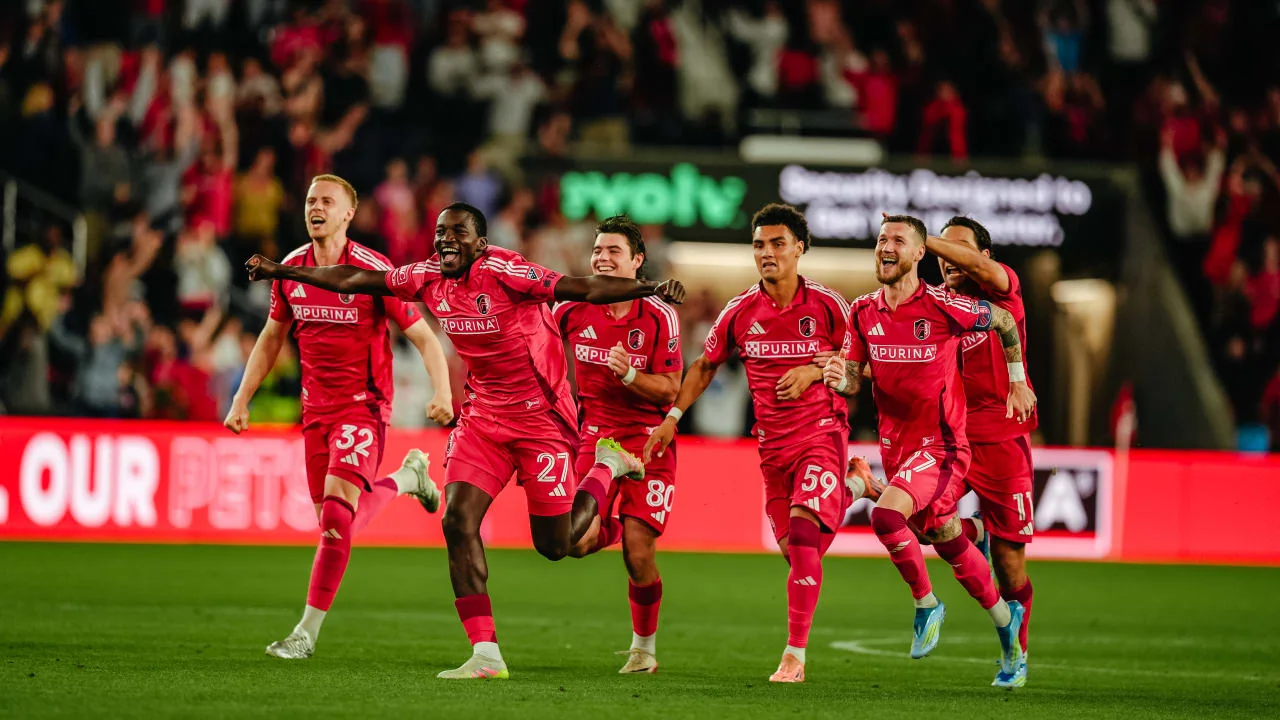
After the 2-2 score survived extra time, St. Louis won the shootout 4-2. Ben Lundt saved two penalties, including the decisive final attempt. The cover photograph captures CITY SC's celebration from that quarterfinal victory.
For this club, reaching the semifinal is a new achievement. St. Louis as a city has a much longer Open Cup tradition across other teams, but those historical titles should not be assigned to CITY SC's own record. The current players are building their club's cup history rather than defending trophies won by unrelated organizations.
The late match consequently has a distinct emotional shape: one team wants to return to a final after a long absence, while the other wants to get there for the first time. Both have already survived a shootout in this campaign, so neither enters without experience of a cup tie extending to its most pressurized stage.
Knockout rules and roster details to watch
Each semifinal is a single-match knockout tie. If the teams are level after 90 minutes, the Open Cup procedure is 30 minutes of extra time, followed by a penalty shootout if the score remains tied. There is no return leg in another city to settle an aggregate score.
Why the final half-hour can change the match
Both Colorado and St. Louis have already experienced that extended format in this cup run. Their earlier shootout victories do not guarantee another one, but they demonstrate why a supporter should allow more time than an ordinary ninety-minute match when planning the evening.
The possibility of extra time also changes the football decisions visible during the second half. A coach may need to balance the desire for an immediate attacking change against the prospect of another half-hour. Players carrying a heavy workload must still make good decisions as space opens and concentration becomes harder to sustain.
From the stands or television, watch how each side reacts to a level score late in regulation. Pushing more players forward can create a winner but also expose a counterattack. Preserving the tie keeps a route through extra time alive, yet it means accepting the additional physical demands. Those choices are part of the contest rather than proof that a team is content with a draw.
The semifinal team can differ from the quarterfinal team
The long gap since May makes current availability especially important. U.S. Soccer's September 2 Colorado preview states that goalkeeper Nico Hansen will serve a one-match suspension for accumulated yellow cards. His earlier cup performances therefore should not be turned into a promise that he will start this semifinal.
The same organizer preview confirms that Rafael Navarro, who scored for Colorado in the quarterfinal and subsequently moved to St. Louis, is cup-tied to the Rapids for this edition. His transfer does not make him available to face his former club in this Open Cup match.
These are eligibility details with direct match relevance. They illustrate why a May starting eleven or a current MLS club roster is not enough to identify the semifinal lineup. The confirmed team sheets will show which eligible players actually start; until then, any proposed eleven remains a projection.
What the semifinal winners earn next
The 2026 U.S. Open Cup final is scheduled for Wednesday, October 21. The winner of Columbus-Orlando will host the championship match against the winner of Colorado-St. Louis. That hosting outcome is already part of the announced bracket; it does not depend on which finalist has the better MLS regular-season record.
An additional reward in the first semifinal
For Columbus and Orlando, winning on September 16 brings two connected benefits: a place in the final and the opportunity to stage it at home. Columbus would remain at home for the championship fixture, while Orlando would return to Florida after winning away in Ohio.
Colorado or St. Louis would travel for the final. Their semifinal is still a home match for the Rapids, but that does not carry a second home advantage into October. A supporter planning a possible final trip should wait for the first semifinal's winner before selecting the destination.
The hosting rule also gives the opening match a consequence for followers of the later one. Rapids and CITY SC supporters can watch Columbus-Orlando knowing that it will identify the city their own team would visit if it advances. The first result supplies a destination, not a guarantee that their team will get there.
The trophy carries continental and financial stakes
The announced award for the 2026 champion is $600,000, with $250,000 for the runner-up. The champion also earns a berth in the 2027 Concacaf Champions Cup. Reaching the final therefore does not complete the sporting task: the title and continental place still require another win.
For a club, that opportunity can make the Open Cup a defining part of its season. A national trophy remains in the record long after an individual league result, and continental qualification introduces a further competition to pursue. Neither outcome should be assumed before the required knockout matches are won.
These are cup rewards, separate from the MLS league standings and the MLS Cup playoff race. A semifinal victory will not add league points, while a league defeat elsewhere does not remove a club from this bracket. Keeping the competitions separate makes it easier to appreciate exactly what September 16 can deliver.
Planning a semifinal evening
Start by deciding whether the plan is a stadium visit, one televised match or the full two-game evening. The matches share a date and broadcast partners, but the practical requirements differ. A supporter going to Commerce City needs the local Mountain time; a viewer following both needs enough flexibility for the first match to run beyond regulation.
If you are going to the stadium
The Crew's semifinal announcement links to its ticket listing. Colorado supporters should use the Rapids' official fixture announcement and current club ticket information for their match. Confirm the opponent and Open Cup competition before selecting seats, since both clubs also sell league fixtures.
Check whether your existing package includes this cup game and whether parking is a separate purchase. A season-ticket seat location does not by itself prove that a particular knockout fixture is included. Use the relevant stadium's current arrival information for directions and entry arrangements; the announced kickoff is not the time at which every supporter should reach the gate.
If you are watching from home
Set reminders using the displayed time zone and allow for extra time and penalties. Viewers outside the Americas may have the games on the following local calendar date. If you are recording, extend the planned finish where your service permits and keep the second semifinal as a separate selection.
Finally, check the team sheets for the players actually available that night. The path to the semifinals explains why these four clubs deserve attention, but the September lineups will decide how each approaches the next match. By the end of the evening, one former champion and one club seeking its first Open Cup title will have earned the chance to meet in October.
Comments
Comments are reviewed before publication.
Spam, abusive content, personal information and policy-violating links are not published.
Sign in with Google to comment or reply.
Loading comments…