
No new first-team club joined Major League Soccer for the 2026 season. MLS has 30 clubs in 2026, split evenly between the Eastern and Western Conferences. San Diego FC remains the league’s newest team after entering MLS in 2025, so 2026 is the club’s second season rather than its expansion debut.
That short answer matters because several different stories can look like “MLS expansion” in a headline. A city may be talking with the league, an investor may propose buying and moving an existing club, MLS NEXT Pro may add a development team, or MLS NEXT may welcome youth organizations. None of those events automatically creates a new place in the 30-club first-team league.
This guide separates what is confirmed from what is only being discussed. The status below is current as of August 2, 2026; future expansion remains possible, but MLS has not announced a 31st club or a start date for one.
MLS expansion status at a glance
| Question | Confirmed answer as of August 2, 2026 |
|---|---|
| How many first-team MLS clubs are there? | 30: 15 in the East and 15 in the West. |
| Did a new MLS team debut in 2026? | No. |
| Who is the newest MLS team? | San Diego FC, which debuted in 2025 as club No. 30. |
| Has team No. 31 been awarded? | No formal award has been announced. |
| Is a 32-team league confirmed? | No. Commissioner Don Garber has discussed 32 as a possible ceiling, not an approved expansion plan or timetable. |
| When would another expansion club begin play? | Unknown. MLS has not announced an entry season. |
The official 2026 league overview is the clearest check on the current count: 30 clubs, each playing a 34-match regular season. Fans who want the live competitive picture can use the current MLS standings; the standings page includes the same 30 first teams competing this year.
San Diego FC remains the newest MLS team
San Diego’s expansion story has three dates that are easy to mix up. Major League Soccer formally awarded the city its 30th team on May 18, 2023. The award announcement identified the ownership group, Snapdragon Stadium as the home venue and 2025 as the entry year. The club then made its league debut in February 2025, winning 2-0 away to the defending champion LA Galaxy on opening weekend.
That makes San Diego FC the correct answer to “What is the newest MLS team?” in 2026, but not to “What team joined MLS in 2026?” No team did. San Diego is playing its second MLS campaign, and its fixtures are available on the San Diego FC schedule page.
The distinction between award year and debut year is useful whenever expansion resumes. A franchise is normally announced well before its first competitive match. The lead time allows the organization to establish leadership, assemble a roster, build commercial operations, sell tickets and confirm that its venue will be ready.
Could MLS expand to 32 teams?
It could, but there is no confirmed 32-team expansion program. In comments reported on July 27, 2026, Commissioner Don Garber said growth beyond the current 30 clubs was not imminent. He also indicated that 32 was not coming soon and that he did not envision the league growing beyond that number, citing the way the schedule would be constructed.
Those comments establish a useful boundary, not a promise. They do not identify teams 31 and 32, set an expansion fee, launch a bid process or assign an entry season. The safest description is that 32 remains a possible future size that league leadership has discussed, while 30 is the confirmed present-day size.
There is also no reason to assume that expansion must happen immediately after the 2026 FIFA World Cup. The tournament may strengthen interest in soccer across North America, but audience growth and a franchise award are separate developments. MLS owners would still need to approve any new club and settle the ownership, stadium, market and competition questions that come with it.
The league is already preparing for a major calendar transition. After the traditional 2026 season, MLS will use a shorter spring competition in 2027 before moving to a summer-to-spring calendar. Our MLS 2027 Sprint Season guide explains that confirmed format. Adding clubs and changing the calendar are separate decisions, and no new expansion team has been attached to that transition.
What about Indianapolis, Las Vegas and other city headlines?
Interest from a city is real news, but it is not the same as an awarded franchise. Indianapolis is a clear example. During 2024 MLS All-Star week, Garber described the league’s discussions with Indianapolis as encouraging, while also saying there was no specific expansion plan or timing. He characterized the talks as early and pointed to the ownership group, stadium plan, political and business support, and community connection as important pieces.
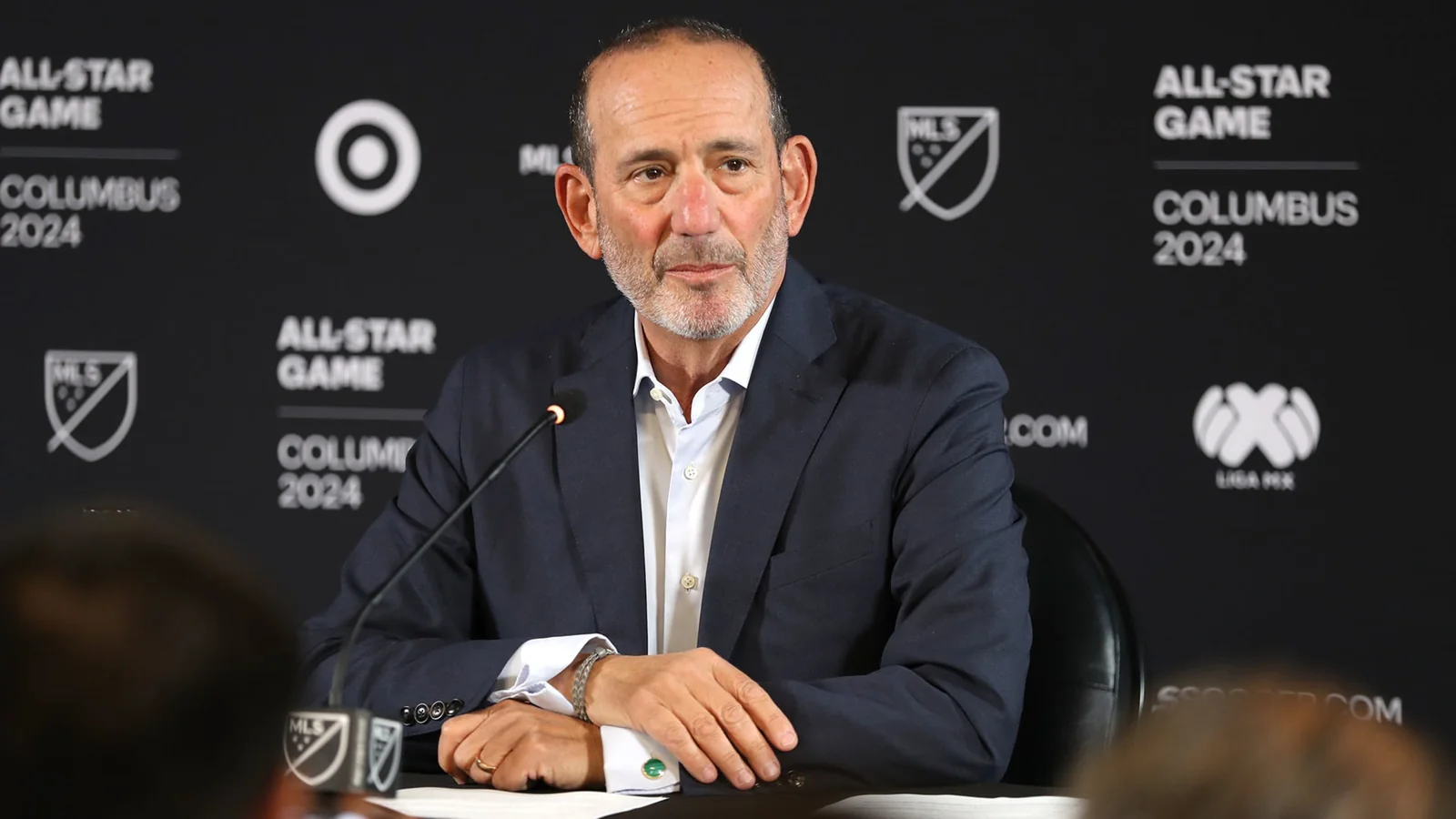
That public interest did not amount to an Indianapolis franchise award. Until MLS issues an announcement naming an owner, venue and entry year, Indianapolis should be described as a market that has held discussions with the league—not as team No. 31.
Las Vegas demonstrates another complication: expansion and relocation can appear in the same news cycle. In May 2026, the Associated Press reported that an investment group had proposed buying the Vancouver Whitecaps and moving the existing club to Las Vegas. The report said MLS was evaluating options for Vancouver and also noted that Las Vegas expansion could be a possibility.
Those paths would have different effects. Moving an existing team from Vancouver to Las Vegas would change the location of one of the 30 clubs but would not create team No. 31. Awarding Las Vegas an additional franchise would increase the league’s membership. Neither outcome should be treated as final until the league and affected club make a formal announcement.
Other cities regularly appear in fan discussions and older expansion coverage. A current article can acknowledge that interest without inventing a race or ranking. MLS has not published a 2026 finalist list for the next franchise, so calling any market the favorite would go beyond the confirmed record.
Expansion, relocation, MLS NEXT Pro and MLS NEXT are different
The MLS name appears across several levels of the North American player pathway. Knowing which competition an announcement concerns prevents a youth or development-club story from being mistaken for top-flight expansion.
- Major League Soccer: the top-flight first-team league in the United States and Canada. It has 30 clubs in 2026.
- MLS NEXT Pro: a separate professional development league launched in 2022. MLS reported 30 NEXT Pro clubs in 2026—27 MLS affiliates and three independent teams—with additional independent clubs planned for 2027.
- MLS NEXT: a youth development platform, not the MLS first division. Its announced growth for 2026–27 included new youth clubs and divisions across a platform representing 40 states and the District of Columbia.
- Relocation: an existing franchise changes markets. Unless MLS separately adds another franchise, the total team count stays the same.
For example, an announcement that MLS NEXT has added dozens of organizations can accurately use the word “expansion” while leaving Major League Soccer at 30 first teams. Likewise, four independent clubs joining MLS NEXT Pro in 2027 would expand that development league, not automatically add four teams to MLS.
The wording around a team also offers clues. “Academy,” age-group labels such as U-15 or U-17, and references to the Homegrown or Academy Division point to MLS NEXT. “Affiliate,” “independent club” and the professional player pathway often point to MLS NEXT Pro. A genuine first-team award will explicitly say the market has been granted a Major League Soccer expansion team.
What MLS looks for before awarding an expansion team
MLS does not select a new club simply because a city has a large population or vocal supporters. Garber’s public comments during the Indianapolis discussions provide a practical checklist of the pieces that have to connect:
- Committed ownership: investors must be able to fund the franchise and build a durable soccer organization.
- A credible stadium plan: the site, financing, construction or renovation plan, and long-term matchday economics all matter.
- Business support: sponsorships, premium seating, partnerships and local commercial demand contribute to viability.
- Political and civic support: venue approvals and infrastructure often require cooperation beyond the ownership group.
- Community connection: the club needs a plan to turn regional interest in soccer into sustained attendance and identity.
- League fit: MLS owners must consider travel, conference alignment, the competition format and how another club affects the schedule.
This is not a published scoring formula, and satisfying every visible item does not guarantee admission. It does explain why a stadium rendering, mayoral statement or investor interview is only one stage of a much longer process.
How to recognize a real MLS expansion announcement
The San Diego award provides a useful model for what confirmation looks like. MLS announced the decision through an official league release and identified the team number, city, owners, venue and target debut season. The organization later revealed its name and crest, hired sporting and business leadership, built a roster and appeared on the league schedule.
When following the next expansion story, look for all of the following:
- An official announcement from Major League Soccer, not only a prospective owner or local government.
- Clear language that the league has awarded an expansion team.
- A named ownership group and home market.
- A confirmed or targeted entry season.
- A venue plan described by the league and the new organization.
- Later operational milestones such as a club identity, executive appointments and inclusion in the MLS schedule.
Until those elements appear, labels matter. “Interested,” “in talks,” “proposed,” and “under consideration” describe developing stories. They do not mean a city has secured a franchise. The same caution applies to an expansion fee: San Diego’s reported price does not automatically establish the price of a future club.
What comes next for MLS expansion?
The immediate priority is the league that already exists. MLS is completing its 2026 season with 30 clubs and preparing for its 2027 calendar transition. Garber’s latest public position emphasizes making the current competition stronger rather than rushing into the next expansion round.
A later move to 31 or 32 remains possible. The next meaningful signal would not be another list of popular candidate cities; it would be action by the MLS Board of Governors or a formal league process. Fans should watch for an official decision to reopen expansion, followed by a franchise award with a named ownership group, stadium arrangement and debut year.
Any approved team would also create practical schedule questions. An odd total of 31 could complicate weekly pairings, while 32 could support balanced conferences or divisions, but MLS has not announced a future format tied to expansion. Those outcomes remain possibilities rather than facts.
Frequently asked questions
Is there a new MLS team in 2026?
No. Major League Soccer has the same 30 first-team clubs that competed in 2025. No expansion club began play in the 2026 season.
Is San Diego FC new in 2026?
San Diego FC is the newest MLS club, but it is not a 2026 expansion team. MLS awarded the franchise in 2023, and the club debuted in 2025. The 2026 campaign is its second league season.
How many MLS teams are there in 2026?
There are 30 clubs: 15 in the Eastern Conference and 15 in the Western Conference. Each club plays 34 regular-season matches. Key dates for the current campaign are listed in our 2026 MLS season date guide.
Will MLS definitely expand to 32 teams?
No. League leadership has discussed 32 as a possible limit, but MLS has not approved or announced teams 31 and 32. Garber said in late July 2026 that 32 was not coming soon.
Which city will get the next MLS team?
No city has been formally selected as team No. 31. Indianapolis and Las Vegas have appeared in documented discussions, but neither has been awarded a new first-team franchise. There is no official 2026 finalist ranking.
Are new MLS NEXT clubs joining Major League Soccer?
No. MLS NEXT is a youth development platform. MLS NEXT Pro is a separate professional development league. Growth in either competition does not change the number of first teams in Major League Soccer.
When will the next MLS expansion team start playing?
There is no confirmed date. A reliable timeline will begin with an official MLS franchise award that identifies the market, ownership, venue and planned entry season.
Bottom line: the accurate answer to “new MLS team 2026” is no. San Diego FC remains the newest club and MLS remains at 30 teams. Expansion to as many as 32 clubs is possible, but the league has not announced the next team, city or season.
Comments
Comments are reviewed before publication.
Spam, abusive content, personal information and policy-violating links are not published.
Sign in with Google to comment or reply.
Loading comments…