
Why the MLS winter calendar worries some supporters
The concern about MLS's new calendar is broader than whether a match can be played in snow. Supporters are asking whether the home games they enjoy will fall on dates they can comfortably attend, whether familiar summer outings will disappear, and whether a season membership will still fit their household. A league calendar can improve the timing of transfers while making a particular fan's matchday routine harder.
MLS plans to begin its first full summer-to-spring season in July 2027 and finish with the playoffs and MLS Cup in May 2028. This analysis uses official information checked on September 6, 2026. It examines the practical tradeoffs for fans; the complete competition timeline is covered in our MLS 2027 calendar guide.
The break removes January league games
The league's announced winter break runs from mid-December into early February, with no league matches scheduled in January. That matters because some online reactions describe uninterrupted winter play. The actual plan includes a substantial pause, and MLS says December and February will have limited activity.
It also retains summer soccer. A July start means the change does not eliminate all July or August matches. The more useful question is how the eventual home schedule distributes the dates a supporter values, especially around summer vacations, school terms and the colder edges of the winter break.
A shared calendar can produce different local experiences
Fans in different markets will not experience an identical tradeoff. Someone who dislikes a hot summer outing may welcome more games outside that period. Someone who treasures a northern summer evening may be less enthusiastic about a replacement date in February. Those preferences can coexist without either group misunderstanding the sport.
Online discussions show this range of questions, but they do not establish how most MLS fans feel or predict ticket sales. The better way to judge the change is to separate what MLS has announced from what remains dependent on individual fixtures, stadium operations and club membership terms. The calendar's headline dates are confirmed; the quality of each supporter’s eventual experience will depend on those more detailed decisions.
Cold weather affects the entire matchday
The supporter experience begins before kickoff and ends after leaving the stadium. A cleared field does not tell you what the walk from transit feels like, how long the entrance queue takes or whether a child enjoys sitting through the second half. For a family evaluating a winter outing, those details can matter as much as the quality of the soccer.
Snow games already belong to MLS history
Minnesota United's first MLS home match in 2017 became known as the Snow Opener. The club's retrospective describes supporters at TCF Bank Stadium cheering through snowfall while the field required repeated attention. Real Salt Lake's March 2, 2024, home game against LAFC also encountered wind, lightning and snow. Both happened before the new calendar.
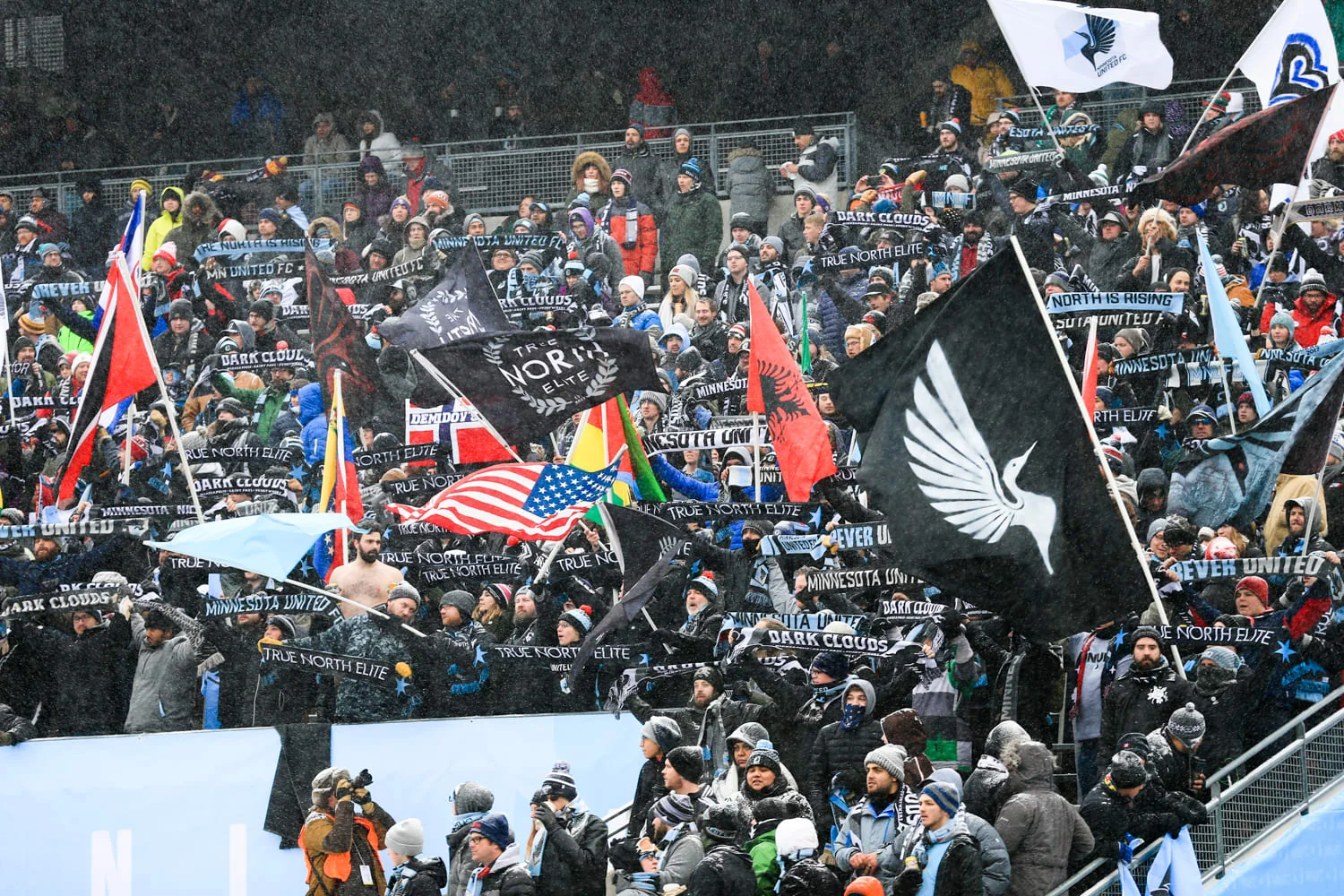
Those occasions can become treasured memories. RSL's account celebrated fans making snow angels after the match, and Minnesota's remembered the atmosphere despite the result. A memorable exceptional outing, however, does not establish how often each household wants to repeat it. Enjoying one dramatic snow game and preferring most home dates in milder conditions are compatible positions.
Comfort depends on more than a temperature reading
Think through the route your group actually takes. Do you wait outdoors for a bus, cross a large parking area, arrive early to meet friends or remain in an exposed section? Does a member of the group need extra time getting between the entrance and the seat? Those are practical planning questions rather than a universal rule about who can attend in cold weather.
Stadium information should explain the experience beyond the playing surface: permitted items, available indoor areas, accessible routes and how supporters receive delay updates. Fans can then make an informed choice for their circumstances. A photograph of committed supporters in the snow should never replace that information or imply that staying home is a failure of loyalty.
Moving winter home games creates another scheduling tradeoff
MLS has acknowledged the geographic problem. Its calendar announcement says the league intends to limit home matches in northern markets during December and February. That is a meaningful planning commitment, but it does not promise that every northern club will avoid every cold home date.
What the league has said about warmer markets
In a March 2026 interview with The Philadelphia Inquirer, MLS competition executive Nelson Rodriguez described an intention to place a disproportionate share of winter games in warmer markets or domed facilities, then reverse that approach during the hotter summer months. The distinction is between a scheduling approach and a published assignment for a particular team.
Fans should therefore resist two tempting shortcuts: assuming their club will have no February home matches, or drawing a fictional sequence of away fixtures and treating it as inevitable. The league's stated objective supports a discussion of possible consequences. It does not supply dates, opponents, kickoff times or a guarantee of a particular number of consecutive road games.
Distribution matters even when the total stays the same
If home matches become more concentrated in certain parts of the season, a member may face several attractive outings close together and longer stretches without a local game. That can change the monthly budget and the ease of attending every fixture. It can also change when a supporters group plans gatherings, away travel and community events.
For teams, supporters will want to examine the sequence as well as the count: travel between games, recovery time and whether a difficult away stretch is followed by a crowded home run. Those are useful criteria for evaluating the eventual schedule. They are not evidence that one club has already been disadvantaged.
A hypothetical example makes the distinction clear. Three home matches close together may offer more comfortable dates, yet still be harder for someone who can attend only twice in a month. The same supporter might prefer a steadier rhythm even with an occasional colder evening. The quality of the allocation cannot be measured solely by how many matches were moved out of winter.
The fairest assessment will compare actual club schedules using the same measures. A league-wide promise to consider weather is the beginning of that process; the final distribution will show how well competing needs were balanced.
Summer traditions and family routines are part of the debate
For some supporters, an MLS ticket is attached to a summer ritual: meeting friends outdoors, bringing a child during school vacation or adding a match to a weekend trip. Moving part of the season changes that ritual even when the total number of league games remains familiar. It is reasonable to value the occasion as well as the competition.
Check the household calendar, not just the league calendar
Fan discussions about the change include worries about school nights, youth sports and losing convenient vacation outings. These are examples of individual concerns, not proof that every family prefers the same schedule. A household with summer travel commitments may find a spring date easier, while another may depend on the freedom of school holidays.
Build a simple availability map before deciding what the change means for you. Mark months when attendance is easy, months when it is difficult and weeks already committed to other activities. Keep that map separate from the club's fixture list until the actual games can be added. It helps distinguish a general dislike of change from specific conflicts you can explain to a ticket representative.
Summer trips can still include MLS after the new season begins in July. The mistake would be to assume that an old annual trip will retain the same home fixture, or that every summer date disappears. Check the new pattern before promising a particular weekend to your group.
The viewing rhythm also changes
Supporters who follow other teams or sports may need to reorganize their time. A winter break interrupts the local league's weekly rhythm; a May title race creates a different end-of-season habit. Whether that feels refreshing or inconvenient depends on what else someone watches and attends.
Those preferences should not be turned into unsupported predictions that MLS will inevitably gain or lose a certain audience. League strategy and an individual household's entertainment choices operate at different scales. A supporter can welcome stronger summer recruitment and still dislike having two personal commitments on the same evening.
Clubs can make that adjustment easier through clear fixture communication, reliable calendar updates and practical options when members cannot attend. Familiar traditions may move to new dates, but supporters need enough detail to plan those replacements. An announcement about global alignment does not, by itself, answer the question of when a family can next share its usual matchday.
Season-ticket value depends on usable dates and clear terms
A calendar change can alter a membership even before the first cold match arrives. The transition may affect the package length, the number of included events and the payment schedule. Read the product for the named club and season, rather than assuming the league has prescribed one universal renewal offer.
The transition package can be larger than a normal renewal
LA Galaxy provides a concrete example. Its published calendar-change page describes a dual-season membership containing seven Sprint Season home matches, seventeen home matches in the following regular season and one additional club-designated stadium event. It also describes spreading monthly payments across seventeen months instead of the usual twelve for that product.
Those are Galaxy terms, not instructions for every MLS member. The example shows why comparing only a headline invoice with last year's bill can mislead: the product may contain more events over a longer period. Another club may structure its transition differently.
Ask for the complete event breakdown and identify anything described only as an additional match. Separate guaranteed admission from purchase priority for playoffs or other competitions. A longer package can offer more soccer, but it also asks the supporter to make more decisions about attendance.
Flexibility becomes more valuable when plans are uncertain
Read the return, exchange and transfer rules with the new calendar in mind. How far ahead must you act? Is the result a refund, an account credit or a ticket for another event? Does the benefit cover every seat and competition in your package? A policy that works for a known business trip may be less useful for a last-minute change in your group's willingness to attend.
Keep a conservative budget for unused tickets. A ticket offered for resale is not automatically sold, and the eventual proceeds may differ from the amount you paid. Membership should be evaluated using the attendance and flexibility you can reasonably expect, rather than a promise that the marketplace will solve every conflict.
Our season-ticket comparison guide explains the basic value calculation. For the new calendar, add one more step: identify which included dates are actually useful to your household once fixtures are released. That connects the price to the experience you are buying, while keeping seat continuity, supporter friendships and other personal reasons for membership visible in the decision.
Why MLS believes the change can improve the product
The league's argument deserves to be considered alongside the concerns. MLS says the new calendar will improve alignment with the international transfer market, reduce conflicts with national-team commitments and move its championship phase to May. These are intended advantages of the structure, rather than a guarantee that every match or membership will improve immediately.
Summer signings can arrive closer to a new season
Under the existing calendar, a major summer arrival can join a team already deep into its campaign. MLS's rationale is that a summer start makes recruitment and integration fit more naturally around the beginning of the season. For a fan, the potential benefit is easier to understand than a broad claim about global competitiveness: a newly assembled team may have more of its season ahead of it.
That still depends on the actual signing date, availability, preparation and coaching decisions. Calendar alignment alone does not ensure that a player arrives before every important match, adapts quickly or improves results. Supporters should assess what their club does with the opportunity rather than assume the opportunity has already produced success.
The league also expects fewer clashes between MLS games and national-team call-ups. Its official language is about reducing conflicts, not eliminating every possible absence. Injuries, selections and other competitions will remain part of the sporting experience.
A May postseason changes the season's climax
MLS wants the playoffs and MLS Cup to receive a clearer, uninterrupted place in its own competition calendar. A spring championship can create a different kind of matchday atmosphere from a late-year final, and some supporters may prefer building toward a title race after the winter break.
Moving the postseason does not create an empty entertainment calendar or guarantee favorable conditions at every host venue. The practical attraction is the new timing and the league's intended reduction in international-window interruptions. The final experience will depend on the competition details and the teams involved.
Fans do not have to choose between acknowledging these potential benefits and asking for better local arrangements. A stronger roster-building cycle does not explain an unclear ticket exchange rule; a concern about February travel does not disprove the transfer rationale. Evaluating each issue separately makes the debate more useful and gives clubs specific problems they can address.
How to judge the new calendar when your club's fixtures arrive
The strongest test is a local one: compare the released schedule with how you actually attend and follow the club. A season can look manageable in a league announcement yet contain an awkward cluster for your household. It can also look worrying in principle and turn out to offer dates that work better than expected.
Audit the home schedule in a few useful ways
- Count home dates by month, especially around the winter break.
- Separate weekend outings from games that create work or school-night conflicts.
- Look for concentrated home runs and long gaps between local matches.
- Check kickoff times in the stadium's local time, then add your travel time.
- Match likely conflicts against the ticket return or exchange deadline.
- Identify which dates work for guests, children or friends who attend occasionally.
Use the MLS calendar to organize released fixtures and the MLS TV schedule for viewing plans. Recheck important dates before arranging travel. An early schedule entry and a ticket purchase should be accompanied by the current club information for that match.
Ask for operational answers that change your decision
For colder outings, locate the club's matchday updates, entry rules, accessible-route information and procedure for delays or postponements. For an away trip, read the change and cancellation conditions of the travel products you select. A rearranged match does not automatically mean every associated hotel or transport booking follows the same policy.
Send the club specific feedback. Explain which dates are difficult, which ticket options would help and what information is missing. That is more actionable than asking whether the league should simply be for or against winter soccer.
Then evaluate the first full season with evidence: the home dates actually offered, the outings your group enjoyed, the flexibility you used and the quality of communication when plans changed. Those measures connect the league's ambitions to the supporter experience. They allow room for the new calendar to succeed while keeping the practical needs of the people attending matches at the center of the assessment.
Comments
Comments are reviewed before publication.
Spam, abusive content, personal information and policy-violating links are not published.
Sign in with Google to comment or reply.
Loading comments…