
MLS and the Premier League use the same Laws of the Game, but they turn a soccer season into two very different competitions. Major League Soccer divides 30 clubs into Eastern and Western conferences, plays an uneven 34-match regular season, and then sends 18 teams into the MLS Cup Playoffs. England's Premier League puts 20 clubs in one table, gives every club the same 38-match sequence, and awards the championship to the team that finishes first.
That difference affects almost every comparison a new fan makes. A club can win the MLS Cup without finishing first in the regular-season table. A Premier League club cannot reach a separate domestic league playoff after finishing below the champion. MLS also uses centrally defined roster-budget tools, while Premier League clubs build squads under a different financial and registration framework. At the bottom, Premier League clubs face relegation; MLS clubs do not.
MLS vs Premier League at a glance
| Question | MLS in 2026 | Premier League in 2026/27 |
|---|---|---|
| How many clubs? | 30: 15 East, 15 West | 20 in one national table |
| Regular-season matches per club | 34 | 38 |
| Does every club play the same opponents? | No; conference opponents dominate the schedule | Yes; every opponent once home and once away |
| How is the league champion decided? | MLS Cup Playoffs after the regular season | First place in the final table |
| Separate regular-season prize? | Yes, the Supporters' Shield | No equivalent separate top-table trophy |
| Promotion and relegation? | No automatic movement into or out of MLS | Bottom three relegated; three promoted replacements |
| Typical calendar | February to fall, then playoffs | August to May |
| Roster economics | Salary budget plus DP, U22, GAM and TAM mechanisms | No MLS-style roster-budget system |
The fairest short answer is therefore not “American soccer versus English soccer.” It is a comparison between a North American conference-and-playoff league and a balanced European top-flight table. Both reward consistency, but MLS adds a knockout route to its championship and the Premier League adds the danger of losing top-flight status. The remaining sections explain why those design choices matter when reading standings, comparing squads, or choosing which competition to follow.
One table or conferences and playoffs?
The Premier League's competitive logic is deliberately direct. Every club plays every other club twice, points accumulate in one table, and the club with the most points after 38 matches wins the league. Goal difference and further published tiebreakers separate teams that finish level. There is no league playoff that allows a lower finisher to overtake the table leader after the regular schedule ends.
MLS divides the same basic points race into Eastern and Western Conference tables. In 2026, the first seven clubs in each conference qualify directly for the best-of-three Round One series. Eighth and ninth play a single Wild Card match for the final Round One place. Later rounds lead to MLS Cup, the championship game. A club's conference seed matters because it shapes qualification, opponent and hosting position, but first place in a conference is not the same achievement as winning MLS Cup.
MLS therefore recognizes two forms of excellence. The Supporters' Shield rewards the best regular-season points total across the league. MLS Cup rewards the club that survives the postseason. One club can win both, but the competition does not require that outcome. When someone calls a team the “MLS champion,” they normally mean the MLS Cup winner, not merely the first-place regular-season club.
Why an MLS seed is not a Premier League finishing position
An MLS seed is conference-specific. The Western Conference's fourth seed and the Eastern Conference's fourth seed have not necessarily earned the same number of points or faced identical schedules. By contrast, fourth in the Premier League is fourth in a common table built from the same opponent set. That makes direct numerical comparisons tempting but incomplete.
The pressure also arrives differently. A Premier League title challenger cannot recover from a second-place finish through a knockout tournament. An MLS contender can use the regular season to earn entry and hosting advantages, then peak in the playoffs. That does not make one route inherently easier. It tests a different combination: long-run consistency plus postseason performance in MLS, and long-run table performance alone in the Premier League.
For live context, use the site's MLS standings to see conference and league-wide views, then use the MLS playoffs guide for the postseason path. Keeping those pages conceptually separate prevents the most common comparison error.
The calendars and schedules are built differently
MLS follows a single-calendar-year season. In 2026, the regular season began on February 21 and ends with Decision Day on November 7. The playoffs then extend the championship race to MLS Cup on December 18. The Premier League normally starts in August and ends in May, so its season name crosses two years: 2026/27 rather than simply 2026.
The more important difference is schedule balance. Every Premier League club plays 19 opponents at home and away. Each finishes with 38 matches and an identical opponent list. Venue order, rest and fixture congestion vary, but the underlying league schedule is balanced.
Each MLS club plays 34 regular-season matches, including 28 against conference opponents—one home and one away against each of the other 14 clubs in its conference—and six against selected clubs from the opposite conference. It follows that two MLS clubs can finish the season without playing many of the same cross-conference opponents. The league-wide Supporters' Shield still compares their points totals, but those totals did not come from identical schedules.
Why geography matters more in MLS
MLS spans the United States and Canada, multiple time zones and a wide range of climates. Conferences reduce the number of long cross-continent trips and preserve more recurring regional matchups. The Premier League operates within England, so its double round robin is possible within a much smaller footprint.
Geography does not automatically tell us which schedule is harder. An MLS club may absorb long flights, time-zone changes, summer heat and artificial surfaces. A Premier League club may face a dense winter program alongside domestic cups and European competition. Those are different burdens, and a serious comparison should describe them rather than compress them into one difficulty score.
What the calendar changes for transfers and form
The opposite calendars also complicate player and team comparisons. An MLS club can be in midseason when a Premier League club is in preseason. A January arrival joins the English campaign midway but can join MLS before opening day. A summer transfer can leave an MLS contender during its playoff push or join an English club just before its new season. When judging a friendly, transfer or short run of results, check where each club sits in its own competitive cycle.
This is also why “MLS 2026/27 table” is misleading language. MLS uses the 2026 regular season and 2026 playoffs. The Premier League uses the 2026/27 league season. Matching the label to the calendar avoids mixing separate competitions and incomplete datasets.
MLS salary rules are not a simple payroll ceiling
The phrase “MLS salary cap” is convenient but incomplete. For 2026, MLS publishes a $6,425,000 Salary Budget for as many as 20 Senior Roster players and a maximum Salary Budget Charge of $803,125 for one player. Those are accounting charges inside the roster system. They are not a claim that an MLS club can spend only $6.425 million in total cash compensation.
Clubs can add players and reduce budget charges through several mechanisms. General Allocation Money and Targeted Allocation Money serve defined roster purposes. Designated Players may earn compensation and carry acquisition costs above the maximum charge, with the club responsible for the excess. U22 Initiative slots offer another construction route, and Supplemental Roster salaries do not count against the Senior Roster budget.
MLS clubs also choose between two headline construction models. One permits up to three Designated Players and up to three U22 Initiative players. The other permits up to two Designated Players, up to four U22 Initiative players and as much as $2 million in additional General Allocation Money. That is why counting DPs alone cannot reveal a club's complete roster strategy.
Salary figures need labels
The MLS Players Association publishes both current annualized base salary and average annual guaranteed compensation. Guaranteed compensation includes annualized signing and guaranteed bonuses, plus specified marketing bonuses and agent fees, but excludes performance bonuses that a player may never earn. A news report using base salary can therefore show a different number from one using guaranteed compensation without either necessarily being wrong.
Premier League clubs do not build squads with MLS's DP, U22, GAM and TAM vocabulary or the same per-club salary-budget charges. They still face competition, financial and player-registration rules; “no MLS-style cap” does not mean “no rules” or literally unlimited spending. It means the cost of adding a star is not processed through the MLS roster-budget architecture.
What this means on the field
MLS rules encourage clubs to make deliberate tradeoffs between a few high-cost stars, mid-roster depth and younger investment. Two clubs with similarly talented starting lineups can have very different cover when injuries or international absences arrive. Premier League clubs can also have depth gaps, but the mechanisms producing them are different.
For a fair salary comparison, specify the year, currency, source and measure. Compare base salary with base salary, guaranteed compensation with guaranteed compensation, and actual club payroll with actual club payroll. Never compare an MLS budget-charge total directly with a reported Premier League wage bill and call the gap a precise measure of playing quality.
The Premier League has relegation; MLS does not
At the end of a Premier League season, the clubs finishing 18th, 19th and 20th are relegated to the EFL Championship. Three Championship clubs replace them: the top two earn automatic promotion and another wins the promotion playoff. The next Premier League season therefore has 20 clubs again, but its membership changes through results on the field.
MLS does not operate an automatic promotion-and-relegation link with lower divisions. A club that finishes last remains an MLS club for the following season. Missing the top nine in its conference means missing the MLS Cup Playoffs, not dropping to another league. A lower-division club cannot win promotion into MLS through its league position.
This is often described as an open pyramid versus a closed league. “Closed” does not mean MLS membership can never change: expansion can add an approved club, and league history includes clubs that ceased operations. It means annual sporting results do not move clubs between MLS and another division.
How relegation changes the bottom of the table
Premier League clubs near the bottom play for continued top-flight status. Relegation changes opponents, league revenue and the level at which the club competes. That creates a clear survival race even when a team has no chance to win the title.
An MLS club outside the playoff race has a different set of incentives: developing players, evaluating the roster, affecting rivalry games and building toward the following season. It can still influence playoff seeding and the Supporters' Shield race by taking points from contenders, but it does not face relegation.
Neither structure guarantees better decision-making. Relegation pressure can reward urgent improvement, yet it can also encourage short-term choices. Membership stability can support long-range investment, yet it can also remove the specific penalty that relegation creates. Those are plausible incentives, not automatic descriptions of every club.
Why the playoffs are not a substitute for promotion
MLS playoffs decide the champion among qualifying top-flight clubs. Promotion decides which lower-division clubs move into the top flight. They answer different questions. A ninth-place MLS conference team can reach the playoffs through a Wild Card; it has not been “promoted.” A Championship playoff winner reaches the Premier League; it has not won the Premier League title.
That vocabulary matters when comparing drama. The Premier League offers title, European qualification and relegation races within its table. MLS offers conference positions, a league-wide regular-season race, the playoff line and a postseason bracket. Both create consequential matches, but the consequences are not interchangeable.
Which league has the higher playing level?
A responsible comparison starts by defining “quality.” It could mean the level of the best starting XI, depth across a 30-player roster, tactical speed, technical execution, coaching, or the strength of the weakest club. Those questions may produce different answers. There is no official MLS-versus-Premier-League season in which every club meets comparable opponents under the same conditions.
In practical terms, the Premier League is the stronger environment for squad depth and week-to-week concentration of elite talent. Its clubs do not have to fit stars and supporting players through MLS's salary-budget charges, Designated Player slots and allocation mechanisms. That statement is a structural judgment, not a precise claim that every Premier League player is better than every MLS player.
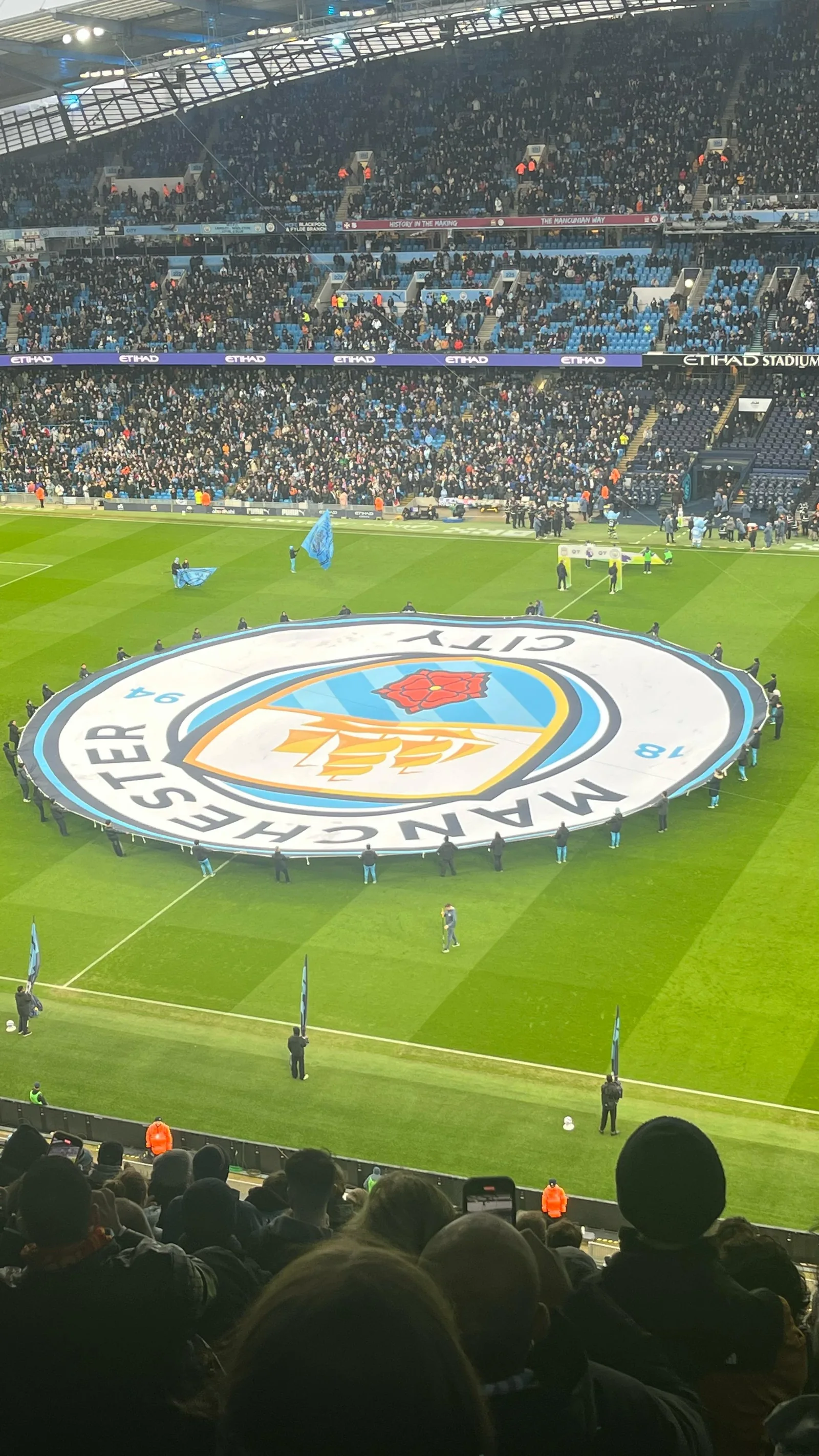
MLS can still field outstanding players and highly organized teams. Its roster rules make squad construction a distinctive skill: a successful sporting department must find production from domestic players, international slots, academy graduates, allocation-money signings, U22 investments and expensive stars. The ceiling of a first XI and the depth behind it may not rise at the same rate.
Why friendlies and one-off matches cannot settle it
A single match captures form, tactics, motivation, availability and calendar timing. An MLS club in midseason can meet an English club in preseason; another matchup can reverse that fitness advantage. Knockout soccer adds variance. A surprise win is real and meaningful, but it does not prove that all clubs in the winner's league are stronger.
Player transfers offer useful context but not a universal conversion rate. Some players thrive after moving from MLS to England; others need time or land in a poor tactical fit. Older stars can dominate in MLS, yet younger MLS-developed players can also earn moves abroad. Age, role and club situation matter more than a simple league label.
A better way to compare a specific matchup
- Compare likely starting lineups and available substitutes, not badge reputation.
- Check whether both clubs are in preseason, midseason or postseason.
- Separate current form from multi-year reputation.
- Note venue, travel, surface and weather.
- Treat a result as evidence about those teams on that day, not a final verdict on two leagues.
So, if “better” means the deeper concentration of elite players across an entire domestic season, the Premier League is the defensible choice. If the question is whether an MLS club can play excellent soccer or beat an English opponent in a particular match, the answer can also be yes. Those propositions do not conflict.
Which league should you follow?
Follow the Premier League if you want one balanced table, a season that runs through the European winter, and simultaneous races for the title, continental qualification and survival. Every point has a direct relationship to the same 20-club table, and there is no league playoff waiting after Matchweek 38.
Follow MLS if you enjoy conference rivalries, cross-continent variety and a regular season that feeds into a postseason. The Supporters' Shield race rewards sustained performance, while the playoff line and seeding races determine who gets a route to MLS Cup. That creates a reset without erasing the value of regular-season position.
You do not need to choose only one. Their calendars overlap for much of the year but peak at different times. MLS begins while the Premier League moves toward its spring finish; the next Premier League season begins while MLS enters its second half; MLS playoffs then occupy the late-year window after the English season is underway.
A practical MLS viewing checklist
- Use MLS games today for the current slate rather than relying on a static article.
- Check the MLS TV schedule for viewing details and availability caveats.
- Read conference position and the league-wide race on the standings page.
- Switch to the playoff guide when qualification and bracket context become the question.
The central lesson is simple: compare like with like. MLS Cup belongs beside a playoff championship, not beside first place in a balanced table. The Supporters' Shield is the closer MLS analogue to finishing first over the league schedule, though its unbalanced opponent list remains an important difference. An MLS Salary Budget Charge is not the same thing as cash salary, and a Premier League wage report is not directly comparable unless both measures use the same definition.
Once those distinctions are clear, the debate becomes more useful. The Premier League offers the deeper top-to-bottom playing environment and the jeopardy of relegation. MLS offers a different strategic puzzle built around roster rules, geography, conferences and knockout qualification. They are not alternate versions of the same league template, and that is exactly why following both can be rewarding.
Comments
Comments are reviewed before publication.
Spam, abusive content, personal information and policy-violating links are not published.
Sign in with Google to comment or reply.
Loading comments…