
MLS's official transfer ledger was updated through October 9, 2026, and includes confirmed signings, departures, trades and loans. Among the year's headline arrivals are Robert Lewandowski at Chicago Fire, Antoine Griezmann at Orlando City and Josh Sargent at Toronto FC. Charlotte's October 9 additions show why a summer-deadline roundup alone is no longer the complete late-season picture.
This article, reviewed October 11, examines selected official transactions and what they change for the clubs involved. It links the comprehensive league ledger while keeping transfer announcements, registration conditions and subsequent playing opportunities distinct.
What this confirmed 2026 transfer roundup includes
The official MLS All Transfers report groups moves by club, with incoming and outgoing lists. It is the broad reference for all 30 teams. The selection below is a closer look at notable transactions, rather than a claim to reproduce every academy promotion, departure or loan in that report.
There is a date distinction inside the ledger. Some entries occurred in late 2025 while clubs assembled their 2026 rosters. They belong to the wider roster-building cycle, but they are not calendar-year 2026 transactions. Our examples below use 2026 announcement dates. Likewise, a familiar star who joined in 2025 does not become a new 2026 arrival simply because he remains prominent this season.
Read the transaction type before assessing impact. A permanent international acquisition, a free signing, a loan, an internal MLS trade and a first-team promotion alter a roster in different ways. An incoming row at one MLS club and an outgoing row at another can describe the same player movement. Counting both as independent new arrivals would inflate the league total.
“Confirmed” here means the league or club announced the agreement or transaction. When a release says the roster addition is pending a medical, visa or International Transfer Certificate, that condition remains part of the original announcement. The press-release date is not automatically a debut date, and no article can promise selection from a signing headline alone.
The existing 2026 transfer-window and free-agent guide explains eligibility and deadlines in greater depth. Here the focus is the actual players, clubs and terms. Descriptions of likely football effects are analysis unless attributed to the club; they should be tested against subsequent lineups and performances.
Chicago, Orlando and Toronto added headline forwards
Three prominent forwards joined from European clubs under agreements with different time horizons. Their official announcements establish the clubs and contract terms; the announcement date alone does not establish the first MLS appearance. Orlando's spring announcement explicitly described a contract that would begin in July.
| Announcement | Player and destination | Previous club | Confirmed contract detail |
|---|---|---|---|
| February 27, 2026 | Josh Sargent — Toronto FC | Norwich City | Designated Player through 2030–31 |
| March 24, 2026 | Antoine Griezmann — Orlando City | Atlético de Madrid | July 2026 start; through 2027–28, with 2028–29 option |
| June 29, 2026 | Robert Lewandowski — Chicago Fire | FC Barcelona | Designated Player through 2027–28 |
Chicago Fire: Robert Lewandowski
Chicago's June 29 acquisition release confirmed Lewandowski as a Designated Player with an international roster spot and a contract through 2027–28. The initial roster addition depended on his P-1 visa and International Transfer Certificate. Those were conditions in the original release, rather than a claim that he remains unavailable today.
The league ledger lists the acquisition as free, a transaction label that does not reveal his salary. Chicago added a center forward to an existing attack, so later evaluation should consider the service reaching him and the players combining around him. His reputation identifies why the move drew attention; his MLS appearances provide the evidence for its effect on the team.
Orlando City: Antoine Griezmann
Orlando's March 24 announcement identified Atlético de Madrid as Griezmann's previous club and specified a July 2026 contract start. His Designated Player agreement extends through 2027–28, with a separate option for 2028–29. The original announcement described medical clearance, an International Transfer Certificate and a P-1 visa as requirements.
This is an important timing example: confirmation in March did not mean Griezmann had already made a March MLS debut. The agreement established a future arrival period. Assessing his subsequent role requires Orlando match evidence, and his European club or France statistics cannot be added to an MLS season total. Likewise, the optional extra year should remain labeled as an option until a confirmed decision changes its status.
Toronto FC: Josh Sargent
Toronto's Sargent release announced a transfer agreement from Norwich City and a Designated Player contract through 2030–31. It separately disclosed the acquisition of St. Louis CITY's right of first refusal and the initial medical, work-permit and International Transfer Certificate conditions. The MLS rights arrangement was distinct from the transfer agreement with Norwich.
Toronto's longer stated term makes this a different planning commitment from the other two contracts. It still does not guarantee a starting place or a fixed number of goals. For a useful comparison, track the forward's actual involvement, the supporting attack and the club's results while keeping the disclosed MLS rights payment separate from any international fee the announcement left unpublished.
Charlotte's October additions and Miami's midfield move
Miami's signing of Casemiro and Charlotte's October additions show why a transfer list should explain more than the destination. The former brought a senior midfielder into a new club on a free-agent agreement; the latter combined a senior addition with two players moving up from its own development team.
Inter Miami's club history records Casemiro's arrival on July 22. Its individual announcement specifies a contract through the conclusion of the 2027 Sprint Season, with an extension option until June 2029. It also identifies the original P-1 visa requirement and the acquisition of his MLS Discovery Priority from LA Galaxy. Those are distinct parts of the transaction: a free-agent signing and an agreement over the relevant MLS rights.
For Miami, the football question concerns the balance around a midfielder with extensive experience at the highest level. Positioning, distribution and support when possession changes matter more than treating past European trophies as a prediction of MLS results. The announcement establishes the agreement; match reports and team sheets establish subsequent involvement. An optional extension is a possible longer stay, rather than a guarantee that every season through June 2029 is already secured.
Three Charlotte signings had different development backgrounds
Charlotte's October 9 release announced Abdoulaye Doucouré, Hugo Mbongue and Nathan Richmond. Doucouré joined through the end of 2026 and occupies an international roster slot. Mbongue and Richmond received first-team contracts through the 2027 Sprint Season, with options for 2027–28 and 2028–29, after playing for Crown Legacy FC in MLS NEXT Pro.
The two promotions were not the same kind of arrival as recruiting an established senior midfielder. They moved players already participating in Charlotte's development structure onto first-team agreements. Richmond had already made his MLS debut against Chicago on September 26; signing a longer first-team contract should not be confused with a player's first appearance. His reserve contribution and Mbongue's reserve goals also belong to MLS NEXT Pro records, rather than Charlotte's MLS league totals.
The club placed Archie Goodwin and Aron John on the season-ending injury list to accommodate the additions. That is relevant roster context, but it does not establish an immediate starting eleven. The practical comparison is between the experience Doucouré brings and the opportunity the younger players have earned. Different contract lengths, previous playing levels and roster positions make this a group of three distinct decisions, even though they appeared in one announcement.
MLS trades reshaped Colorado, St. Louis and Seattle
Not every major 2026 acquisition added a player to the league. Two substantial cash-for-player trades moved established MLS forwards between clubs. For a league-wide arrival count, each is one player changing employer. For the individual teams, each creates both an attacking opportunity and a departure that needs to be evaluated.
Rafael Navarro moved from Colorado to St. Louis
Colorado's September 2 transaction statement identifies $12 million in cash from St. Louis CITY SC for Navarro, plus $250,000 if specified performance conditions are met. Colorado also retained a sell-on percentage; the initial announcement described a medical-test condition. The potential $12.25 million total therefore includes conditional compensation.
CITY's announcement confirms Navarro as a Designated Player with an agreement through 2029–30 and an option for 2030–31. This was a permanent internal move, rather than a loan from Colorado or a new 2026 arrival from Palmeiras. His earlier history with the Brazilian club explains his route into MLS, but it is not the origin of this September transaction.
For St. Louis, the decision puts a long-term commitment behind a forward familiar with the league. For Colorado, receiving cash and a possible future sell-on return changes the resources available to the club. Neither fact identifies a completed replacement signing by itself. A fair review keeps the actual transaction alongside the subsequent squad choices, rather than presuming that a sale automatically fixes every roster need.
Seattle acquired Dejan Joveljić from Sporting Kansas City
Seattle's August 25 release confirms Joveljić as a Designated Player in a $6 million cash-for-player trade with Sporting Kansas City. His agreement runs through June 2030, with a club option through June 2031. Seattle also said Albert Rusnák restructured his agreement to maintain roster compliance.
The selling club's announcement explains its own perspective: Joveljić no longer occupied a Sporting Designated Player slot, and the trade offered resources for its wider roster. Sporting specifically discussed converting a substantial amount of the fee into General Allocation Money. That explanation does not make the original $6 million consideration a salary figure or an announced $6 million GAM payment.
These deals illustrate two directions within the same competition. Seattle and St. Louis acquired experienced attacking players; Kansas City and Colorado accepted departures with financial implications. Follow the incoming forward's role and the selling side's subsequent changes separately. There is no requirement for both sides to receive an identical immediate football benefit, and a substantial price alone cannot establish the final sporting outcome.
Dallas and Vancouver illustrate incoming and outgoing transfers
FC Dallas confirmed Maarten Paes's transfer to Ajax, with the receiving club's February 2 announcement specifying an immediate move and a contract through June 30, 2029. The goalkeeper's old Dallas profile still contains historical contract information, so a confirmed departure release is the stronger source for this transaction. His arrival in Amsterdam was an outgoing MLS transfer, rather than an MLS free-agent signing.
Dallas later added another goalkeeper from within the league. Its July 9 announcement for Daniel lists $300,000 in 2026 GAM, $400,000 in 2027 GAM and up to $300,000 in conditional GAM payable to San Jose. The maximum package was $1 million, but the guaranteed allocation amounts totaled $700,000. Unlike the Navarro and Joveljić deals, this consideration was explicitly General Allocation Money.
Daniel's September 16 extension then added a separate piece of news: a Dallas agreement through 2027–28, with club options for 2028–29 and 2029–30. Count the July trade as his club change and the September announcement as a renewal. Neither requires counting him as two different incoming players. The months between Paes's exit and Daniel's acquisition also argue against collapsing an entire goalkeeping season into a simple same-day replacement story.
Vancouver's September 1 signing of Rui Modesto is another incoming transaction type: an international transfer from Udinese. The Angolan right back agreed to a contract through 2029–30, with an option for 2030–31. The announcement identified an International Transfer Certificate and medical as initial requirements for his addition to the MLS roster.
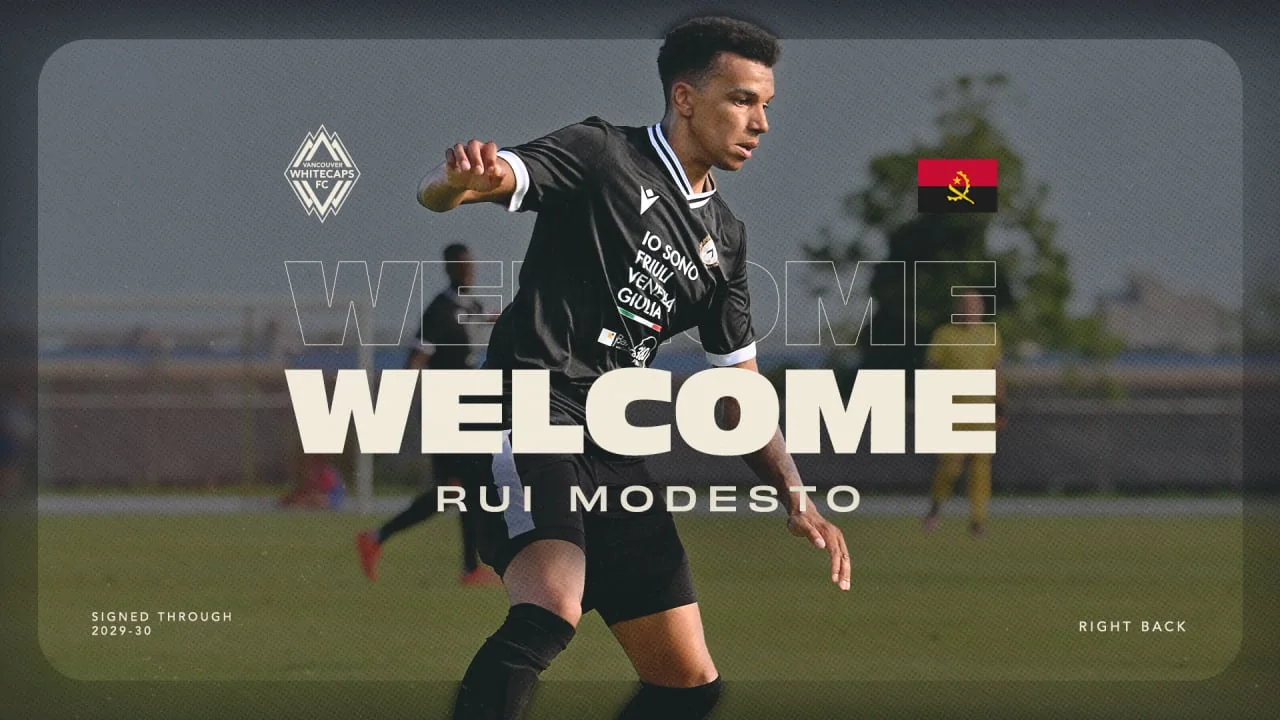
Modesto had recently been on loan at Palermo, but Udinese was the club from which Vancouver acquired him. That distinction is useful when comparing trackers that list the last team a player appeared for with those that identify the club holding his contract. His announcement also addresses a defensive position, adding a different kind of depth from the forward-heavy headlines elsewhere in this roundup. A transfer review should describe the actual role being filled before comparing the size or visibility of different moves.
Loans, purchase options and extensions need distinct labels
Permanent arrivals are only one part of a club's transaction record. Loans add or relocate playing opportunities for a defined period, while extensions secure additional time with an existing player. Both can matter considerably to a squad, but a clear roundup retains the mechanism rather than calling every announcement a new permanent transfer.
A loan is not the same as a permanent signing
Vancouver announced Sebastián Ramírez on August 20 on loan from Colombia's Fortaleza CEIF through June 2027, following the 2027 Sprint Season. The official agreement includes an option to purchase. His current club profile also describes the arrangement as a loan. This is the Colombian club, rather than the similarly named Brazilian Fortaleza EC.
The purchase option supplies a possible route to a permanent deal; it does not establish that Vancouver has already exercised that route. The announcement does not publish a purchase price. A tracker should keep the loan end date and the option in separate fields, and change the transaction label only when a subsequent confirmed decision warrants it.
This distinction also changes how to read future squad planning. A player can be available under a loan during the Sprint Season without already having a permanent contract covering the following full campaign. Assess his playing contribution now, then review any later purchase announcement on its own terms.
A renewal keeps a player at his existing club
Thomas Müller's September 29 Designated Player extension runs through the 2027 MLS Sprint Season. The Whitecaps release confirms continued employment at Vancouver. His original arrival was announced in August 2025, so this renewal should not be placed in a list of players entering MLS for the first time in 2026.
It should also not be described as an agreement through the entire 2027–28 season. The short Sprint Season and the subsequent full campaign are different periods. For Vancouver, keeping an existing contributor supports continuity; for a transfer count, it leaves the number of new arrivals unchanged. Our Müller guide follows his Vancouver role in more detail, while this roundup keeps the contract decision in its proper category.
How to track the effect of a confirmed signing
The next useful evidence after an announcement is a team sheet and a match report. Seattle's August 29 report against Chicago supplies a concrete example: Joveljić started on his Sounders debut and scored in the 12th and 48th minutes of a 2–2 draw. Lewandowski scored Chicago's late equalizer. These are actual league contributions after confirmed agreements, rather than projected totals attached to transfer headlines.
That match also shows the limits of a quick verdict. Two debut goals demonstrate immediate involvement, but the shared points do not establish that a signing solved every team problem. Review several appearances, distinguish starts from substitutions and keep regular-season statistics separate from cup performances. A forward's finishing, a midfielder's role and a defender's minutes answer different questions.
For future fixtures, use the MLS weekend schedule and check the official club's latest availability update before assuming a new signing will play. For transaction updates, follow the league's ledger and the individual club release together: the former helps find a move, while the latter often supplies the contract, option and compensation details.
Finally, keep the financial measures separate. A confirmed cash fee, a GAM trade package, an undisclosed international transfer fee and a player's salary are different quantities. The same applies to a third-party market-value estimate, explored in our MLS market-values guide. Preserving those distinctions makes the 2026 transfer picture more useful than an undifferentiated ranking of famous names or headline prices.
Comments
Comments are reviewed before publication.
Spam, abusive content, personal information and policy-violating links are not published.
Sign in with Google to comment or reply.
Loading comments…