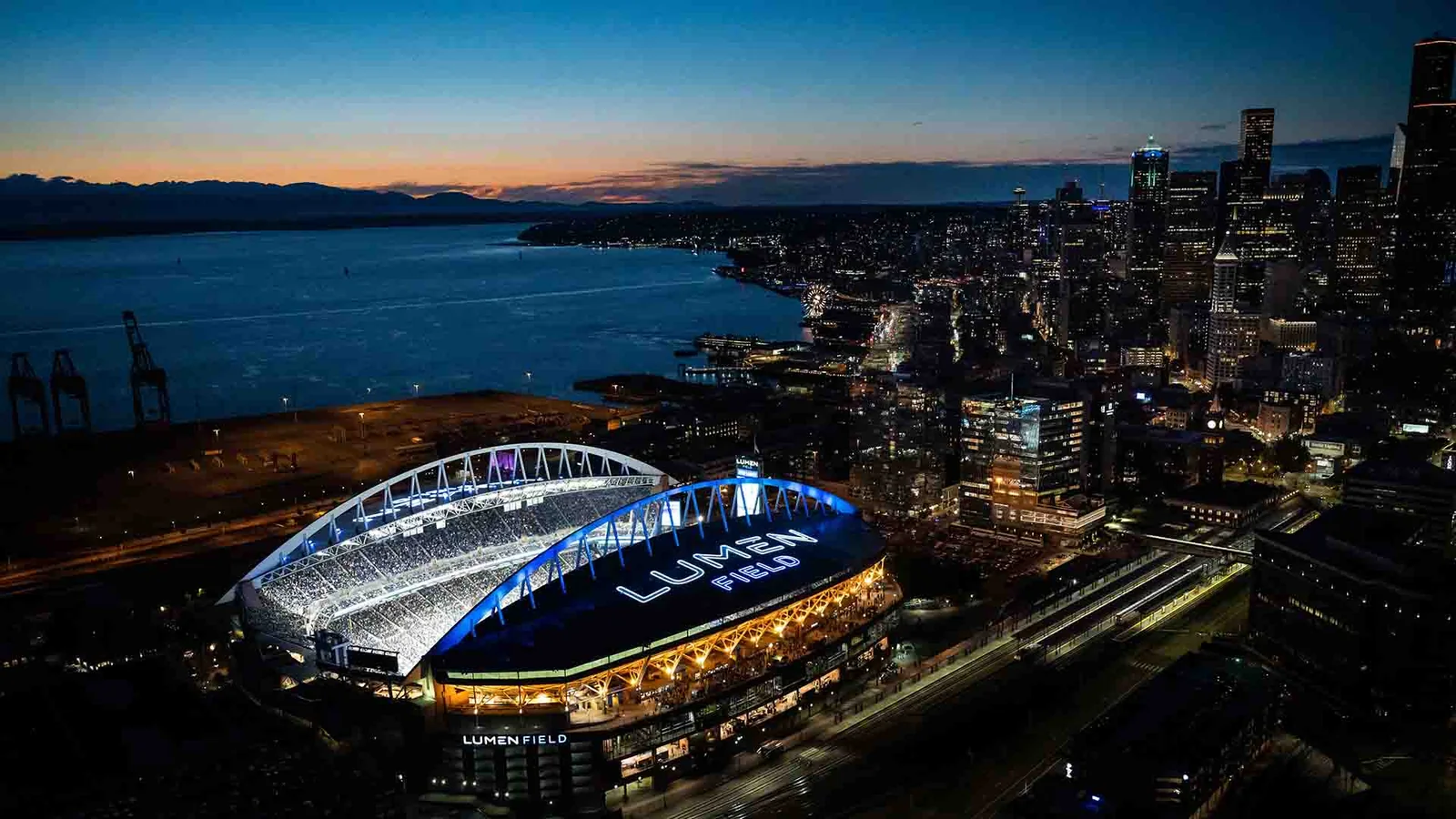
An MLS match and an NFL game can make a memorable city break, especially when both teams use the same stadium. Seattle and Atlanta are useful places to start: you can investigate a Sounders–Seahawks trip at Lumen Field or an Atlanta United–Falcons trip at Mercedes-Benz Stadium. The essential first check is whether both clubs actually have home fixtures during your visit.
This guide starts with the soccer match and works outward to tickets, transport and a second sporting event. It does not advertise a particular weekend or a combined ticket package. Use it to decide which dates deserve a closer look before you commit to travel.
Start with a shared stadium, not an assumed doubleheader
Seattle's official Lumen Field stadium guide identifies Seattle Sounders FC and the Seattle Seahawks among its home teams. In Atlanta, Mercedes-Benz Stadium provides separate Atlanta United and Atlanta Falcons ticket pathways. These are two concrete starting points for a soccer-and-football trip.
A familiar venue can make the second visit easier. After the MLS match, you may know which approach feels comfortable, where you would like to eat and how the walk back to your accommodation works. That is useful knowledge to carry into another event. It does not establish that the same entrances, seating areas or transport arrangements will apply.
Pick your city around the MLS experience you actually want. Perhaps seeing the Sounders is the main reason for traveling, with football an optional addition. Or perhaps you already have Atlanta plans and would enjoy attending either home team. Write down that priority before comparing dates: it prevents the search for a doubleheader from quietly replacing the match you wanted to see.
Also distinguish the city from the stadium. A search result mentioning a club, its metropolitan area and an NFL venue does not prove that your selected fixture takes place there. Read the venue attached to the individual event. This matters particularly when browsing old articles, special-event announcements or listings for teams with similar names.
The working question is therefore quite narrow: can you find an MLS home match you want to attend, an NFL home game that fits around it, and enough time to enjoy both? If one team is away, the shared stadium remains an interesting fact but stops being a reason to book that weekend. Keeping that distinction clear saves a great deal of unnecessary comparison shopping.
Match two confirmed home dates before booking
Begin with the MLS fixture. Use the MLS weekend schedule to narrow the search, then confirm the match on the club's own schedule and ticket page. For a trip further ahead, search the club's full season rather than assuming that the next available weekend view covers your intended dates.
Next, open NFL-Schedule.com's NFL team schedule directory and choose Seattle or Atlanta. NFL-Schedule.com is part of the same website project as MLS Schedule. Its team pages are useful for comparing opponents, home and away designations, venues and listed kickoff times alongside your soccer plans. Confirm the selected football game with the club before buying travel or admission.
Make a small record for each event rather than relying on two browser tabs that may be showing different seasons. Include the full date and year, home team, opponent, venue, local start time and ticket-page address. Mark anything still listed as to be determined. An opponent list without an assigned date is not enough to establish a weekend.
- Check that both events are home fixtures at the stadium you intend to visit.
- Convert displayed times to the destination's local time before comparing them.
- Keep the match date separate from the date on which you leave home, particularly for overnight travel.
- Leave any unannounced kickoff or venue field visibly unresolved in your notes.
- Open the individual ticket listings and compare their event names with the schedule entries.
For Seattle, label your working times Pacific Time; for Atlanta, label them Eastern Time. Avoid adding a fixed UTC offset to an entire season because daylight saving changes can affect the conversion. If your calendar already adjusts for travel, check how it will display the event when your phone changes time zones. The important result is that everyone in your group understands the same local arrival time.
A gap on the calendar must also work in practice. Two events on different days may be comfortable; two on the same day require a much closer assessment of travel, entry and possible overruns. Do not calculate the connection using only scheduled starts. Write down when you would need to leave the first event, whether that means missing part of it, and how much uncertainty you are willing to accept.
If the pairing fails, keep the MLS match as the anchor and consider another city activity. A successful trip does not require filling every available hour. Finding out that a second game does not fit is a useful planning result, especially before paying for transport that cannot easily be changed.
Choose seats and tickets separately for each sport
Treat the two admissions as separate purchases unless the seller explicitly describes a package covering both named events. A ticket bearing the stadium's name tells you where to go; the event name and date tell you what it admits you to. The same distinction applies to parking, hospitality and any other add-on you are considering.
Open the seating map attached to each actual event. Decide what matters for soccer: following the full shape of play, being closer to a goal, or joining the most vocal part of the crowd. Then make a fresh decision for football. The best place for you at one event may not be the best place at the other, even if a familiar section number is available.
Supporter areas deserve particular attention. Atlanta United's official matchday guidance says that its Supporter Section does not allow other teams' apparel, including opposing MLS clubs, international clubs and national teams. Read the club's current section rules before choosing a seat or packing a shirt. Do not interpret a rule for that section as a description of every seat in the building.

The atmosphere is part of the choice, not an incidental extra. Ask your group whether they want sustained singing and participation or a different viewing setting. If someone needs an accessible seat, a particular entry route or assistance, resolve that with the relevant ticket office before purchasing. A description of a section is more useful than assuming that everyone will enjoy the same experience.
Compare the full cost of the weekend in one place. Put both sets of tickets, stated fees, accommodation, transport and meals on the same worksheet. Leave room for expenses that are not yet known. A reasonably priced second ticket can still make the trip substantially more expensive if it requires another night in a hotel or a changed return journey.
Before checkout, read the seller's terms for the event and confirm that the tickets will be delivered in a form you can use. Check the number of seats, their location and the date once more. Keep the two confirmations clearly labeled by team and event; this is particularly helpful when several people share the booking work.
You do not need to buy the same type of experience twice. One match might be the weekend's main occasion and the other a straightforward first visit to a different sport. Set those expectations before comparing upgrades. That keeps the trip focused on what the group values instead of allowing two separate checkout screens to decide the budget.
Plan the stadium journey twice
Work backward from the part of each event you want to experience. If the soccer match includes a supporter march or another activity you care about, kickoff is too late to use as your arrival target. Check that event's published schedule, choose an arrival time, and then plan the journey from your accommodation. Repeat the exercise for football.
In Seattle, distinguish a special game train from a service that runs on your chosen date regardless of the event. Sound Transit's October 2026 announcement describes special Sounder services for selected Seahawks home dates. It is not a promise of the same trains for every Sounders match or every football game. Use current transit schedules and alerts for each journey.
For Atlanta, the Mercedes-Benz Stadium A–Z guide connects visitors to parking, transportation and stadium information. Compare the route from your actual accommodation, including the walk at each end. If you choose public transport, check the return service as carefully as the inbound trip. If you drive, verify that any parking reservation names the right event and date.
Write down the return plan before you enter the stadium. A useful plan identifies where you will walk, which service or pickup point you intend to use, and what you will do if the event runs later than expected. Avoid committing to an airport connection on the assumption that leaving your seat means you have already left the venue area.
Pack for the stricter requirements you actually verify, not the ones you remember from another stadium. Review the current bag and prohibited-item guidance for both events. If a member of your group needs to bring something for an accessibility or medical reason, contact guest services about the applicable procedure rather than relying on a general checklist.
A shared stadium can make it tempting to carry everything from the first outing into the second. Instead, reset the small details each morning: the correct ticket, the correct parking reservation, a charged phone and clothing suited to the day's plan. Leave unnecessary luggage at an appropriate storage location that you have checked in advance.
Finally, agree on a meeting point and a way to reconnect if the group separates. Choose something more precise than “outside the stadium,” and make sure everyone knows which event entrance they are using. These decisions take little time before the trip and remove avoidable confusion once the crowds arrive.
Build a weekend with room for changes
Once you have a possible pairing, sketch the whole trip before making either match the centerpiece of a tight travel connection. Include arrival, sleep, meals and the return journey as well as the two events. This exposes the difference between a weekend that fits on paper and one that your group will enjoy.
Here is a hypothetical structure, not an announcement of an actual fixture pair: arrive on Friday, attend an MLS match on Saturday, attend an NFL home game on Sunday and travel home on Monday. The structure gives you separate days for the two stadium visits. It works only if the clubs' confirmed fixtures and your travel arrangements support it.
| Stage | Decision to make | Leave unresolved until checked |
|---|---|---|
| Arrival day | Accommodation and a manageable journey into the city | Whether your arrival leaves time for any optional activity |
| MLS match day | Match ticket, event arrival target and return route | Current club activities, gates and transport alerts |
| NFL game day | Separate admission and a fresh stadium journey | Final game information and applicable schedule changes |
| Departure day | A return plan with enough margin for the trip you booked | Any change costs or accommodation extension you might need |
NFL flexible scheduling can change kickoff arrangements. Recheck your selected game before making a commitment that depends on a particular start time. Read the current official policy if that game falls within an affected window; a screenshot saved when you first researched the trip is not a continuing confirmation.
Add the soccer event to your calendar using the MLS calendar tools, and keep the club's match page in the event notes. Record when you last checked both fixtures. A calendar reminder is useful because it brings the plan back to your attention; it should not replace reading the latest club and venue messages.
Choose a commitment order that matches your priorities. If the MLS match is essential, establish its ticket and travel feasibility first. If the second game is optional, decide in advance how much extra time and cost it can justify. If both are essential, wait until you can verify both event listings and understand the booking conditions for the whole trip.
A good final check is to ask each person to describe the plan without looking at your spreadsheet: which team they are seeing on each day, which stadium they are going to, and when they expect to return. Any disagreement points to something worth fixing now. With the dates, admissions and journeys clearly separated, sharing a stadium becomes a practical advantage you can enjoy.
Comments
Comments are reviewed before publication.
Spam, abusive content, personal information and policy-violating links are not published.
Sign in with Google to comment or reply.
Loading comments…