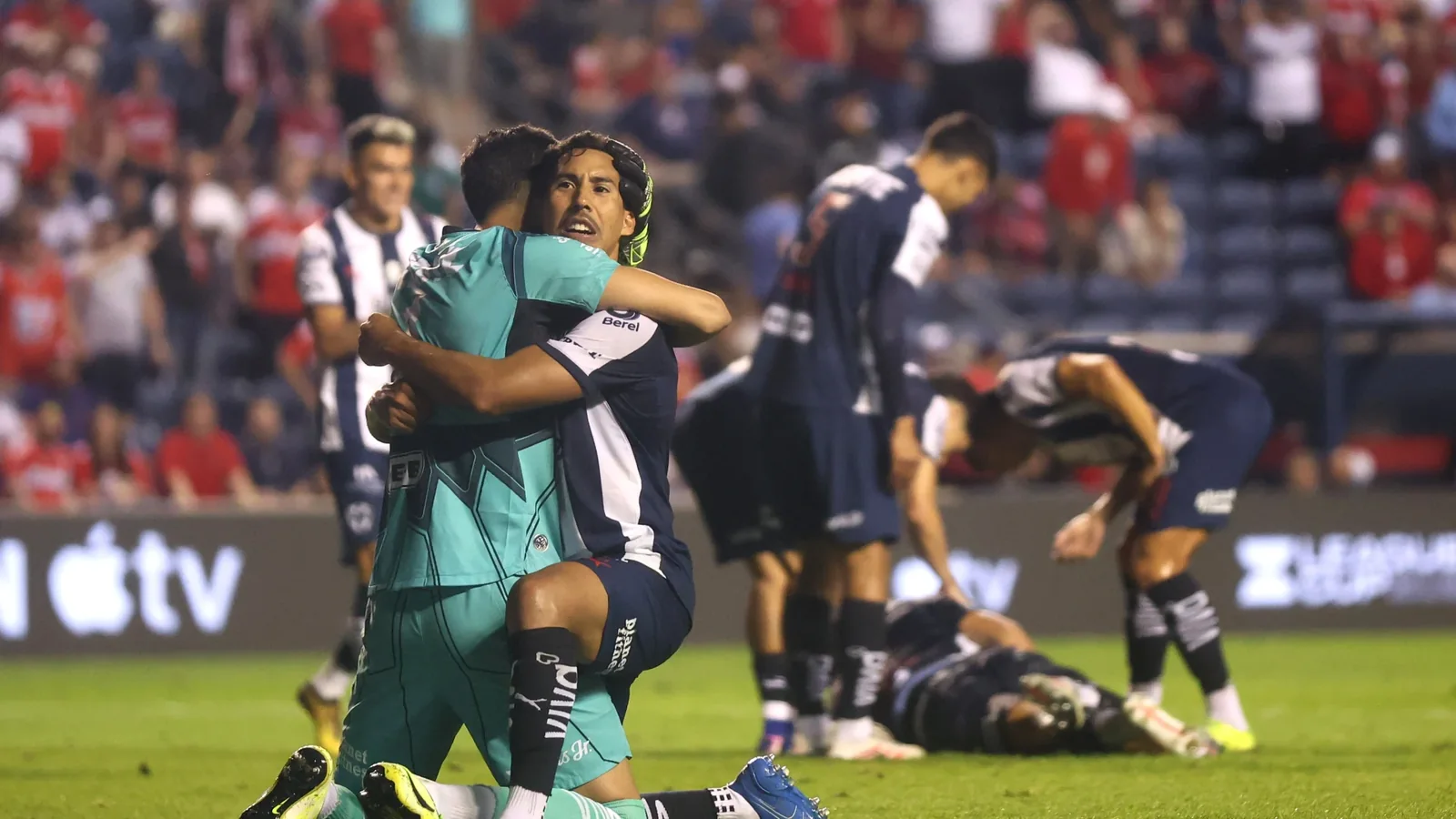
What MLS lost when all four clubs went out
MLS has been eliminated from Leagues Cup 2026, with Monterrey, León, Toluca and Club América taking all four semifinal places. The decisive quarterfinal matches were played on August 25 and 26 in the United States. By the end of that round, no MLS club could win the tournament or finish in one of its three Concacaf Champions Cup qualifying positions.
The qualification consequence is substantial, but it needs precise language. All three places awarded through Leagues Cup 2026 will benefit Liga MX clubs. MLS did not have three guaranteed places in this tournament to begin with: those were prizes available to clubs from either league through their performance. MLS clubs lost the opportunity to earn them.
A missed route, not a reduced domestic allocation
Concacaf still lists five qualification places through MLS for the 2027 Champions Cup. The league's cup champion, regular-season leaders and other qualifying clubs retain their announced routes. Losing every Leagues Cup quarterfinal does not remove those places from the regulations, and it does not exclude MLS from next year's continental tournament.
This distinction separates a disappointing sporting outcome from a rule change that has not happened. A club hoping to qualify through Leagues Cup now needs another applicable route. A supporter following the league-wide allocation should still count the five MLS places separately from any club qualifying through a different domestic cup.
The result also ends MLS's involvement before the final day. As of the morning of September 6 in UTC, the scheduled championship match between Toluca and Monterrey has not been played. Neither its winner nor the third-place result can bring an eliminated MLS club back into contention for this edition's tournament berths.
The practical questions are therefore about what happened in the four losses, how the overlap rules distribute the available continental places, and which goals remain for MLS clubs in their own competitions. The final can still alter the precise route taken by a Liga MX qualifier, but the league identity of the beneficiaries is already settled.
Four quarterfinals that ended the MLS challenge
Chicago Fire, Real Salt Lake, Austin FC and Columbus Crew were the four MLS clubs to reach the knockout round. Each lost its quarterfinal to Liga MX opposition. The table uses the local U.S. match dates, rather than the following day's publication date on a recap.
| Date | Result | Venue |
|---|---|---|
| August 25, 2026 | Monterrey 2-1 Chicago Fire | SeatGeek Stadium, Bridgeview, Illinois |
| August 25, 2026 | León 3-0 Real Salt Lake | Dick's Sporting Goods Park, Commerce City, Colorado |
| August 26, 2026 | Toluca 2-0 Austin FC | Sports Illustrated Stadium, Harrison, New Jersey |
| August 26, 2026 | Club América 2-0 Columbus Crew | Dignity Health Sports Park, Carson, California |
Chicago's recovery ends with a late defeat
Chicago drew level through Philip Zinckernagel after Monterrey had taken the lead before halftime. The match was still tied until Orbelín Pineda's volley in the 83rd minute delivered the winner. That was a different kind of exit from Real Salt Lake's loss: León won by three goals, with Díber Cambindo scoring twice and Sebastián Vegas adding the other.
The location of the RSL match deserves attention. It was played in Colorado, not at Real Salt Lake's usual ground in Utah. The official quarterfinal arrangements distinguished hosting privileges from the assigned stadium, so describing every MLS side as losing on its normal home field would be inaccurate.
Austin and Columbus leave on the second night
Toluca broke a scoreless match against Austin with Helinho's second-half penalty, then added its second goal through Jorge Díaz deep into stoppage time. The late second goal means the final margin alone does not describe how long the tie remained within one goal.

América's win over Columbus contained a different turning point. With the Crew trailing, goalkeeper Rodolfo Cota saved their first-half penalty. América then extended the lead before the interval. The missed opportunity to equalize matters when reviewing the match, even though it cannot be converted into an alternative result.
Together, the four scorelines add up to nine goals for Liga MX clubs and one for MLS. That is a decisive round, but it was not one identical performance repeated four times. Late-game defending, taking an equalizing opportunity and managing a match after conceding all belong in the individual reviews.
What the format tells us about the result
Leagues Cup 2026 began with 36 clubs: all 18 Liga MX teams and 18 MLS qualifiers. The MLS entrants qualified through the previous season's playoff places, with nine from each conference. That is an important detail when someone describes the tournament as a complete test of every MLS club or an exact selection of the best teams at the moment it began.
Each club played three Phase One matches against opponents from the other league. The qualifying tables remained league-specific, with four clubs advancing from each. The knockout field was therefore built to contain four MLS teams and four Liga MX teams, rather than simply taking the eight highest teams from one combined table.
Why one round could remove an entire league
The quarterfinal bracket paired MLS clubs with Liga MX clubs in all four matches. Once all four Liga MX entrants won, the semifinal field necessarily came from a single league. There was no reserved MLS semifinal place to protect, and no requirement that the final retain one representative from each competition.
The structure makes the quarterfinal round a direct sporting comparison, but also a concentrated elimination point. Four losses on two evenings were enough to turn a balanced eight-club field into an all-Liga MX final four. Earlier Phase One success could secure entry and affect the pairing, but it could not rescue a club after losing that knockout tie.
The limits of a league-wide conclusion
The right conclusion is that Liga MX's four quarterfinalists outperformed their MLS opponents in the matches that decided advancement. Expanding that into a precise measure of the entire quality gap between the leagues would require much more evidence. The competition did not match every MLS club against every Liga MX club, and the participating MLS field was based on the previous season.
That limitation does not soften the actual outcome. Tournament football rewards winning the required matches, not assembling an explanation afterward. It simply keeps two different questions separate: who deserved to advance from these ties, and what a wider comparison of the leagues would show across many opponents, venues and seasons.
Where the three Champions Cup places go
Leagues Cup awards continental qualification to its champion, runner-up and third-place finisher. The complication is that a successful club may already hold a Champions Cup place through its domestic league. That overlap does not make the spare opportunity available to whichever eliminated Leagues Cup club finished closest behind it.
Concacaf's published rule gives the relevant domestic league an additional place for its next eligible, non-qualified club under the applicable regular-season standings. With all four 2026 semifinalists from Liga MX, the tournament organizers confirmed that any relevant reallocation remains with Liga MX.
Why Pachuca qualified without reaching this final four
Concacaf has already confirmed Pachuca's qualification through an additional Liga MX place. Toluca and América had qualified through other routes before reaching the semifinals, and the resulting overlap guaranteed an additional beneficiary from the league's aggregate standings.
Monterrey was also confirmed as qualified after the quarterfinals. At that point, its eventual route could be a Leagues Cup top-three finish or an additional Liga MX place from the aggregate table. Those are two possible descriptions of how one club reaches the competition, not two entries for the same club.
The distinction is useful when reading a live qualification tracker. A club can be mathematically assured of participation before the competition that determines its final route has ended. The tracker may later change the route label without changing the club's qualified status.
Why an eliminated MLS club does not inherit the overlap
Imagine an already-qualified Liga MX team finishes on the Leagues Cup podium. The applicable mechanism sends the additional opportunity through Liga MX's qualification criteria. It does not ask which MLS quarterfinalist lost by the smallest margin, which MLS club performed best in Phase One, or which team would provide the most attractive continental fixture.
For Chicago, RSL, Austin and Columbus, therefore, the final-day combinations cannot turn their quarterfinal defeats into a continental place from this tournament. Their remaining possibilities must be assessed through other competitions. That is the real cost of the sweep: every potential MLS benefit from the three Leagues Cup routes has gone, including the possibility of an overlap helping another club from the same league.
The MLS qualification routes that remain
Concacaf's 2027 qualification list assigns five places through MLS. The named routes are the 2026 MLS Cup winner, the Supporters' Shield winner, the regular-season winner of the opposite conference, and the next two qualifying clubs from the Supporters' Shield standings. These are the domestic routes to follow after Leagues Cup elimination.
| MLS route | What the supporter follows |
|---|---|
| MLS Cup winner | The postseason championship |
| Supporters' Shield winner | The overall regular-season points race |
| Opposite conference winner | The regular-season leader in the other conference |
| Next two qualifying clubs | The applicable places in the overall regular-season standings |
Why this is not simply “the top five”
A list containing the playoff champion and both conference-related achievements is not identical to taking the first five names from a live combined table. The final champions, standings and any relevant overlap must be resolved under the qualification rules. A table position in early September is evidence of a club's progress toward a route, not automatically proof that it has clinched the place.
Use the MLS standings to follow the regular-season component and the MLS playoff guide for the postseason route. A club can fall short through one route and remain competitive through another. That is why the league campaign still has continental stakes even after this tournament ends badly.
National cups are separate opportunities
The U.S. Open Cup winner also earns a Champions Cup place, and the Canadian Championship has its own place. Those are distinct competition allocations, not additional automatic spots attached to the MLS table. Their relevance to a particular MLS club depends on its national cup participation and results.
For an individual supporter, the useful task is to identify the routes actually open to that club. A team still alive in its national cup has a different immediate opportunity from one already eliminated there. A team chasing a high regular-season finish faces a different sequence from one depending on a postseason title. The Leagues Cup loss narrows the options, but the remaining options should be evaluated on their own terms.
What is still at stake on September 6
The final day remains worth following even without an MLS club involved. Shell Energy Stadium in Houston hosts both the third-place match and the final on Sunday, September 6, 2026. The schedule below reflects the official announcement checked before the games began.
| Match | Eastern time | Houston local time | Announced U.S. coverage |
|---|---|---|---|
| Third place: León vs. Club América | 6:00 p.m. ET | 5:00 p.m. CDT | Apple TV |
| Final: Toluca vs. Monterrey | 9:15 p.m. ET | 8:15 p.m. CDT | Apple TV and Univision |
Both times are on September 6 in the listed U.S. time zones. An international viewer may see a different calendar date after conversion. The official Leagues Cup schedule is the appropriate place to confirm the event listing immediately before watching.
Different qualification stakes in the third-place match
The tournament's final-day announcement describes León as competing to secure Champions Cup qualification. América, already qualified, is competing for a podium finish. The teams therefore share the desire to win the match, but they do not arrive with the same unresolved continental question.
That difference explains why a third-place game can matter beyond deciding which team finishes above the other. For one participant it can close the qualification process directly; for the wider allocation it helps determine how the existing overlap is resolved. It should not be dismissed as having no sporting consequence simply because it is outside the final.
The final offers more than a place in the field
Toluca and Monterrey have already secured continental participation. The trophy remains at stake, and the Leagues Cup champion's route includes direct entry to the 2027 Champions Cup Round of 16. Qualified status alone therefore does not make the championship match meaningless.
This article does not assign a winner before kickoff. Once the final has been played, the champion and the exact final-day qualification outcomes can be recorded. The central MLS conclusion will remain the same: its four quarterfinal exits already ended its access to the three places awarded through this Leagues Cup.
How MLS supporters should judge this exit
The first judgment is straightforward: losing all four quarterfinals is a poor collective result. Every MLS club that reached the decisive round failed to advance, and none remained to compete for the trophy. The league does not need an invented regulatory penalty for that outcome to be disappointing.
Separate the result from the explanation
The second judgment requires more care. A late winner against Chicago and a saved Columbus penalty point to different match situations. Neither proves that all MLS teams shared one tactical defect, lacked motivation or made the same selection mistake. Those explanations need evidence from the actual lineups and performances, not just the league badge beside the losing team.
A useful review can ask whether a team created a realistic route back into the match, how it protected or attacked the space around its penalty area, and what changed after the opening goal. Those are football questions that can identify improvements. A slogan about one league wanting it more cannot do the same work.
The tournament structure also puts a limit on sweeping conclusions. This was a selected MLS field playing a short initial phase and single-match quarterfinals. The wins belong fully to the Liga MX clubs that earned them, while a durable judgment about the leagues as a whole needs a broader body of results.
Follow the next attainable objective
For a club still seeking a 2027 Champions Cup place, the next meaningful target is an applicable domestic route. That could mean protecting a strong regular-season position, winning the other conference's race, or building a postseason campaign capable of ending with MLS Cup. A surviving national cup campaign offers a different sequence of knockout opportunities.
Each target has a measurable requirement. Points and standings determine the regular-season routes; knockout wins determine the cup routes. That makes the remaining season more useful to follow than a hypothetical Leagues Cup reprieve that the regulations do not provide. MLS lost a valuable opportunity in this tournament, and its clubs now have to earn continental qualification elsewhere.
Comments
Comments are reviewed before publication.
Spam, abusive content, personal information and policy-violating links are not published.
Sign in with Google to comment or reply.
Loading comments…