
MLS published remaining 2026 General Allocation Money for all 30 clubs on September 17, 2026, using a September 15 roster snapshot. Philadelphia Union led at $4,665,679; Red Bull New York was listed at $0. Those figures answer a useful but narrow question: how much 2026 GAM the league showed as available for each club on that date. They are not live balances, cash reserves or a ready-made ranking of which team can buy the best player.
What Does the September 2026 MLS GAM Report Measure?
General Allocation Money, usually shortened to GAM, is a roster-building mechanism in MLS. The league's rules describe it as allocation money available in addition to a club's salary budget. It can be used under specific regulations to reduce a player's salary-budget charge or be traded in approved deals. In the September report, MLS disclosed the amount of remaining available 2026 GAM on every club's roster profile. The number is denominated in dollars, but it is a league accounting resource rather than a simple bank balance.
The release followed the close of the secondary transfer window and was part of a broader publication of club roster profiles. Those profiles cover more than one figure: senior and supplemental roster players, contract years, international status, Designated Players, U22 Initiative players and other roster designations. That context is essential. A team with plenty of GAM may have different needs and restrictions from a team with the same amount but a different mix of contracts and roster slots.
For readers, the table below is most valuable as a dated comparison. It can show which clubs held more or less of this particular roster resource at one point in the season. It cannot, on its own, reveal whether a club intends to use GAM on a contract, send it to another team, carry eligible funds forward, or take no action. Those are decisions and transactions beyond the scope of a static snapshot.
The September 15 date is more important than the publication date
The document appeared on September 17, but MLS states that both the profiles and the GAM amounts are static as of September 15. The league specifically warns that changes to rosters after that day are not reflected and that GAM transactions through the roster freeze will not update the published totals. A trade reported on September 20, for example, could alter a club's true position without changing the September table.
That is why every ranking in this guide is labeled “as of September 15.” A lower figure here does not prove a club still has that amount today, and a higher one is not a promise that it remains uncommitted. If a later official roster profile is released, it should be treated as a new snapshot rather than silently substituted into the old table. This date discipline is especially important when readers compare a headline about a recent trade with the figures in the league's earlier disclosure.
What Is Each MLS Team's Remaining 2026 GAM?
The following is the complete 30-club list from MLS's September 17 release. It retains the league's club names and published dollar amounts and uses the league's alphabetical order so a supporter can find a team quickly. The heading “remaining” means the amount the report showed as available for 2026 on September 15. It does not mean the same amount is available at the moment you read this article.
| Club | Available 2026 GAM |
|---|---|
| Atlanta United | $493,386 |
| Austin FC | $1,970,454 |
| Charlotte FC | $1,125,351 |
| Chicago Fire FC | $1,114,300 |
| FC Cincinnati | $1,542,968 |
| Colorado Rapids | $2,031,997 |
| Columbus Crew | $2,365,353 |
| FC Dallas | $890,114 |
| D.C. United | $809,890 |
| Houston Dynamo FC | $1,266,602 |
| Sporting Kansas City | $1,832,942 |
| Los Angeles Football Club | $480,389 |
| LA Galaxy | $263,670 |
| Inter Miami CF | $142,300 |
| Minnesota United FC | $4,320,451 |
| CF Montréal | $2,308,722 |
| Nashville SC | $17,667 |
| New England Revolution | $593,847 |
| New York City FC | $842,009 |
| Orlando City SC | $1,865,900 |
| Philadelphia Union | $4,665,679 |
| Portland Timbers | $782,974 |
| Real Salt Lake | $2,557,866 |
| Red Bull New York | $0 |
| San Diego FC | $2,120,259 |
| San Jose Earthquakes | $3,685,457 |
| Seattle Sounders FC | $1,984,562 |
| St. Louis CITY SC | $4,061,367 |
| Toronto FC | $1,023,282 |
| Vancouver Whitecaps FC | $758,412 |
These 30 disclosed amounts add to $47,918,170, with a median of $1,195,976.50 per club. Those calculations describe the spread in the release; they are not an MLS-wide payroll, a transfer budget or an amount every club could spend without other constraints. The amounts range from zero to more than $4.6 million, a gap wide enough to require explanation rather than a quick “richest to poorest” label.
For a useful comparison, first identify the exact resource, then the date, then the roster situation. A club carrying an above-median balance may still have a full roster or no immediate need for a particular buy-down. A club near zero may have already allocated GAM to contracts or trades. The table tells us where each team stood in this accounting category on one day, not which front office used its resources best.
Which Clubs Lead and Trail the September Snapshot?
The September distribution is far from even. Four clubs had more than $3 million in remaining available 2026 GAM, while six were below $500,000. The median was about $1.2 million. That spread makes the league's roster profiles worth reading, but it is also where interpretation can go wrong. A ranking is a ranking of this balance at this date, not a list of the best-run clubs, the most ambitious owners or the strongest upcoming transfer windows.
GAM can enter and leave a club's account in several ways, and clubs choose different roster construction models. The published amount is the result of those earlier choices. Without the rest of a roster profile and subsequent transactions, a fan cannot know whether a high number signals planned flexibility, recently received allocation money or simply a different stage in the club's team-building cycle.
Philadelphia, Minnesota, St. Louis and San Jose are above $3 million
Philadelphia Union topped the disclosure with $4,665,679. Minnesota United FC followed at $4,320,451, St. Louis CITY SC at $4,061,367, and San Jose Earthquakes at $3,685,457. Real Salt Lake, at $2,557,866, was fifth. These positions come from sorting the league's 30 disclosed values, not from an estimate of what each club could acquire in a later window.
The gap between the top two was $345,228, much smaller than the gap between either of them and a club near the middle of the list. Still, it would be careless to treat that difference as a scouting advantage. A player signing depends on roster slots, existing contracts, salary-budget charges, the player's terms and relevant MLS rules. A large GAM number may help with part of that puzzle, but it does not guarantee a transaction.
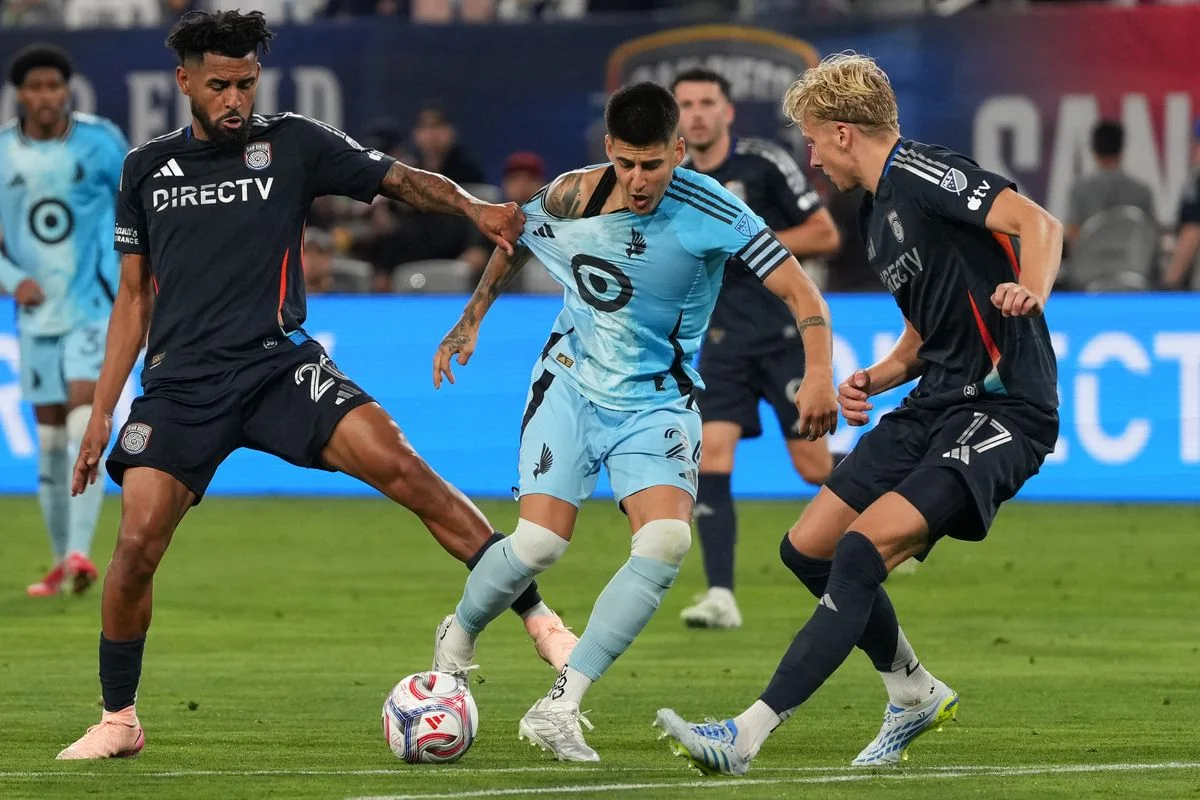
Six clubs are below $500,000
At the other end, Atlanta United had $493,386, LAFC $480,389, LA Galaxy $263,670, Inter Miami CF $142,300, Nashville SC $17,667 and Red Bull New York $0. Red Bull's zero is a striking line item, but it is only zero in the report's remaining available 2026 GAM column. It does not say the club has no cash, no salary budget, no players it can move or no ability to act under another roster mechanism.
Low balances can follow different choices. A club could have used GAM to lower charges for players already on its roster, sent it in a trade, or received less through a particular mechanism. The release does not explain each club's causal history in its short summary table, so the number alone cannot certify a good or bad outcome. Results on the field belong in a separate conversation from this bookkeeping snapshot.
How Can a Club Use General Allocation Money?
MLS's 2026 roster rules give every club an annual GAM allotment of $3,280,000. The rules also allow additional sources, including up to $2 million for a club that selected the U22 Initiative Player roster construction model, as well as qualifying transfers, certain competition outcomes and other defined mechanisms. Clubs can carry most GAM forward because it generally does not expire, but the extra GAM associated with the U22 model must be used within the same league season by the roster-freeze date. These differences help explain why September balances are not simply “initial allotment minus signings.”
The money has value because MLS measures many roster decisions against a club salary budget. For 2026, that budget is $6,425,000, and the maximum salary-budget charge for a player is $803,125 under the published rules. GAM can help clubs manage those charges, subject to eligibility limits. The reported balance is therefore one component of a larger regulatory system, not an amount that can be handed to any prospective player without conditions.
GAM can reduce a player's salary-budget charge
The simplest use to understand is a buy-down. MLS gives an example in its own rules: a player with an $800,000 salary-budget charge can have that charge reduced to $400,000 by applying $400,000 of GAM. The club gains room in the salary-budget calculation. The example does not mean the player's underlying contract pay suddenly fell by $400,000; the accounting charge changes under league rules.
Limits still apply. The league places restrictions on how far GAM can reduce a charge, with separate treatment for loan or transfer fees. Some Designated Player situations have their own requirements. A large disclosed balance, therefore, does not automatically fit every player on a roster. To assess a specific signing, a fan would need to know the player's acquisition costs, roster category and budget treatment. Those facts are not contained in the one-column GAM ranking.
GAM can move in approved trades, but it differs from TAM
MLS also permits clubs to trade GAM, subject to league approval, roster compliance and valid trading periods. That gives a team a way to exchange allocation resources for another asset or to receive GAM in a deal. It is a direct reason the September 15 snapshot can become outdated even if no new club-wide profile is published: the league has said later GAM transactions will not change the posted figures.
Targeted Allocation Money, or TAM, is a separate category. It has particular salary thresholds and roster uses, and the 2026 MLS rules explicitly say TAM may not be traded. A reader should not add a team's disclosed GAM to a guessed TAM amount and call the result “cash to spend.” The categories have different rules and are not interchangeable in every transaction. Likewise, GAM received under the U22 model has the special same-season deadline mentioned above, even though most other GAM does not expire.
The practical lesson is to ask what mechanism is involved before drawing conclusions from a transaction headline. A club could use GAM in a budget-charge adjustment, send it in a trade, or hold it for an allowable future purpose. Each choice changes what its remaining balance would mean, and each is governed by league rules that sit outside a simple ranking table.
Why Is a GAM Balance Not a Club's Spending Budget?
A spending budget would tell a reader how much a club can commit across all relevant costs. The September GAM figure tells only how much of one allocation category MLS showed as available on a past date. It omits the club's cash position, ownership appetite, existing salary commitments, open roster slots, Designated Player choices, international roster status and the terms of any prospective deal. Some of those details appear elsewhere in the roster profiles; others are not public at all.
Consider two hypothetical clubs, both listed with $2 million in GAM. One may have a player whose salary-budget charge it intends to buy down and room for another roster addition. The other may already have its planned senior roster in place and prefer to keep eligible GAM for a later period. The headline balance is the same, but the useful action differs. That is why comparing totals without asking how a club constructed its roster can lead to a false conclusion about urgency or ambition.
The reverse mistake is to read $0 as complete financial paralysis. Red Bull New York's September entry was $0 in available 2026 GAM. MLS did not say that its overall salary budget was zero, that it could not trade a player, or that it was prohibited from using other lawful roster mechanisms. A specific balance is not a verdict on the team's whole business. Even within GAM, a subsequent receipt or trade could change the position after the snapshot.
A high figure also does not establish a better roster. Allocation money is a tool, not a goal scored or a win earned. Philadelphia's first-place balance and Minnesota's second-place balance may prompt useful questions about future flexibility, but judging roster quality requires looking at contracts, performances, availability and club strategy separately. Similarly, a club that spent GAM on a productive player may show less remaining money precisely because it used a resource it was given.
When a ranking circulates on social media, the most accurate short caption is “remaining available 2026 GAM as of September 15.” Leaving out 2026 or as of changes the claim. Calling it a “transfer budget” changes it further. The official release supports the narrower description, and the roster rules explain why the broader one would be misleading.
How Should Fans Use the Roster Profiles After September 15?
Start with the official club profile rather than the sorted GAM number. MLS says the September documents identify senior and supplemental roster players, off-roster Homegrown players, roster designations, guaranteed contract and option years, international status, Designated Players, U22 Initiative players and players treated under TAM rules. A player marked unavailable may be on loan or on a season-ending injury list. Each detail changes how a club's theoretical flexibility translates into an actual roster move.
For example, a supporter wondering why a team with a large GAM balance has not announced a new starter should first ask whether there is an appropriate roster slot, what budget category the player would occupy, and whether a player already on the roster needs a charge reduction. Those questions are more informative than assuming the front office is “sitting on cash.” The profile cannot reveal every private negotiation, but it provides a firmer foundation than the table alone.
It also helps to compare like with like. A Designated Player designation, a U22 Initiative designation and a senior-roster contract involve different rules. Counting names on a roster without noticing those categories can make two clubs look similarly constrained when they are not. The public document is meant as a profile of current construction; it is not a forecast of transfers, starting lineups or the club's next trade.
Check roster designation and later transactions separately
After examining a September 15 profile, check official MLS and club transaction notices for events that occurred later. The league explicitly says it will not revise this release's GAM totals to reflect post-snapshot trades before roster freeze. If a team acquires or sends GAM after September 15, the published row can remain unchanged even though the club's real position has moved. The same caution applies to a later loan, injury designation or roster change.
MLS had published an earlier 2026 roster-profile and GAM cycle, which is a reminder that each disclosure is a dated photograph of a moving system. When comparing two versions, align the dates and the definition of the balance before deciding that a team “gained” or “spent” a given amount. Even then, a net change by itself may combine more than one transaction or roster mechanism. The September table is best used as a reliable baseline that invites specific follow-up questions, not as a constantly updating dashboard.
For supporters focused on matches, the roster economics sit alongside the MLS standings and club schedules. The amount of GAM available on September 15 may shape future options, but it cannot predict a result on the field. Read the number with its date, consult the club's roster designations, and use fresh official transaction information when the question is what the club can do now.
Comments
Comments are reviewed before publication.
Spam, abusive content, personal information and policy-violating links are not published.
Sign in with Google to comment or reply.
Loading comments…