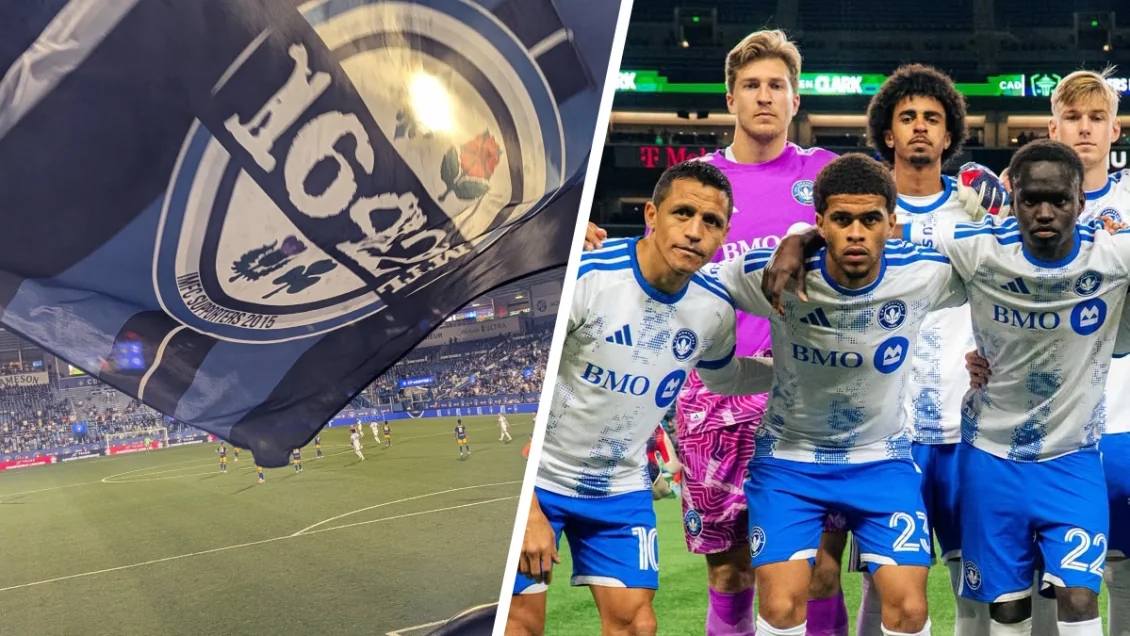
Updated October 28, 2026. CF Montréal supporter groups 1642MTL and Collectif Impact Montréal have stopped their organized support for the remainder of the 2026 season. A Canadian Championship final defeat intensified the dispute, but identity, communication and the club's sporting direction are also central to the complaints. The club has separately announced a safety response to incidents after the final.
What the Montréal supporter groups actually announced
The October 2026 CF Montréal protest is a withdrawal of organized supporter activity by two named groups. It is not an announcement that the club has stopped playing or that every person who follows the team has joined a single boycott. That distinction matters when reading dramatic descriptions of a silent Stade Saputo.
1642MTL stopped its organized support
On October 24, before the home match against Nashville SC, 1642MTL announced that it would stop its support activities for the remainder of the season. The group's explanation described accumulated disappointments on and off the field rather than one isolated defeat. Local reporting on the announcement also highlighted its unhappiness about having to change supporter sections.
The significance comes from what such a group contributes. Organized singing, flags, coordinated displays and the work of keeping a section active depend on people repeatedly volunteering their time. Withdrawing those activities makes that contribution visible through its absence. A seat can still exist in the stadium while the collective atmosphere normally produced around it disappears.
1642MTL describes itself as an independent supporter organization officially recognized by the club. Recognition does not mean that its leadership speaks for the club, or that the club directs its opinions. Equally, a decision by the organization does not tell us what every member will do individually. Some people can remain emotionally attached to the players while refusing to provide the usual organized backing.
Collectif Impact Montréal followed with its own statement
Collectif Impact Montréal issued a separate statement on October 25 announcing the end of its activities for the 2026 season. Its message emphasized the Impact identity and ultra culture, and challenged how management was responding to the incidents after the Canadian Championship final. Those are the group's stated positions, not findings that settle the dispute.
The two announcements should therefore be read alongside each other without merging their membership, histories or demands. They overlap in their rejection of the current relationship with the organization, but they remain separate statements. Neither gives outside observers a basis to declare that every Montréal supporter shares an identical view about ownership, the name, stadium discipline or the best next step.
As of October 28, the announced endpoint concerns the remaining 2026 campaign. It does not establish a confirmed date for reconciliation, the permanent dissolution of either organization or a guaranteed return next season. Any later decision needs a new statement rather than an assumption that silence automatically ends when the calendar changes.
Why the Canadian Championship final became the breaking point
On October 21, Montréal had a home final against Forge FC and a chance to finish a frustrating year with a tangible achievement. Instead, the Canadian Championship ended 1–1 after extra time, with Forge winning the shootout 4–2. The shootout numbers describe the deciding contest; they do not mean Montréal conceded four goals during the match.
Forge became the first Canadian Premier League club to win the competition and secured a place in the 2027 Concacaf Champions Cup. From Montréal's side, the result removed both a trophy opportunity and the qualification prize attached to that route. The competition organizer's match account supplies the sporting detail without needing to adopt either set of supporters' view of the aftermath.
A cup final concentrates expectations differently from an ordinary league fixture. There is a winner that evening, a presentation and an immediate contrast between celebration and disappointment. At home, supporters also see the visiting team collect the reward in their own stadium. That helps explain why this particular loss carried emotional weight, although the final result alone cannot explain every complaint in the subsequent statements.
A lost trophy chance and a difficult league finish
Three days later, Nashville won 2–0 at Stade Saputo, clinching its first Supporters' Shield while Montréal was eliminated from MLS playoff contention. The juxtaposition was unusually stark: the visitors were celebrating the league's best regular-season record while the hosts lost their remaining postseason possibility. It was the same venue, but the competitive outlook of the two clubs could hardly have been more different.
The broader league struggle also preceded that week. Sportsnet's October 26 assessment records six defeats in Montréal's first seven MLS matches and the departure of Marco Donadel, followed by Philippe Eullaffroy's interim spell. The precise judgment of who is responsible remains contested. The existence of a prolonged difficult campaign does not depend on accepting a columnist's harshest language.
For supporters, a final can become the last occasion on which a season still feels redeemable. When that opportunity disappears, older questions about direction and communication can become more urgent. That is an interpretation of the sequence, not proof that winning one shootout would have solved the relationship. The earlier supporter correspondence shows that some of those questions were already being asked months before the final.
The complaints go beyond the latest result
Describing this dispute only as anger about a losing team leaves out the relationship being contested. The statements concern who feels heard, which traditions belong in the stadium and whether supporters see a credible sporting direction. Those questions can reinforce each other, but they should be examined separately.
Communication and the place of supporter traditions
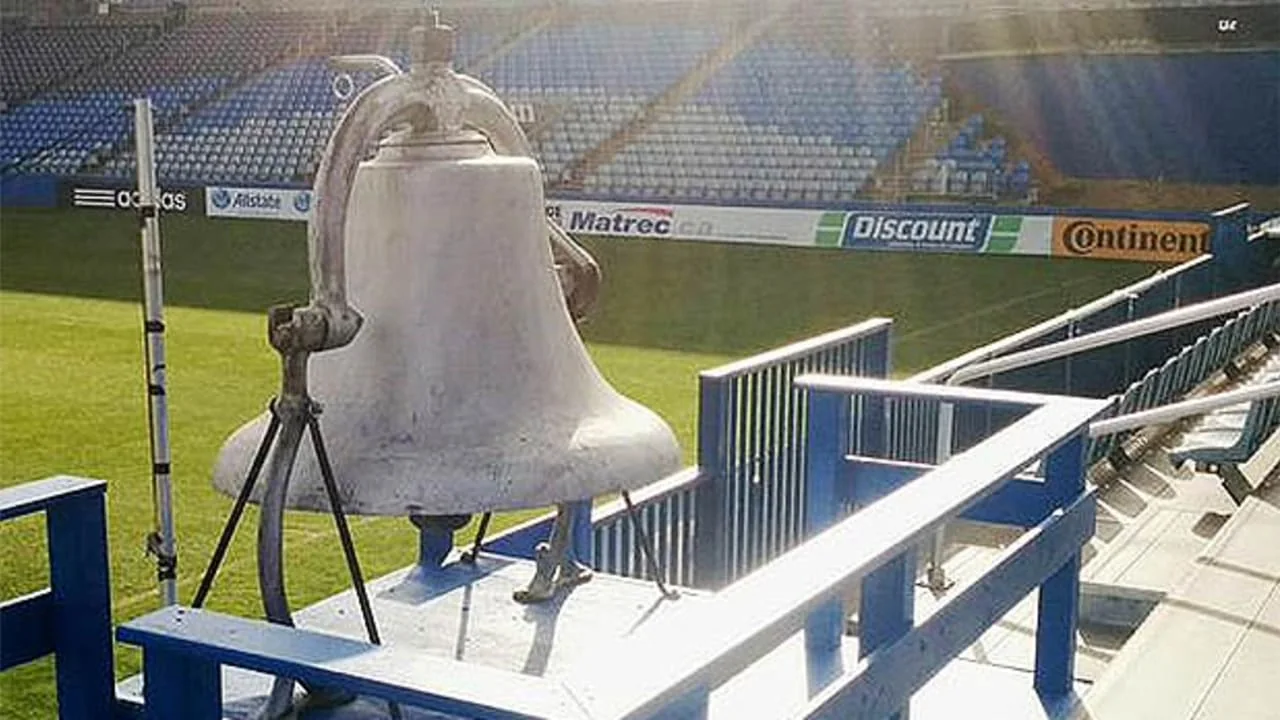
A particularly useful piece of evidence predates the final. In an August 1 newsletter, 1642MTL's Justine Longpré described contacting management about the group's place within the club, the importance of the bell and players greeting section 133 after matches. She described the response as largely absent and wrote about a decline in active participation.
That does not independently establish how every conversation unfolded. It does establish that a group leader was publicly voicing concerns in the summer. The October withdrawal therefore cannot fairly be explained as a reaction invented overnight after a cup defeat.
The bell is part of this story because it represents supporter initiative. The club's historical account describes members pooling their own money to obtain it and working with the organization to install it. For a visitor it may be a distinctive sound after a goal; for the people who created the ritual it can stand for years of personal effort and continuity.
Why the Impact name still matters
Collectif's continued use of Impact is deliberate. The club's rebranding announcement presented the move to Club de Foot Montréal as an identity rooted in the city and an opportunity to grow. Supporters who prefer Impact attach their own meaning to the older name. These two interpretations of local identity can coexist without either side accepting the other's decision.
A name dispute is easy to dismiss as branding trivia until it involves the name people used when introducing friends to the team, making banners or remembering earlier seasons. In that setting, recognition is part of belonging. Changing a badge or winning a game does not automatically answer whether those people feel that their history has been respected.
There is no confirmed announcement here that the official name will change again. Nor does the available discussion show unanimity among Montréal fans. Some sympathize with the protest while placing less importance on restoring Impact. A useful account can explain the demand without pretending it is the only possible supporter position.
What sporting ambition means to the protesters
Calls for ambition should also be separated from a demand to win every match. A supporter can accept defeats while asking who is responsible for recruitment, how a coaching plan will survive setbacks and what progress is supposed to look like. Those are questions about direction and accountability, not just the latest score.
Online discussion includes sympathy for the management criticism and sharp disagreement about protest conduct. It also contains unverified claims about finances and future ownership. Those claims should not be promoted into facts. The documented issue is a breakdown of trust between organized supporters and the current organization; it does not prove a sale, relocation or any undisclosed financial transaction.
What the club said about safety and stadium bans
The club did respond publicly to the incidents after the final. In its stadium safety statement, CF Montréal said that objects, including pyrotechnics, had been thrown toward the field and security personnel, and that vandalism had occurred in the concourses. It condemned those actions while acknowledging dissatisfaction with sporting results.
The announced response included sanctions and lifetime stadium bans for individuals formally identified as involved. The club also said it would increase security measures and police presence. It warned that further incidents could lead to stronger sanctions, potentially including supporter-section closures.
Several distinctions follow from that wording. A promised sanction for identified individuals is not an announcement that every member of a named supporter group has received a lifetime ban. A warning about possible future section closures is not proof that all sections have already closed. The statement also does not provide a complete public list of people involved or an independently verified count of bans completed.
Those differences matter because a group protest and an individual's conduct can be discussed at the same time without treating them as identical. One person may stop singing, another may stop attending and another may disagree with both choices. None of those decisions alone establishes participation in dangerous behavior. Conversely, frustration with management does not answer the separate question of responsibility for a particular incident.
This is also where the debate among fans becomes more complicated than supporters versus owners. Some people defend criticism of the club while strongly rejecting thrown objects and property damage. Others see the security response through a longer history of conflict. Those arguments concern different things: the right to express dissatisfaction, the method of expression and whether discipline is applied fairly.
A constructive discussion needs evidence at each level. Assessing a sporting plan requires results and decisions; assessing an allegation against a person requires identification and evidence about that person's behavior. Using the first dispute to settle the second, in either direction, obscures what actually happened. The available public statements explain the competing positions but do not turn every disputed allegation into a settled fact.
What the protest means for people attending matches
The practical effect depends on whether someone is asking about atmosphere, admission or a specific sanction. Those are separate questions. A visitor who normally buys an ordinary match ticket should not interpret a supporter statement as a new set of stadium terms.
A withdrawal of support does not cancel a fixture
The groups control their organized activities; they do not decide whether an MLS fixture takes place. As of October 28, the club's ticket page still lists the November 7 home match against Vancouver Whitecaps FC. Check the current club ticket information for operational details rather than relying on a repost of an earlier supporter announcement.
What may change is the experience inside the ground. Coordinated chants, displays and familiar rituals contribute something different from the number of tickets distributed. It is reasonable to expect a withdrawal to affect that experience, but no one can guarantee precisely how loud a future match will be or how many unaffiliated fans will attend. A social-media impression of quietness is not an official attendance figure.
Check current ticket and entry information
Before making plans, review the latest club notices for your specific match and seating area. The announced increase in security is a reason to keep current information handy, not a basis for inventing new bag rules, arrival requirements or a fixed delay at the gates. Only the operator can confirm the procedures applying on the day.
If your question involves an individual ban, a supporter privilege or a possible section change, contact the relevant ticket or supporter representative directly. A general explainer cannot determine the status of an individual account. It also cannot promise a refund or replacement seat simply because organized backing has stopped.
For people choosing whether to attend, there is no single compulsory response. Buying a ticket, staying away, supporting the players and agreeing with criticism of management are different choices that people may combine in different ways. Understanding the protest helps explain the atmosphere; it does not require treating every person in the stadium as a vote for management or every absent person as a member of a supporter group.
What would show that the relationship is improving
The next meaningful development will be evidence of a changed relationship, rather than a louder description of the current disagreement. The following are useful editorial tests for assessing future updates; they are not a list of conditions that either side has privately accepted.
First, look for a specific channel of communication. A published meeting outcome, an agreed process for raising matchday concerns or a clear explanation of who handles supporter questions would be more informative than a general promise to listen. Such a process does not guarantee agreement, but it lets people see whether an issue has reached someone with responsibility for it.
Second, separate the sporting plan from the matchday relationship. A team can improve its recruitment without resolving a dispute over traditions, and it can improve communication without instantly climbing the table. Assessing each strand on its own makes it harder for one victory or one cordial photograph to stand in for progress everywhere.
Third, examine whether accounts of discipline remain precise. New public information should distinguish what has been established about an individual from assumptions about an entire section. Supporters can ask for clarity while the club maintains its responsibility to protect people in the stadium. Those aims become harder to reconcile when every disagreement is treated as evidence that the other side has no legitimate concern.
Finally, wait for the groups themselves to explain any return to organized activity. A fixture announcement or next season's ticket sale is not a substitute for that decision. As of this October 28 account, the confirmed story is that two organizations have withdrawn their usual support for the rest of 2026 after a damaging week exposed grievances that were already present. What follows will depend on decisions still to be made, not on an automatic reset when the season ends.
Comments
Comments are reviewed before publication.
Spam, abusive content, personal information and policy-violating links are not published.
Sign in with Google to comment or reply.
Loading comments…