How we ranked the best MLS teams of all time
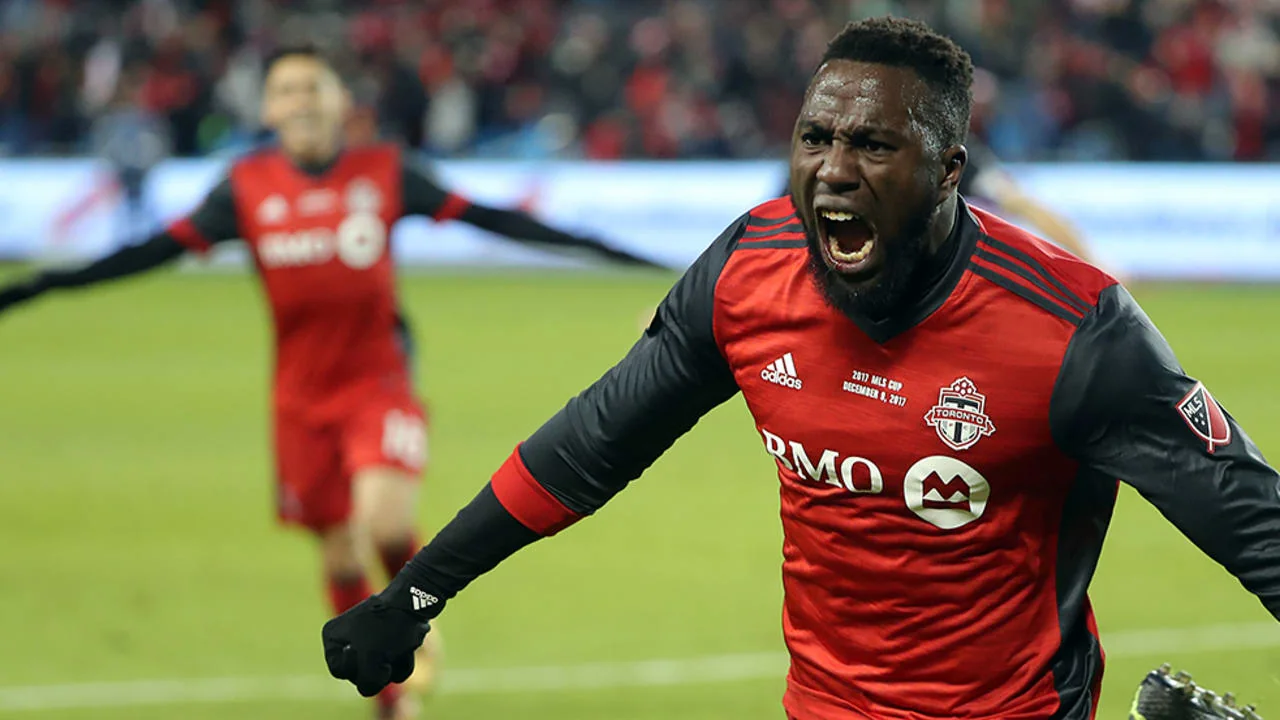
Toronto FC's 2017 team is our choice for the greatest single-season MLS side. Its combination of the Supporters' Shield, MLS Cup and Canadian Championship gives it the most convincing complete-season argument. The 2011 LA Galaxy and 1997 D.C. United follow closely. These positions reflect our editorial judgment, not an official MLS award or a forecast of who would win an imaginary match.
The unit of comparison matters: this list ranks one club in one particular year. A famous badge does not inherit credit from another season. Toronto's 2017 players receive no bonus for earlier or later finals; the Galaxy's separate teams must make their own cases. That makes the question different from asking which franchise has accumulated the most trophies.
The three questions behind each selection
- How convincing was the league campaign? Sustained results carry more evidence than a few memorable highlights.
- Did that quality survive the postseason? Winning MLS Cup strengthens a season already supported by league performance.
- What made this particular team exceptional? A domestic double, attacking dominance or an expansion championship can distinguish otherwise close candidates.
There is no rigid formula that converts a Canadian Championship into a fixed number of league points. Opponents, competition access and formats differ. We explain the tradeoff for each selection so readers can change the order without having to guess what the ranking rewards.
Why raw points cannot settle every comparison
Early MLS used a shootout to resolve tied regular-season games, and historical seasons did not all have the same match count. A win column from the 1990s therefore needs context before it is compared with a modern table. Even among 34-game seasons, differing opponents prevent the standings from functioning as a controlled experiment.
This September 2026 assessment considers completed seasons through 2025. It does not award a place to an unfinished 2026 campaign. For the current competition, use the MLS standings; for the relationship between league placement and the postseason, consult the MLS playoffs guide. The ranking below deliberately includes both championship teams and exceptional Shield winners whose playoffs ended early.
Nos. 1-2: Toronto's treble and the Galaxy's complete campaign
1. Toronto FC, 2017
Toronto collected 69 regular-season points, won the Canadian Championship and finished by beating Seattle 2-0 in MLS Cup. The treble is the central fact behind its first-place ranking. It provides evidence across a league campaign, a domestic cup and the decisive playoff match, rather than asking one achievement to stand for everything.
Greg Vanney's side also had tactical flexibility. MLS's retrospective highlights the diamond midfield used in the final, a useful reminder that Toronto's achievement involved more than assembling prominent players. Sebastian Giovinco and Jozy Altidore supplied different attacking threats, while the team's structure helped bring those qualities into the same game.
Why it ranks here: Toronto presents the fewest compromises under our criteria. Readers who value the Shield can find a strong season; readers who require MLS Cup can find the title; readers looking for additional achievement can point to the Canadian Championship. The case does not depend on pretending that 69 remains the points record.
The counterargument: other teams accumulated more points, and cup pathways are not identical across countries or eras. Toronto cannot prove it would beat every later champion. Its advantage is the completeness of the season it actually played. That is a more defensible reason for first place than a hypothetical scoreline against another generation.
2. LA Galaxy, 2011
The 2011 Galaxy combined 67 league points with only 28 goals conceded, then added MLS Cup to the Supporters' Shield. They defeated Houston 1-0 in the final. The celebrated attacking names draw attention, but the defensive record is equally important to understanding why this team stands so high.
Bruce Arena's team offers a different model of greatness from a side built around overwhelming scoring totals. Its case rests on controlling the season well enough that the championship feels connected to the league campaign. The Cup reinforced what the standings had already suggested.
Why it ranks here: a strong defense makes a team credible in different kinds of matches, including evenings when its most recognizable attackers do not produce a spectacle. For this ranking, the Galaxy's balance and completed double outweigh the temptation to choose a more explosive side solely because its highlights are more dramatic.
The counterargument: Toronto's extra domestic trophy gives the top choice a broader collection of completed objectives. A reader who prioritizes defensive reliability over that additional competition could reasonably reverse the first two. Our second-place selection is a statement about narrow comparative preference, not a claim that the Galaxy lacked a championship-level ceiling.
Nos. 3-4: D.C. United and LAFC complete the double
3. D.C. United, 1997
D.C. United finished the 1997 season with both the best regular-season record and MLS Cup, beating Colorado 2-1 in the championship game. That combination earns this particular United side its place above several more recent candidates. It is the chosen season here, rather than an amalgamation of everything the club achieved during its early dynasty.
Putting a 1990s team this high requires judging excellence against the competition it actually faced. Simply assuming that newer means greater would turn a historical ranking into a list of recent teams. The reverse mistake would be treating early domination as proof that later, deeper leagues were easier.
Why it ranks here: United passed the two central tests available within MLS: leading the league campaign and winning its championship. That is substantial evidence even without applying a modern points conversion or borrowing trophies from the following season. It also gives the list a meaningful early-era benchmark.
The counterargument: the league's size and competitive environment were different. That limits any claim about absolute playing strength across decades. A reader choosing the best team for a theoretical match against modern opposition might move United down. Our question instead asks which single seasons most persuasively demonstrated greatness in their own competitive setting.
4. LAFC, 2022
LAFC won the Shield and MLS Cup in 2022, becoming another member of the select group to complete that double. The final against Philadelphia finished 3-3 before LAFC won the shootout 3-0. Gareth Bale's late equalizer and John McCarthy's contribution in the shootout turned a remarkable game into a championship.
The final's drama should support the season's evaluation without swallowing it. If we remembered only those last moments, we would risk judging a year by a short sequence. LAFC already possessed the regular-season trophy before that game began, which gives the Cup a much stronger foundation than a surprise postseason run alone.
Why it ranks here: this was a team that completed both principal MLS objectives. That puts it above the club's 2019 side in this overall ranking, even though a reader focused strictly on regular-season dominance may prefer the earlier team.
The counterargument: the final required a rescue and a shootout. Those details weaken a claim that LAFC was unchallenged or unquestionably superior in every decisive moment. They do not undo the double, but they explain why we stop short of placing the team above every other champion with the same pair of trophies.
Nos. 5-6: The Galaxy's fluid attack and Columbus's balance
5. LA Galaxy, 2014
The 2014 Galaxy finished the regular season with 61 points, 69 goals scored and 37 conceded, then beat New England 2-1 after extra time in MLS Cup. Their plus-32 goal difference supplies a strong statistical foundation for a team also remembered for the way it attacked.
The league's season review describes a possession game that developed around frequent attacking interchange. That detail helps explain the appeal of choosing this Galaxy team over the 2011 version: there is a credible footballing argument beyond counting titles. Movement and combination play can make a team memorable even when another season produces more points.
Why it ranks here: we give the 2014 side substantial credit for combining an excellent scoring margin with a championship finish. It is the highest selection here that won MLS Cup without also winning that season's Shield. Its place reflects the quality of the campaign, rather than an assumption that every Cup winner should automatically outrank every Shield winner.
The counterargument: the 2011 Galaxy completed both major MLS objectives and accumulated more league points. That is enough to separate the two for us. Choosing 2014 instead would mean giving greater weight to attacking expression and the shape of the team at its best.
6. Columbus Crew, 2008
Columbus won the Shield and followed it with a 3-1 victory over the New York Red Bulls in MLS Cup. Guillermo Barros Schelotto supplied three assists in the final. Chad Marshall and Frankie Hejduk were among the scorers, making the decisive match an illustration of contributions extending beyond the most obvious attacking names.
The Crew's case is easy to underestimate in a discussion dominated by famous rosters. Yet their two principal achievements fit this ranking's method directly. They were successful across the regular season and produced a winning championship performance when a single game decided the title.
Why it ranks here: Columbus earns a place through a coherent completed season. The final's distribution of decisive contributions also makes it a useful example for readers thinking about team construction: a celebrated creator needs teammates who can convert possession and service into goals.
The counterargument: the Galaxy's 2014 scoring margin and attacking identity narrowly win our comparison. Readers who treat the Shield-Cup double as an absolute requirement should place Columbus ahead of that Galaxy side. We leave room for playing quality in the ranking, while acknowledging that this is one of its closest calls.
Nos. 7-8: Chicago's expansion double and LAFC's scoring machine
7. Chicago Fire, 1998
Chicago's first MLS season ended with two trophies: MLS Cup and the U.S. Open Cup. The Fire beat D.C. United 2-0 in the league final and Columbus 2-1 in the Open Cup final five days later. Winning both in an inaugural campaign creates one of the strongest distinctive achievements on this list.
The attraction of the Fire's season is not simply its novelty. A new team still had to organize itself well enough to defeat established opponents and finish two knockout competitions. The short turnaround between finals also makes the two wins part of a connected challenge, rather than unrelated entries in a trophy cabinet.
Why it ranks here: an expansion double earns a meaningful premium in our evaluation. Chicago achieved a level of immediate completeness that deserves to stand beside seasons with more imposing regular-season numbers. This is the selection most directly shaped by the circumstances in which success was achieved.
The counterargument: the Fire did not add the Shield. A ranking that prizes league dominance above everything else would move Chicago below LAFC's 2019 team. We narrowly favor the two completed cup campaigns while recognizing that the teams present very different kinds of evidence.
8. LAFC, 2019
LAFC amassed 72 points, scored 85 goals and finished with a plus-48 goal difference in the regular season. Carlos Vela scored 34 league goals. Those numbers explain why this side belongs in an all-time conversation despite failing to win MLS Cup.
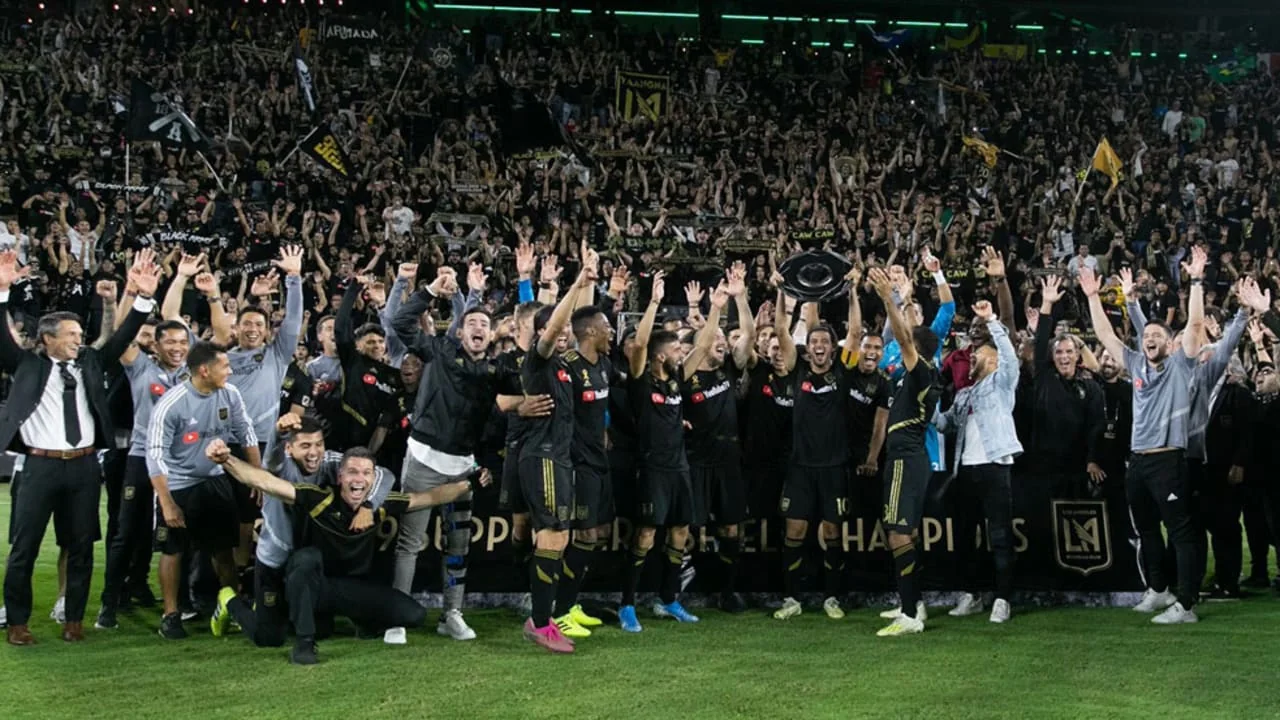
The gap between goals scored and conceded is particularly useful here. An enormous scoring total can sometimes obscure defensive problems; a large positive margin provides a broader picture. LAFC's evidence therefore extends beyond one outstanding scorer, even though Vela's contribution is central to remembering the season.
Why it ranks here: excluding this team merely because Seattle ended its playoff run would discard too much regular-season evidence. Greatness can include sustained superiority even when a team does not finish the postseason as champion. Our list is designed to recognize that distinction.
The counterargument: the playoff defeat is a real limitation. Under a complete-season standard, LAFC cannot receive credit for a championship it did not win. Its eighth place is therefore much lower than its position would be in a ranking restricted to regular-season attacking dominance.
Nos. 9-10: Inter Miami and New England raise the points standard
9. Inter Miami CF, 2024
Inter Miami finished the 2024 regular season with 74 points, surpassing New England's 2021 total of 73. The Shield-winning campaign belongs in this conversation for that measurable achievement. It does not need to borrow the reputations of its players from competitions they played before joining MLS.
Atlanta United then eliminated Miami in the first round of the playoffs. Both facts belong in any honest evaluation. Treating the exit as if it erased the league campaign would be too harsh; treating the Shield as if it guaranteed a championship would be equally misleading.
Why it ranks here: collecting more points than the earlier benchmark over a full regular season is a substantial argument for inclusion. We place Miami above New England because the two teams have comparable claims built around exceptional points totals and an uncompleted postseason.
The counterargument: Miami's early exit limits its position under our broader standard. This ranking is not a points leaderboard, so the team with the highest listed total does not automatically finish first. A reader whose definition of greatness ends on Decision Day should place this side much higher.
10. New England Revolution, 2021
New England's 73-point season established a new regular-season benchmark in 2021. The Revolution nevertheless lost to New York City FC in the playoffs, and NYCFC went on to win MLS Cup. That sequence makes New England another important test of how much weight a historical ranking gives the championship tournament.
The achievement should be described in its proper time. New England set a record in 2021; Miami subsequently surpassed it in 2024. Calling the Revolution the current points-record holder would confuse the historical milestone with the later record list.
Why it ranks here: a full campaign provides repeated evidence of quality. We retain a place for that evidence even though the final memory of the season is disappointment. The selection is a reminder that a team's historical value is not exhausted by the identity of the eventual Cup winner.
The counterargument: a championship-first list would replace New England with another Cup-winning side. That is a reasonable alternative. Our tenth place intentionally preserves space for a remarkable regular season while stopping short of treating its points total as compensation for every missing postseason achievement.
Questions that can change your own top ten
Is Toronto officially the greatest MLS team ever?
No permanent official title settles this debate. Toronto's 2017 side won an Extratime greatest-team voting bracket, which is useful historical context, but a poll is different from a competitive trophy. Our first-place choice comes from the criteria explained above. Another writer can prefer a different season without disputing Toronto's actual achievements.
Why is Inter Miami's 2025 championship team outside this list?
Miami won MLS Cup in 2025, while Philadelphia won that year's Shield. We considered that completed season rather than freezing the discussion before it happened. Our choice of Miami's 2024 team reflects the exceptional regular-season points achievement; it does not suggest the club failed to win a later championship.
This is also the clearest way to challenge the final places. If winning the Cup is mandatory in your definition, Miami's 2025 side is a natural replacement candidate for one of the Shield-only selections. Atlanta's 2018 champion belongs in that conversation too. A ten-team limit forces exclusions, and the last position should not be mistaken for an objective boundary between greatness and ordinary success.
Can the same club appear more than once?
Yes. The Galaxy teams of 2011 and 2014 and the LAFC teams of 2019 and 2022 represent different seasons with different arguments. Restricting every club to one entry would answer a different question and could exclude a stronger season simply because its badge had already appeared.
How should a new contender earn a place?
Wait for the season to finish, separate its league results from its playoff record, then compare both with the existing candidates. Check historical claims against the year in which they were true. Most importantly, decide whether you value complete trophy campaigns or regular-season dominance before changing the order. The same evidence can support different rankings when those priorities differ.
Comments
Comments are reviewed before publication.
Spam, abusive content, personal information and policy-violating links are not published.
Sign in with Google to comment or reply.
Loading comments…